
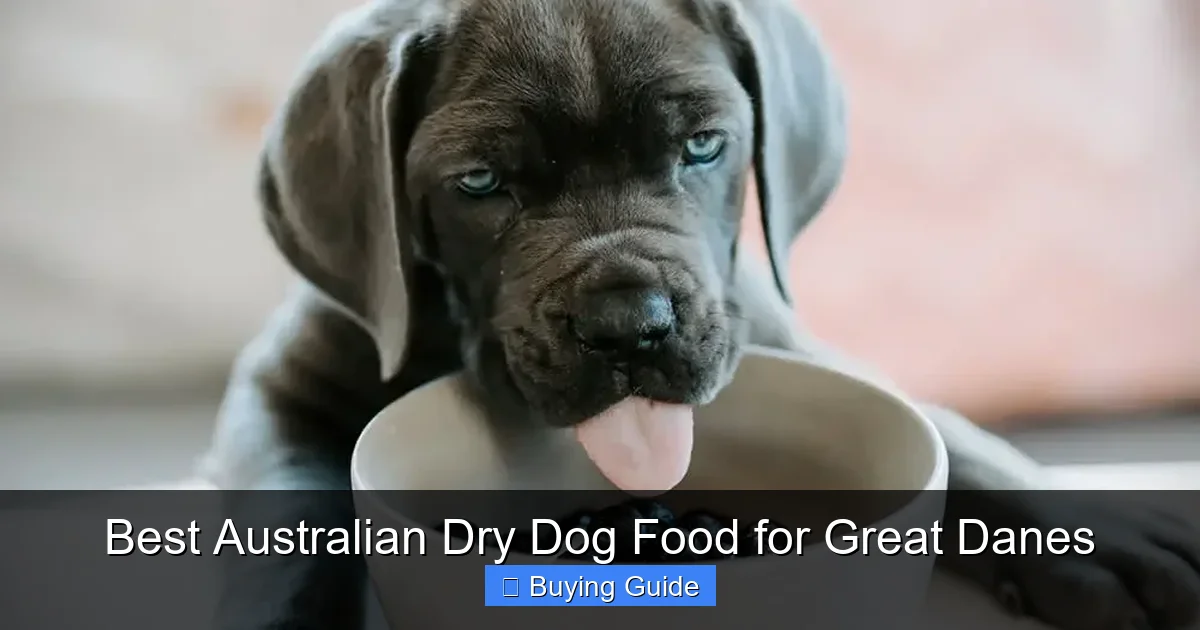
Choosing the right dry dog food for your Great Dane is crucial for their health, growth, and longevity. In this guide, we review the top Australian dry dog foods in 2026, focusing on high-quality protein, joint support, and digestibility—key factors for giant breed dogs.
Key Takeaways
- High-Qtein, low-fat formulas are ideal: Great Danes need muscle support without excessive weight gain, so look for foods with 24–30% protein and moderate fat levels.
- Joint and bone health is non-negotiable: Ingredients like glucosamine, chondroitin, and omega-3s help prevent hip dysplasia and arthritis common in large breeds.
- Digestive health matters: Prebiotics, probiotics, and easily digestible carbs like sweet potato aid gut health and reduce bloating risks.
- Australian-made ensures quality control: Locally produced foods often meet strict AQIS standards and use fresh, traceable ingredients.
- Avoid fillers and artificial additives: Skip corn, soy, and artificial preservatives—opt for natural, whole-food ingredients instead.
- Portion control and feeding schedules are vital: Overfeeding can lead to rapid growth and skeletal issues, so follow vet-recommended guidelines.
- Transition gradually when switching foods: A slow 7–10 day transition prevents digestive upset and helps your Dane adjust.
📑 Table of Contents
- Why Great Danes Need Specialised Nutrition
- What to Look for in Dry Dog Food for Great Danes
- Top Australian Dry Dog Food Brands for Great Danes in 2026
- Feeding Guidelines and Portion Control for Great Danes
- Common Mistakes to Avoid When Feeding Great Danes
- How to Transition Your Great Dane to a New Diet
- Conclusion: Investing in Your Great Dane’s Long-Term Health
Why Great Danes Need Specialised Nutrition
Great Danes are known as “gentle giants”—towering, affectionate, and full of personality. But behind their majestic presence lies a unique set of nutritional needs that set them apart from smaller breeds. These dogs grow rapidly during their first 18 months, reaching heights of up to 32 inches at the shoulder and weights exceeding 140 pounds. This explosive growth, combined with their predisposition to joint issues, heart conditions, and bloat, means their diet must be carefully managed from puppyhood through adulthood.
Unlike smaller dogs, Great Danes are prone to developmental orthopedic diseases like hip dysplasia and osteochondrosis. These conditions are often influenced by genetics, but nutrition plays a critical role in either exacerbating or mitigating their impact. Feeding a diet too high in calories or calcium can accelerate growth, putting undue stress on developing bones and joints. That’s why choosing the right dry dog food isn’t just about taste or convenience—it’s about long-term health and quality of life.
In Australia, where pet owners are increasingly conscious of ingredient quality and ethical sourcing, the demand for premium, scientifically formulated dog food has surged. Brands are responding with formulas tailored specifically for giant breeds, incorporating joint-supporting nutrients, balanced energy levels, and highly digestible proteins. As we move through 2026, the market offers more options than ever—but not all are created equal. This guide will help you cut through the noise and find the best Australian dry dog food for your Great Dane, ensuring they thrive at every stage of life.
What to Look for in Dry Dog Food for Great Danes

Visual guide about Best Australian Dry Dog Food for Great Danes
Image source: vetguru.com
When shopping for dry dog food for your Great Dane, it’s easy to get overwhelmed by flashy packaging and marketing claims. But the real value lies in the ingredient list and nutritional profile. Here’s what to prioritise:
High-Quality Animal Protein
Protein is the foundation of any good dog food, especially for large, muscular breeds like Great Danes. Look for named animal proteins as the first ingredient—such as “chicken meal,” “deboned lamb,” or “turkey.” Avoid vague terms like “meat meal” or “animal by-products.” Aim for a protein content between 24% and 30%. This supports lean muscle development without overloading the kidneys, which is important for dogs prone to renal issues.
Moderate Fat Levels
While fat provides energy, too much can lead to obesity—a serious concern for Great Danes. Excess weight puts additional strain on joints and increases the risk of heart disease. Opt for foods with fat levels between 12% and 16%. Sources like chicken fat, fish oil, and flaxseed are ideal because they also deliver essential fatty acids.
Joint-Supportive Ingredients
Glucosamine and chondroitin are must-haves for Great Danes. These compounds support cartilage health and can help prevent or slow the progression of arthritis. Many premium Australian brands now include these in their formulations. Omega-3 fatty acids, particularly EPA and DHA from fish oil, also reduce inflammation and support joint mobility.
Digestive Health Boosters
Great Danes are notorious for sensitive stomachs and bloat (gastric dilatation-volvulus), a life-threatening condition. To reduce risk, choose foods with prebiotics (like chicory root) and probiotics to promote healthy gut flora. Easily digestible carbohydrates such as sweet potato, pumpkin, and brown rice help maintain steady energy without causing gas or discomfort.
Controlled Calcium and Phosphorus
Excessive calcium is a known contributor to skeletal problems in giant breeds. The ideal calcium-to-phosphorus ratio is between 1:1 and 1.5:1. Avoid foods with added calcium unless specifically formulated for large-breed puppies. This balance ensures bones grow at a healthy rate without becoming brittle or deformed.
No Fillers or Artificial Additives
Steer clear of corn, soy, wheat, and artificial colours, flavours, or preservatives like BHA and BHT. These offer little nutritional value and can trigger allergies or digestive issues. Instead, look for natural preservatives like mixed tocopherols (vitamin E) and rosemary extract.
Top Australian Dry Dog Food Brands for Great Danes in 2026
The Australian pet food market has evolved significantly in recent years, with a growing emphasis on transparency, sustainability, and breed-specific nutrition. Here are the standout brands and products that have earned top marks from veterinarians, breeders, and dog owners in 2026.
1. Ivory Coat Large Breed Adult Dry Dog Food
Ivory Coat has long been a trusted name in Australian pet nutrition, and their Large Breed formula is a favourite among Great Dane owners. Made with real Australian lamb as the primary protein, this food includes glucosamine and chondroitin for joint support, along with omega-3s from fish oil. The inclusion of beet pulp and prebiotic fibre aids digestion, while the controlled calcium levels make it safe for long-term feeding. It’s free from artificial colours and preservatives, and the kibble size is designed for large jaws—encouraging slower eating, which helps prevent bloat.
2. Black Hawk Large Breed Chicken & Rice
Black Hawk’s Large Breed recipe features free-range Australian chicken as the first ingredient, providing high biological value protein. The formula includes green-lipped mussel powder, a natural source of glucosamine and omega-3s, which is especially beneficial for joint health. Brown rice and oats offer slow-releasing energy, while added probiotics support gut health. This food is grain-inclusive but uses easily digestible grains, making it suitable for most Danes. It’s also manufactured in Australia under strict quality controls, ensuring freshness and consistency.
3. Ziwi Peak Air-Dried Lamb Recipe
While technically air-dried rather than kibble, Ziwi Peak’s lamb recipe is so nutrient-dense and palatable that many Great Dane owners use it as a topper or occasional meal. Made with 90% meat, organs, and bone, it’s rich in natural taurine, which supports heart health—a major concern for Danes. The air-drying process preserves nutrients without the need for artificial preservatives. Though pricier than traditional kibble, its high bioavailability means you can feed smaller portions, making it cost-effective over time.
4. Royal Canin Giant Adult
Royal Canin’s Giant Adult formula is scientifically designed for dogs over 45 kg, making it a perfect fit for mature Great Danes. It includes a patented antioxidant complex to support immune function and L-carnitine to help maintain a healthy weight. The kibble is uniquely shaped to encourage chewing, reducing the risk of rapid ingestion and bloat. While it’s a global brand, it’s widely available in Australia and backed by extensive veterinary research. Some owners note the inclusion of by-products, but Royal Canin maintains these are high-quality and safe.
5. My Dog Large & Giant Breed
My Dog is an Australian-owned brand that focuses on natural, holistic nutrition. Their Large & Giant Breed formula features kangaroo as the primary protein—ideal for dogs with food sensitivities. It’s grain-free, using sweet potato and peas for carbohydrates, and includes turmeric for its anti-inflammatory properties. Added glucosamine and green-lipped mussel support joint health, while prebiotics promote digestive balance. The food is free from artificial additives and is manufactured in small batches to ensure quality.
6. Hill’s Science Diet Large Breed Adult
Hill’s Science Diet is a vet-recommended brand known for its research-backed formulations. Their Large Breed Adult food includes high-quality chicken meal, balanced omega-6 and omega-3 fatty acids for skin and coat health, and natural sources of glucosamine and chondroitin. The controlled mineral levels support healthy bone development, and the inclusion of beet pulp aids digestion. While it contains some grains, they are easily digestible and well-tolerated by most Danes. It’s a reliable, widely available option for owners seeking a trusted, science-based diet.
Feeding Guidelines and Portion Control for Great Danes
Even the best dog food won’t do its job if it’s not fed correctly. Great Danes require careful portion control to prevent obesity and support healthy growth. Overfeeding—especially during puppyhood—can lead to rapid weight gain, which stresses developing joints and increases the risk of skeletal disorders.
How Much to Feed
The amount you feed depends on your dog’s age, weight, activity level, and metabolism. As a general rule:
– **Puppies (8–12 weeks):** 3–4 meals per day, 1.5 to 2.5 cups per meal (depending on brand and growth rate).
– **Adolescents (6–12 months):** 2–3 meals per day, 3 to 4 cups per meal.
– **Adults (1–7 years):** 2 meals per day, 4 to 6 cups per meal.
– **Seniors (7+ years):** 2 meals per day, adjusted for lower activity levels—typically 3.5 to 5 cups.
Always refer to the feeding guidelines on the packaging, but use them as a starting point. Monitor your dog’s body condition regularly. You should be able to feel their ribs without seeing them, and they should have a visible waist when viewed from above.
Feeding Schedule Tips
– **Avoid free-feeding:** Leave food out all day can lead to overeating and increase bloat risk.
– **Use slow-feeder bowls:** These encourage slower eating, reducing the chance of gulping air.
– **Wait 1–2 hours after meals before exercise:** Vigorous activity right after eating can trigger bloat.
– **Split meals evenly:** Two meals spaced 10–12 hours apart help maintain steady energy and digestion.
Transitioning to a New Food
When switching your Great Dane to a new dry food, do it gradually over 7–10 days. Start by mixing 25% new food with 75% old food for days 1–3, then 50/50 for days 4–6, and 75% new for days 7–9. By day 10, you can feed 100% new food. This slow transition helps prevent digestive upset, diarrhoea, or refusal to eat.
Common Mistakes to Avoid When Feeding Great Danes
Even well-intentioned owners can make feeding mistakes that impact their Dane’s health. Here are the most common pitfalls and how to avoid them.
Overfeeding for “Growth”
Many owners believe that feeding more will help their Dane grow bigger or stronger. In reality, overfeeding—especially high-calorie diets—can cause rapid growth, leading to joint deformities and shortened lifespan. Stick to recommended portions and consult your vet if you’re unsure.
Ignoring Ingredient Quality
Cheap dog foods often rely on fillers like corn and soy, which offer little nutritional value and can cause allergies. Always read the ingredient list. If you can’t pronounce it or don’t know what it is, it’s probably not ideal.
Feeding Inappropriate Treats
Treats should make up no more than 10% of your dog’s daily caloric intake. Avoid high-fat or high-sodium treats, which can contribute to weight gain and heart strain. Opt for healthy alternatives like dehydrated liver, carrots, or vet-approved dental chews.
Not Adjusting for Life Stage
A puppy formula isn’t suitable for an adult Dane, and vice versa. Puppy foods are often too high in calories and calcium for adult dogs, while senior formulas may lack the energy younger Danes need. Always choose a food appropriate for your dog’s life stage.
Neglecting Hydration
Dry food contains little moisture, so ensure your Dane has constant access to fresh, clean water. Dehydration can lead to urinary tract issues and kidney strain, especially in large breeds.
How to Transition Your Great Dane to a New Diet
Switching your Great Dane to a new dry food can be nerve-wracking, especially if they’re picky or have a sensitive stomach. But with the right approach, the transition can be smooth and stress-free.
Step-by-Step Transition Plan
1. **Choose the right food:** Based on your dog’s age, weight, and health needs.
2. **Start slow:** Mix 25% new food with 75% old food for the first 3 days.
3. **Increase gradually:** Move to 50/50 for days 4–6, then 75% new for days 7–9.
4. **Monitor closely:** Watch for signs of digestive upset, such as diarrhoea, vomiting, or lethargy.
5. **Adjust if needed:** If your dog shows discomfort, slow the transition or consult your vet.
Tips for Picky Eaters
– Warm the food slightly to enhance aroma.
– Add a small amount of low-sodium broth or a spoonful of wet food as a topper.
– Be patient—some dogs take longer to accept new textures or flavours.
When to Consult a Vet
If your dog refuses to eat the new food after 10 days, or shows signs of illness, contact your veterinarian. They may recommend a different formula or check for underlying health issues.
Conclusion: Investing in Your Great Dane’s Long-Term Health
Feeding your Great Dane the best Australian dry dog food isn’t just about convenience—it’s a long-term investment in their health, happiness, and longevity. These gentle giants deserve nutrition that supports their unique physiology, from strong bones and joints to a healthy heart and digestive system. In 2026, Australian pet owners have access to an impressive range of high-quality, science-backed options that prioritise real ingredients, breed-specific needs, and ethical production.
By choosing a food rich in quality protein, joint-supporting nutrients, and digestive aids—and by feeding it correctly—you’re giving your Dane the best possible start in life. Remember, every meal is an opportunity to nourish their body and strengthen your bond. Whether you opt for a premium brand like Ziwi Peak or a trusted staple like Ivory Coat, the key is consistency, awareness, and love.
Your Great Dane may be large in size, but their needs are delicate. With the right diet, they’ll stand tall—not just in stature, but in vitality.
Frequently Asked Questions
What is the best protein source for Great Danes?
High-quality animal proteins like deboned chicken, lamb, or kangaroo are ideal. Look for named meat sources as the first ingredient and avoid vague terms like “meat meal.”
Can Great Danes eat grain-free food?
Yes, but it’s not necessary unless your dog has a grain allergy. Easily digestible grains like brown rice or oats can provide beneficial fibre and energy.
How often should I feed my Great Dane?
Adult Great Danes should be fed twice daily. Puppies may need 3–4 smaller meals to support steady growth and prevent bloat.
Is it safe to feed puppy food to adult Great Danes?
No. Puppy food is too high in calories and calcium, which can cause rapid growth and joint problems in adult giant breeds.
What ingredients should I avoid in dog food for Great Danes?
Avoid corn, soy, artificial colours, flavours, and preservatives like BHA and BHT. Also, watch for excessive calcium or fillers with little nutritional value.
How can I prevent bloat in my Great Dane?
Feed smaller, frequent meals, use a slow-feeder bowl, avoid exercise right after eating, and ensure your dog doesn’t gulp water too quickly.