
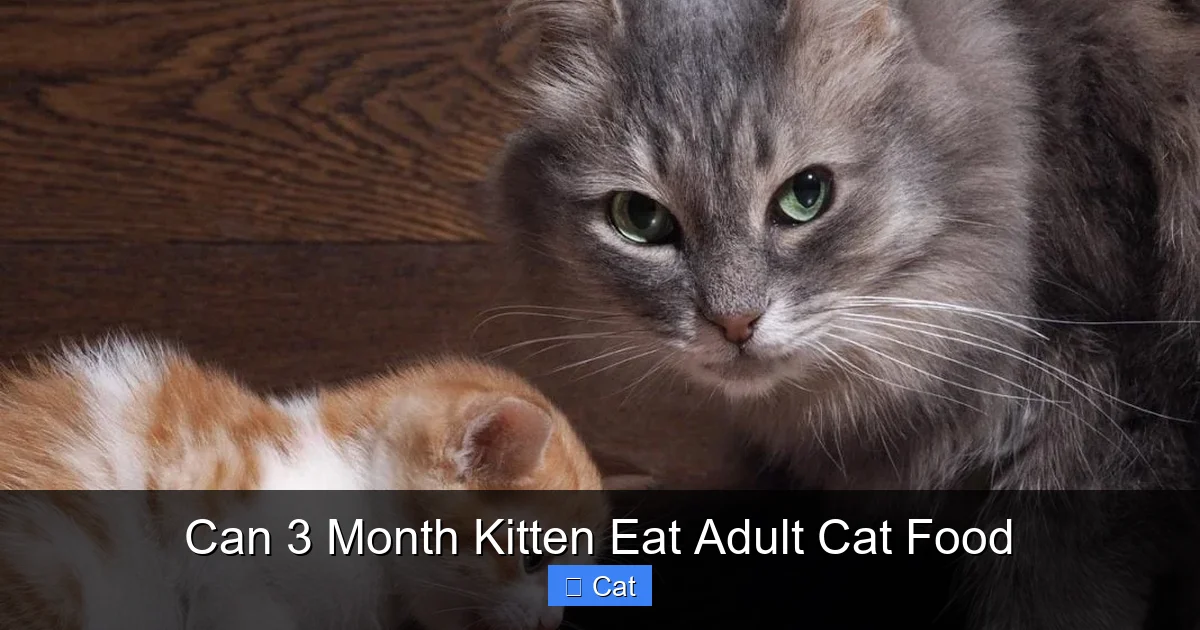
No, a 3-month-old kitten should not eat adult cat food. Kittens need higher levels of protein, fat, calories, and key nutrients like DHA and taurine to support rapid growth and brain development. Feeding adult food can lead to nutritional deficiencies and long-term health problems.
Key Takeaways
- Kittens require more calories and nutrients: At 3 months old, kittens are growing rapidly and need up to three times more energy per pound than adult cats.
- Adult cat food lacks essential kitten nutrients: It typically has lower protein, fat, and key vitamins like DHA, which are crucial for brain and vision development.
- Taurine is vital for kittens: This amino acid supports heart function, vision, and immune health—deficiencies can cause serious issues.
- Feeding adult food risks malnutrition: Long-term use can stunt growth, weaken immunity, and lead to developmental disorders.
- Choose AAFCO-approved kitten food: Look for labels stating the food meets kitten growth standards for balanced nutrition.
- Transition gradually when switching foods: Sudden changes can upset your kitten’s stomach—mix old and new food over 7–10 days.
- Consult your vet for personalized advice: Every kitten is different; a vet can recommend the best diet based on breed, size, and health.
📑 Table of Contents
- Can 3 Month Kitten Eat Adult Cat Food? The Truth Every Pet Parent Needs to Know
- Why Kitten Nutrition Is So Different from Adult Cat Food
- The Risks of Feeding Adult Cat Food to a 3-Month-Old Kitten
- What Should You Feed a 3-Month-Old Kitten Instead?
- Transitioning from Kitten Food to Adult Food: When and How
- Common Myths About Kitten Nutrition
- Final Thoughts: Prioritize Your Kitten’s Health
Can 3 Month Kitten Eat Adult Cat Food? The Truth Every Pet Parent Needs to Know
Bringing a 3-month-old kitten into your home is an exciting adventure. Their tiny paws, playful antics, and curious eyes make them irresistible. But with all that cuteness comes big responsibility—especially when it comes to feeding. One of the most common questions new kitten owners ask is: *Can a 3-month-old kitten eat adult cat food?*
The short answer? No. While it might seem convenient to feed your kitten the same food as your adult cat, doing so can seriously compromise their health. At three months old, kittens are in a critical stage of development. Their bodies are growing at an astonishing rate, and their nutritional needs are vastly different from those of adult cats. Adult cat food simply doesn’t provide the right balance of nutrients to support this rapid growth.
Imagine trying to fuel a high-performance race car with regular gasoline instead of premium fuel. It might run for a short time, but eventually, it will break down. The same principle applies to kittens. Without the proper nutrition, they can suffer from stunted growth, weakened immune systems, and long-term health problems. So, while it might be tempting to grab the nearest bag of adult cat food, it’s essential to choose a diet specifically formulated for kittens.
Why Kitten Nutrition Is So Different from Adult Cat Food

Visual guide about Can 3 Month Kitten Eat Adult Cat Food
Image source: petshun.com
To understand why adult cat food isn’t suitable for 3-month-old kittens, it helps to know what makes kitten food special. Kittens aren’t just small adult cats—they’re growing machines. In their first year of life, they can gain up to 10 times their birth weight. This explosive growth requires a diet rich in energy, protein, and essential nutrients.
Higher Caloric Needs
One of the biggest differences between kitten and adult cat food is calorie density. Kittens need significantly more calories per pound of body weight than adult cats. According to veterinary nutritionists, a growing kitten may need two to three times more calories than an adult cat of the same size. This is because every cell in their body is dividing and expanding rapidly. Their bones, muscles, organs, and brain are all developing at breakneck speed.
Adult cat food is formulated to maintain weight and support everyday functions, not fuel rapid growth. If you feed a 3-month-old kitten adult food, they simply won’t get enough energy to thrive. Over time, this can lead to weight loss, lethargy, and developmental delays.
Protein: The Building Block of Growth
Protein is the cornerstone of a kitten’s diet. It provides the amino acids necessary for building muscle, repairing tissues, and producing enzymes and hormones. Kittens require a higher percentage of protein in their diet compared to adult cats—typically around 30–40% on a dry matter basis, compared to 26–30% for adults.
High-quality animal-based proteins—like chicken, turkey, fish, and eggs—are especially important. These sources contain all the essential amino acids kittens need, including taurine, arginine, and methionine. Adult cat food often contains lower protein levels and may include more plant-based fillers, which are less digestible and less beneficial for growing kittens.
Healthy Fats for Energy and Brain Development
Fats are another critical component of kitten nutrition. They provide concentrated energy and help absorb fat-soluble vitamins like A, D, E, and K. But not all fats are created equal. Kittens need specific types of fatty acids, particularly docosahexaenoic acid (DHA), an omega-3 fatty acid found in fish oil.
DHA plays a vital role in brain and vision development. Studies show that kittens fed diets rich in DHA perform better in learning and memory tests and have sharper vision. Adult cat food rarely contains adequate levels of DHA, which means feeding it to a 3-month-old kitten could impair their cognitive and visual development.
Essential Vitamins and Minerals
Kittens also need higher levels of certain vitamins and minerals. For example, calcium and phosphorus are crucial for strong bones and teeth. However, the ratio of these minerals must be carefully balanced—too much calcium can lead to skeletal problems, while too little can cause weak bones.
Vitamin A supports vision and immune function, while vitamin E acts as an antioxidant. Taurine, as mentioned earlier, is essential for heart health and vision. Deficiencies in any of these nutrients can lead to serious health issues, including blindness, heart disease, and poor immune response.
The Risks of Feeding Adult Cat Food to a 3-Month-Old Kitten
Now that we understand why kittens need specialized nutrition, let’s explore what can happen if you feed them adult cat food.
Malnutrition and Stunted Growth
The most immediate risk is malnutrition. Because adult cat food lacks the high calorie, protein, and fat content kittens need, they may not gain weight properly. You might notice your kitten becoming lethargic, losing interest in play, or failing to grow at the expected rate. In severe cases, this can lead to stunted growth, where the kitten remains smaller than average for their breed and age.
Weakened Immune System
A well-balanced diet supports a strong immune system. Kittens fed adult food may not get enough of the nutrients needed to fight off infections. This makes them more susceptible to illnesses like upper respiratory infections, parasites, and digestive issues. A weakened immune system can also slow recovery from injuries or surgeries.
Developmental Disorders
Long-term feeding of adult cat food can lead to developmental disorders. For example, taurine deficiency can cause dilated cardiomyopathy (a heart condition) and irreversible blindness. Calcium imbalances may result in bone deformities or joint problems. These conditions are not only painful but can also reduce your kitten’s quality of life and lifespan.
Digestive Upset
Even if you only feed adult food occasionally, it can still cause digestive issues. Kittens have sensitive stomachs, and sudden changes in diet—especially to a lower-protein, lower-fat food—can lead to diarrhea, vomiting, or constipation. While these symptoms may seem minor, they can quickly lead to dehydration and nutrient loss in a small kitten.
What Should You Feed a 3-Month-Old Kitten Instead?
So, if adult cat food isn’t the answer, what should you be feeding your 3-month-old kitten? The best choice is a high-quality kitten food that meets the nutritional standards set by the Association of American Feed Control Officials (AAFCO).
Look for AAFCO Approval
When shopping for kitten food, check the label for an AAFCO statement. It should say something like, “This product is formulated to meet the nutritional levels established by the AAFCO Cat Food Nutrient Profiles for growth” or “animal feeding tests substantiate that this product provides complete and balanced nutrition for kittens.” This ensures the food has been tested and proven to support healthy growth.
Choose Wet, Dry, or a Combination
Kittens can eat both wet and dry food, and many experts recommend a combination of both. Wet food provides hydration and is often more palatable, which is great for picky eaters. Dry food is convenient and can help with dental health by reducing plaque buildup.
At 3 months old, kittens should be eating kitten-specific wet food or softened dry kibble (soaked in warm water or broth) to make it easier to chew. As they grow, you can gradually introduce harder kibble.
Feeding Schedule and Portion Control
Kittens have small stomachs but big appetites. They should be fed small, frequent meals throughout the day. Most 3-month-old kittens do well with 3–4 meals per day. Follow the feeding guidelines on the food packaging, but adjust based on your kitten’s weight, activity level, and growth.
Avoid free-feeding (leaving food out all day) unless recommended by your vet. Overeating can lead to obesity, which is just as harmful as malnutrition.
Top Ingredients to Look For
When reading the ingredient list, prioritize high-quality animal proteins as the first ingredient. Look for whole meats like chicken, turkey, or salmon—not by-products or meat meals (unless specified as high-quality). Avoid foods with excessive fillers like corn, soy, or wheat, which offer little nutritional value.
Also, check for added taurine, DHA, and essential vitamins and minerals. These should be clearly listed on the label.
Transitioning from Kitten Food to Adult Food: When and How
While kittens should not eat adult cat food at 3 months, there will come a time when they’re ready to make the switch. Most kittens can transition to adult food between 10 and 12 months of age, though larger breeds like Maine Coons may need kitten food until 18 months.
Signs Your Kitten Is Ready
Your kitten is likely ready for adult food when they’ve reached most of their adult size and their growth has slowed. Your veterinarian can help determine the right time based on your kitten’s breed, weight, and overall health.
How to Transition Gradually
Never switch foods abruptly. Instead, transition over 7–10 days by gradually increasing the amount of adult food while decreasing the kitten food. For example:
– Days 1–2: 75% kitten food, 25% adult food
– Days 3–4: 50% kitten food, 50% adult food
– Days 5–6: 25% kitten food, 75% adult food
– Days 7–10: 100% adult food
This slow transition helps prevent digestive upset and allows your cat’s system to adjust.
Common Myths About Kitten Nutrition
There are many misconceptions about feeding kittens, and they can lead to poor dietary choices. Let’s clear up a few common myths.
Myth: “Kittens Can Eat Whatever Adult Cats Eat”
This is false. As we’ve discussed, kittens have unique nutritional needs that adult food doesn’t meet. Feeding them adult food can lead to serious health problems.
Myth: “All Cat Food Is the Same”
Not true. Cat foods vary widely in quality and nutritional content. Always choose a reputable brand that meets AAFCO standards and lists real meat as the first ingredient.
Myth: “Kittens Need Milk”
While kittens drink their mother’s milk initially, most are lactose intolerant after weaning. Cow’s milk can cause diarrhea and digestive upset. If you want to give your kitten milk, choose a specially formulated kitten milk replacer.
Myth: “More Food Means Faster Growth”
Overfeeding can lead to obesity, which increases the risk of diabetes, joint problems, and heart disease. Follow feeding guidelines and monitor your kitten’s weight regularly.
Final Thoughts: Prioritize Your Kitten’s Health
Feeding your 3-month-old kitten isn’t just about filling their belly—it’s about laying the foundation for a long, healthy life. The right nutrition supports every aspect of their development, from strong bones and muscles to a sharp mind and vibrant coat. While adult cat food might seem like a convenient option, it simply doesn’t provide what your growing kitten needs.
By choosing a high-quality kitten food, feeding on a consistent schedule, and consulting your veterinarian, you’re giving your kitten the best possible start. Remember, those tiny paws and playful jumps today will turn into a healthy, happy adult cat tomorrow—thanks to the care you give them now.
Frequently Asked Questions
Can I give my 3-month-old kitten a little bit of adult cat food?
It’s best to avoid it entirely. Even small amounts of adult food can disrupt your kitten’s delicate nutritional balance. Stick to kitten-specific formulas to ensure they get the right nutrients for growth.
What happens if my kitten accidentally eats adult cat food?
One accidental meal won’t cause harm, but don’t make it a habit. Monitor your kitten for signs of digestive upset like vomiting or diarrhea, and return to kitten food immediately.
How often should I feed my 3-month-old kitten?
Most 3-month-old kittens need 3–4 small meals per day. Follow the feeding guidelines on your kitten food packaging and adjust based on your kitten’s appetite and weight gain.
Can I mix wet and dry kitten food?
Yes! Many owners combine wet and dry food to provide hydration, variety, and dental benefits. Just ensure both are formulated for kittens and meet AAFCO standards.
When can my kitten start eating adult cat food?
Most kittens can transition to adult food between 10 and 12 months of age. Larger breeds may need kitten food longer. Always consult your vet before making the switch.
Is homemade kitten food a good alternative?
Homemade diets can be risky unless formulated by a veterinary nutritionist. Kittens have very specific needs, and imbalanced homemade food can lead to deficiencies and health problems.