
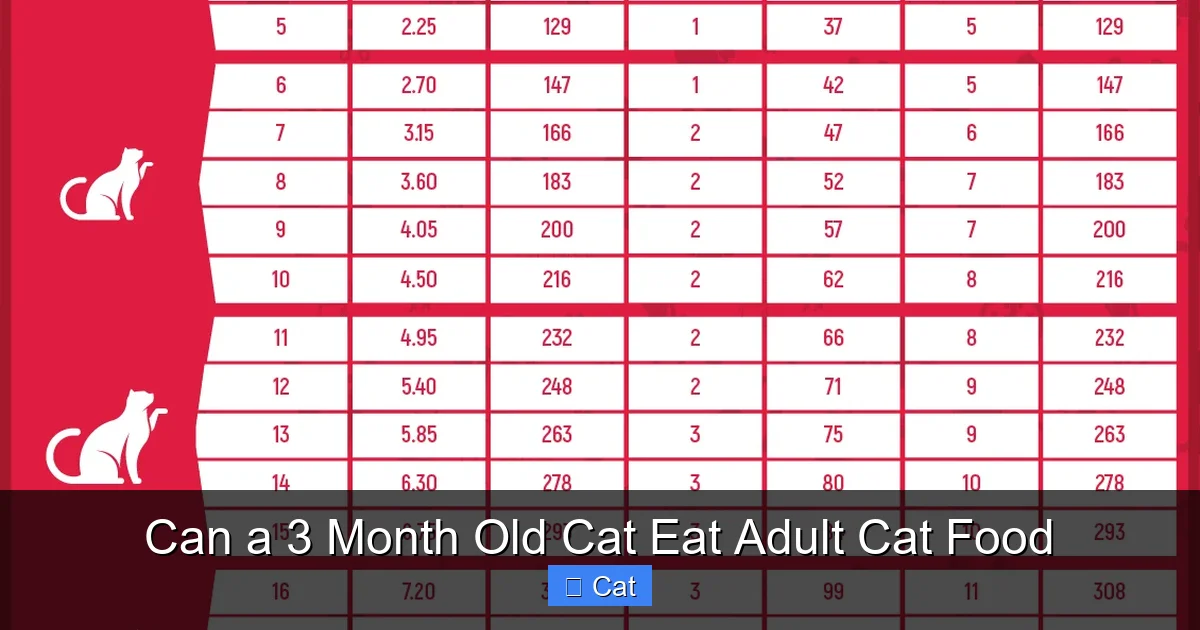
Feeding a 3-month-old kitten adult cat food is not recommended. At this age, kittens need higher levels of protein, fat, calories, and essential nutrients like DHA and taurine to support rapid growth and brain development. Adult cat food lacks the nutritional balance required for healthy kitten development and can lead to long-term health issues.
Key Takeaways
- Kittens need more calories and nutrients than adult cats: A 3-month-old kitten is in a critical growth phase and requires food specifically formulated for kittens to support healthy development.
- Adult cat food lacks essential nutrients for kittens: It typically has lower levels of protein, fat, taurine, and DHA—nutrients vital for brain, eye, and muscle development in young cats.
- Feeding adult food can cause nutritional deficiencies: Long-term feeding of adult food to kittens may result in stunted growth, weak bones, poor coat quality, and immune system problems.
- Kitten food supports rapid growth and high energy needs: Kitten formulas are calorie-dense and designed to meet the demands of a fast-growing body and active lifestyle.
- Transition to adult food should happen around 12 months: Most veterinarians recommend switching from kitten to adult food between 10 to 12 months of age, depending on breed and size.
- Always consult your vet before changing your kitten’s diet: Individual health needs, breed size, and activity level can influence the best feeding plan for your growing cat.
- Look for AAFCO-approved kitten food: Ensure the food meets the Association of American Feed Control Officials (AAFCO) standards for growth and development.
📑 Table of Contents
- Why a 3-Month-Old Kitten Needs Special Nutrition
- Understanding the Differences Between Kitten and Adult Cat Food
- When Can You Safely Switch to Adult Cat Food?
- Choosing the Right Kitten Food
- Common Mistakes to Avoid When Feeding a Kitten
- Conclusion: Prioritize Your Kitten’s Growth with the Right Food
Why a 3-Month-Old Kitten Needs Special Nutrition
When you bring home a tiny, wide-eyed 3-month-old kitten, it’s easy to assume that any cat food will do. After all, they’re eating solid food now, right? But here’s the truth: just like human babies, kittens have very specific nutritional needs that differ dramatically from adult cats. At three months old, your kitten is still in the midst of a rapid growth phase—gaining weight, developing muscles, forming bones, and building a strong immune system. This isn’t the time to cut corners on nutrition.
Imagine trying to fuel a race car with regular gasoline instead of high-octane fuel. That’s what happens when you feed adult cat food to a growing kitten. Adult cat food is formulated for maintenance—keeping a fully grown cat healthy and at a stable weight. But kittens aren’t maintaining; they’re building. Their little bodies are working overtime to grow, and they need more calories, more protein, more fat, and more of certain key nutrients than adult cats.
For example, a kitten needs about twice the calories per pound of body weight compared to an adult cat. They also require higher levels of protein to support muscle development and fat for energy and brain growth. Without these increased levels, a kitten may not reach its full potential in size, strength, or overall health. That’s why kitten-specific food exists—and why it’s so important to use it during this critical window.
The Science Behind Kitten Growth
From birth to around 12 months, kittens experience some of the fastest growth rates in the animal kingdom. In just one year, a kitten can grow from a few ounces to several pounds, depending on the breed. This explosive growth requires a steady supply of high-quality nutrients. For instance, protein makes up about 30–40% of a kitten’s diet, compared to 26–30% for adult cats. This extra protein supports the development of muscles, organs, and tissues.
Fat is another critical component. Kitten food contains higher fat levels—often around 20% or more—compared to adult food, which may have 10–15%. Fat provides concentrated energy, which kittens burn through quickly during play, exploration, and growth. It also supports brain development, especially when paired with essential fatty acids like DHA (docosahexaenoic acid), which is crucial for vision and cognitive function.
Taurine, an amino acid found in high-quality animal proteins, is another non-negotiable nutrient for kittens. Cats cannot produce enough taurine on their own, so it must come from their diet. A deficiency can lead to serious health problems, including heart disease (dilated cardiomyopathy) and blindness. While adult cat food contains taurine, kitten food has even higher levels to meet the demands of developing bodies.
What Happens If You Feed Adult Food Too Early?
Feeding adult cat food to a 3-month-old kitten might seem harmless in the short term, but the consequences can be serious over time. Because adult food is lower in calories and key nutrients, your kitten may not get enough energy to grow properly. This can result in stunted growth, where the kitten fails to reach its expected size or weight. Even if the kitten appears active and playful, internal development—like bone density and organ function—may be compromised.
Another risk is nutritional imbalance. Adult cat food often contains fillers like grains or plant-based proteins that are harder for kittens to digest and don’t provide the same nutritional value as animal-based proteins. Over time, this can lead to digestive issues, poor coat quality, and a weakened immune system. Kittens with weak immune systems are more susceptible to infections, parasites, and illnesses—especially during their first year of life.
There’s also the issue of dental and jaw development. Kitten food is often softer and easier to chew, which helps young kittens transition from milk to solid food. Adult kibble can be too hard for a 3-month-old’s developing teeth and jaws, potentially causing discomfort or difficulty eating.
Understanding the Differences Between Kitten and Adult Cat Food
To truly understand why adult cat food isn’t suitable for a 3-month-old kitten, it helps to compare the two side by side. While both are designed to meet a cat’s basic nutritional needs, the formulations are tailored to different life stages. Let’s break down the key differences.
Calorie Density
One of the most significant differences is calorie content. Kitten food is calorie-dense—meaning it packs more energy into each bite. A typical kitten food might contain 500–600 calories per cup, while adult food ranges from 300–400 calories per cup. This higher calorie count supports the kitten’s rapid growth and high activity level. Without enough calories, a kitten may become lethargic, lose weight, or fail to gain weight as expected.
For example, a 3-month-old kitten might need 200–250 calories per day, depending on size and activity level. If you’re feeding adult food, you’d need to give larger portions to meet that need—but larger portions of adult food can lead to overeating and obesity later on. It’s a tricky balance that’s easily avoided by using kitten-specific food.
Protein and Fat Content
As mentioned earlier, kittens need more protein and fat than adult cats. High-quality kitten food typically lists a named animal protein (like chicken, turkey, or salmon) as the first ingredient. The protein content is usually above 30%, and fat content is around 20% or higher. This combination supports muscle growth, energy needs, and brain development.
Adult cat food, on the other hand, may use lower-quality protein sources or include more plant-based ingredients to reduce cost. While this is fine for a sedentary adult cat, it’s not ideal for a growing kitten. The lower fat content also means less energy, which can slow down development.
Essential Nutrients and Supplements
Kitten food is fortified with additional nutrients that are critical during growth. These include:
– Taurine: For heart and eye health.
– DHA: An omega-3 fatty acid that supports brain and vision development.
– Calcium and phosphorus: For strong bones and teeth.
– Vitamins A, D, and E: For immune function, vision, and skin health.
Adult cat food contains these nutrients too, but often in lower amounts. For a kitten, even a small deficiency can have long-term effects. For instance, insufficient DHA during early development has been linked to learning difficulties and poor vision in cats.
Texture and Kibble Size
Another practical difference is the physical form of the food. Kitten kibble is usually smaller and softer, making it easier for tiny mouths and developing teeth to chew. Adult kibble can be too large or hard, which may discourage a young kitten from eating enough. Wet kitten food is also often smoother and more palatable, helping kittens transition from mother’s milk or bottle feeding.
Some kitten foods even come in a “mousse” or “pâté” texture, which is especially helpful for very young kittens who are just learning to eat solids. These textures are easier to lap up and digest, reducing the risk of gastrointestinal upset.
When Can You Safely Switch to Adult Cat Food?
Now that we’ve established why kitten food is essential for a 3-month-old, the next question is: when can you make the switch? The general rule of thumb is to feed kitten food until your cat reaches about 10 to 12 months of age. However, this can vary depending on the breed and size of the cat.
Small vs. Large Breeds
Smaller breeds, like Siamese or domestic shorthairs, tend to mature faster and may be ready for adult food around 10 months. Larger breeds, such as Maine Coons or Ragdolls, can take up to 18 months to reach full size and should stay on kitten food longer. Feeding adult food too early to a large-breed kitten can slow their growth and lead to joint problems later in life.
Your veterinarian can help determine the right time to transition based on your cat’s growth rate, weight, and overall health. Regular check-ups during the first year are crucial for monitoring development and adjusting the diet as needed.
How to Transition Gradually
When the time comes to switch, don’t make the change overnight. Sudden diet changes can upset your cat’s stomach, leading to diarrhea or vomiting. Instead, follow a gradual transition over 7 to 10 days:
– Days 1–2: Mix 25% adult food with 75% kitten food.
– Days 3–4: Use 50% adult and 50% kitten food.
– Days 5–6: Increase to 75% adult food and 25% kitten food.
– Day 7 onward: Feed 100% adult food.
Watch your cat’s behavior and stool during this time. If you notice digestive issues, slow down the transition or consult your vet.
Signs Your Kitten Is Ready for Adult Food
While age is a good guideline, there are other signs that your kitten may be ready for adult food:
– Consistent weight gain has slowed.
– The kitten is less active or playful than before.
– They’re eating larger portions of kitten food but not gaining weight.
– Your vet confirms they’ve reached near-adult size.
Remember, every cat is different. Some may thrive on kitten food a little longer, while others transition smoothly earlier. The key is to observe your cat and work with your vet.
Choosing the Right Kitten Food
Not all kitten foods are created equal. With so many brands and formulas on the market, it’s important to know what to look for to ensure your 3-month-old gets the best nutrition.
Look for AAFCO Certification
The Association of American Feed Control Officials (AAFCO) sets standards for pet food nutrition. When choosing kitten food, look for a statement on the label that says it meets AAFCO nutrient profiles for “growth” or “kitten” life stages. This ensures the food has been tested and proven to support healthy development.
Avoid foods that only say “complete and balanced” without specifying the life stage. These may not provide the right nutrient levels for a growing kitten.
Prioritize Animal-Based Protein
The first ingredient should be a high-quality animal protein, such as chicken, turkey, lamb, or fish. Avoid foods that list “meat by-products” or “animal digest” as the primary ingredient—these are lower-quality sources and may not provide the same nutritional value.
Also, check the protein percentage. Aim for at least 30% crude protein on the label. This ensures your kitten gets enough amino acids for growth.
Check for Essential Fatty Acids
Look for DHA and arachidonic acid (an omega-6 fatty acid) on the ingredient list. These support brain, eye, and skin health. Some premium kitten foods include fish oil or egg yolks as natural sources of these nutrients.
Wet vs. Dry Food
Both wet and dry kitten foods can be part of a healthy diet. Wet food has higher moisture content, which helps keep kittens hydrated—especially important since cats don’t always drink enough water. It’s also easier to chew and often more palatable.
Dry food is convenient and can help with dental health by reducing plaque buildup. Many owners choose to feed a combination: wet food for meals and dry food for free-feeding or as treats.
If you’re feeding dry food, make sure your kitten has constant access to fresh water. Dehydration can lead to urinary tract issues, especially in young cats.
Avoid Common Fillers and Additives
Steer clear of foods with excessive fillers like corn, soy, or wheat. These provide little nutritional value and can be hard for kittens to digest. Artificial colors, flavors, and preservatives (like BHA or BHT) should also be avoided when possible.
Instead, choose foods with natural preservatives like mixed tocopherols (vitamin E) or rosemary extract.
Common Mistakes to Avoid When Feeding a Kitten
Even with the best intentions, many cat owners make feeding mistakes that can affect their kitten’s health. Here are some common pitfalls to watch out for.
Feeding Adult Food Too Early
This is the most obvious mistake—and the one we’ve focused on throughout this article. Feeding adult food to a 3-month-old kitten deprives them of essential nutrients and can lead to long-term health problems. Always use kitten-specific food until your vet says otherwise.
Overfeeding or Free-Feeding Without Monitoring
While kittens need more food than adult cats, it’s still possible to overfeed them. Free-feeding (leaving food out all day) can lead to obesity, especially if the kitten isn’t very active. Instead, follow the feeding guidelines on the food package and divide the daily amount into 3–4 small meals.
Monitor your kitten’s weight and body condition. You should be able to feel their ribs easily but not see them prominently. If your kitten is gaining weight too quickly, reduce portions slightly and increase playtime.
Ignoring Hydration Needs
Cats are naturally prone to dehydration, and kittens are no exception. If you’re feeding dry food, make sure your kitten has access to fresh water at all times. Consider using a pet water fountain, which many cats prefer because the moving water is more appealing.
Signs of dehydration include lethargy, dry gums, and reduced skin elasticity. If you suspect dehydration, contact your vet immediately.
Switching Foods Too Often
Frequent diet changes can upset your kitten’s stomach. While it’s okay to try different brands or flavors, do so gradually and only when necessary. Stick to one high-quality kitten food unless your vet recommends a change due to allergies or health issues.
Not Consulting a Veterinarian
Every kitten is unique. Factors like breed, health history, and activity level can influence their nutritional needs. Always consult your vet before making major diet changes or if you notice any signs of illness, such as vomiting, diarrhea, or lack of appetite.
Conclusion: Prioritize Your Kitten’s Growth with the Right Food
Feeding a 3-month-old kitten isn’t just about filling their belly—it’s about laying the foundation for a healthy, happy life. At this critical stage, your kitten’s body is working hard to grow, develop, and adapt to the world. To support that process, they need food that’s specifically designed for their needs: higher in calories, protein, fat, and essential nutrients like taurine and DHA.
Adult cat food simply doesn’t cut it. It’s formulated for maintenance, not growth, and lacks the nutritional intensity that a growing kitten requires. Feeding it too early can lead to deficiencies, stunted development, and long-term health problems.
The good news? It’s easy to do the right thing. Choose an AAFCO-approved kitten food with high-quality animal protein, essential fatty acids, and the right balance of nutrients. Feed it in appropriate portions, keep fresh water available, and work with your vet to monitor your kitten’s progress.
By giving your kitten the best possible start, you’re not just feeding them—you’re investing in their future. And that’s something every cat parent can feel good about.
Frequently Asked Questions
Can a 3 month old cat eat adult cat food in small amounts?
It’s not recommended, even in small amounts. Adult cat food lacks the higher levels of protein, fat, and essential nutrients that kittens need for growth. Occasional nibbles won’t cause harm, but it shouldn’t replace kitten food.
What happens if my kitten accidentally eats adult food?
If it’s just once or twice, don’t panic. Your kitten will likely be fine. However, make sure their main meals are still kitten-specific. Repeated feeding of adult food can lead to nutritional deficiencies over time.
Can I mix kitten and adult food together?
Only during a gradual transition around 10–12 months of age. Mixing them before that can dilute the nutrient density your kitten needs. Always prioritize kitten food until your vet says it’s time to switch.
Is wet or dry kitten food better for a 3-month-old?
Both are fine, but wet food has higher moisture content, which helps with hydration. Many owners use a combination: wet food for meals and dry for snacking. Choose high-quality options in either form.
How often should I feed my 3-month-old kitten?
Kittens this age should be fed 3–4 small meals per day. Follow the feeding guidelines on the food package and adjust based on your kitten’s weight and activity level.
When should I start introducing adult cat food?
Most kittens can start transitioning to adult food between 10 and 12 months of age. Larger breeds may need to stay on kitten food until 18 months. Always consult your veterinarian first.