
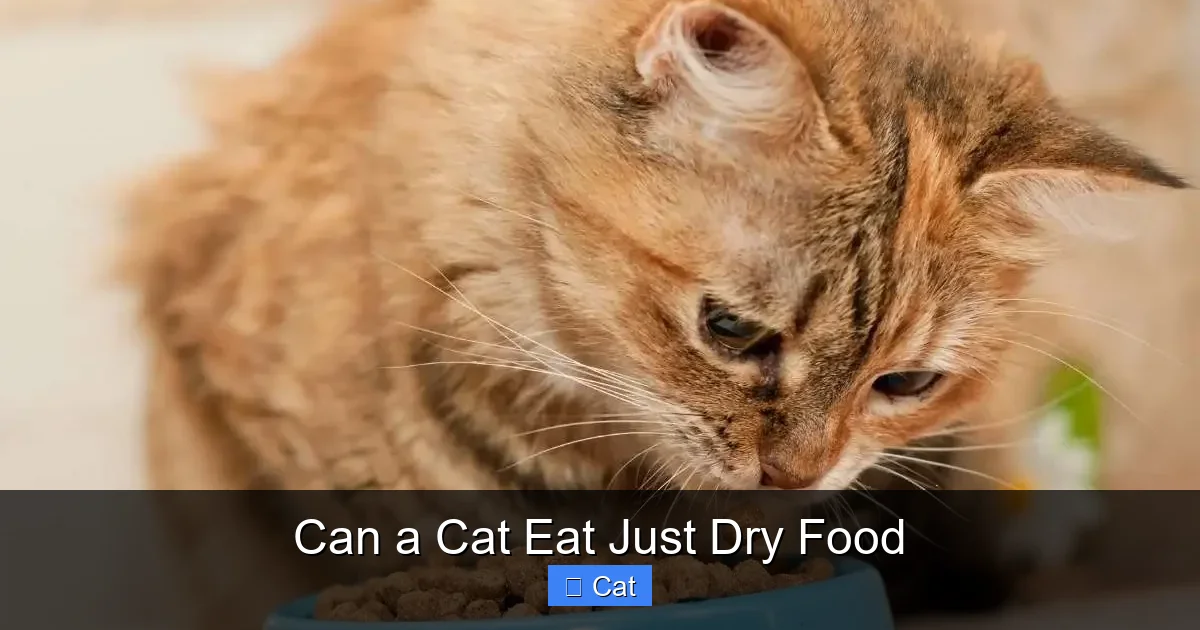
Yes, a cat can eat just dry food, but it’s not ideal for long-term health. While convenient and cost-effective, dry food lacks moisture and may contribute to urinary and kidney issues. A balanced diet with wet food or added water is strongly recommended for optimal feline wellness.
Key Takeaways
- Dry food is safe in moderation: Cats can survive on dry food alone, but it shouldn’t be their sole source of nutrition long-term.
- Hydration is critical: Dry food contains only 5–10% moisture, far below a cat’s natural dietary needs, increasing the risk of urinary tract problems.
- Wet food supports kidney health: The higher moisture content in wet food helps prevent kidney disease and supports bladder function.
- Obesity and diabetes risks: High-carb dry diets can lead to weight gain and insulin resistance, especially in sedentary indoor cats.
- Quality matters: Not all dry foods are equal—choose high-protein, low-carb options with real meat as the first ingredient.
- Mixing diets is ideal: Combining dry and wet food offers convenience, dental benefits, and better hydration.
- Monitor your cat’s health: Watch for signs like frequent urination, straining, or lethargy, which may indicate diet-related issues.
📑 Table of Contents
- Can a Cat Eat Just Dry Food? The Truth Every Cat Owner Should Know
- The Pros and Cons of Feeding Dry Food Only
- How Dry Food Affects a Cat’s Health
- Wet Food vs. Dry Food: Which Is Better?
- Can You Mix Dry and Wet Food? The Best of Both Worlds
- Choosing the Right Dry Food: Quality Matters
- Signs Your Cat’s Diet Needs Adjustment
- Conclusion: Can a Cat Eat Just Dry Food?
Can a Cat Eat Just Dry Food? The Truth Every Cat Owner Should Know
If you’re a cat parent, you’ve probably asked yourself: *Can a cat eat just dry food?* It’s a common question, especially for busy pet owners who appreciate the convenience of kibble. Dry food doesn’t spoil quickly, it’s easy to store, and many cats seem to love the crunch. But while dry food can be part of a healthy diet, relying on it exclusively might not be the best choice for your feline friend.
Cats are obligate carnivores, which means their bodies are built to thrive on a meat-based diet. In the wild, they get most of their water from prey—like mice or birds—which are about 70% water. This natural diet keeps them hydrated and supports vital organ function. But dry food? It typically contains only 5–10% moisture. That’s a big difference, and over time, it can lead to serious health problems.
So, while your cat *can* eat just dry food and survive, thriving is a different story. The real question isn’t whether they *can*, but whether they *should*. In this guide, we’ll explore the pros and cons of a dry-only diet, the health risks involved, and how you can make smarter feeding choices to keep your cat happy, healthy, and hydrated.
The Pros and Cons of Feeding Dry Food Only

Visual guide about Can a Cat Eat Just Dry Food
Image source: m.media-amazon.com
Let’s start with the good news: dry food isn’t inherently bad. In fact, it has some real advantages that make it a popular choice among cat owners.
Convenience and Cost-Effectiveness
One of the biggest benefits of dry food is convenience. You can fill your cat’s bowl and leave it out for hours—or even days—without worrying about spoilage. This “free-feeding” method works well for cats who graze throughout the day. Plus, dry food is generally cheaper per serving than wet food, making it a budget-friendly option for multi-cat households.
Dental Health Benefits (With Caveats)
Some dry foods are marketed as “dental diets” that help reduce plaque and tartar buildup. The crunchy texture can scrape away debris as your cat chews. However, studies show mixed results. While kibble may help a little, it’s no substitute for regular dental care like brushing or vet cleanings. And if your cat swallows the food whole—which many do—the dental benefit is minimal.
Long Shelf Life and Easy Storage
Dry food doesn’t require refrigeration and has a long shelf life, especially if stored in an airtight container. This makes it ideal for travel, emergency preparedness, or households with inconsistent feeding schedules.
But now, let’s talk about the downsides—because there are several important ones.
Low Moisture Content
This is the biggest concern. Cats have a low thirst drive and are evolutionarily adapted to get water from their food. A dry-only diet forces them to rely entirely on drinking water, which many cats don’t do enough of. Over time, this can lead to chronic dehydration, which is a major risk factor for urinary tract infections (UTIs), bladder stones, and kidney disease.
High Carbohydrate Content
Many dry foods are packed with carbohydrates like corn, wheat, and rice to help bind the kibble. But cats don’t need carbs—they need protein and fat. Excess carbs can lead to weight gain, obesity, and even diabetes, especially in indoor cats who aren’t very active.
Risk of Overeating
Because dry food is energy-dense and easy to eat, cats may overconsume calories without realizing it. This is especially true with free-feeding. Obesity in cats is linked to a host of problems, including arthritis, liver disease, and reduced lifespan.
So, while dry food has its perks, the cons—especially the lack of moisture—make it a less-than-ideal choice as the sole diet for your cat.
How Dry Food Affects a Cat’s Health
Now that we’ve covered the basics, let’s dive deeper into how a dry-only diet can impact your cat’s long-term health. The effects aren’t always immediate, but over months or years, they can add up.
Urinary Tract and Kidney Problems
Chronic dehydration from low water intake is a silent killer for cats. Without enough moisture, urine becomes concentrated, creating an environment where crystals and stones can form. This can lead to painful urinary blockages—especially in male cats—which are life-threatening emergencies.
Kidney disease is another major concern. Cats are prone to chronic kidney disease (CKD), and dehydration accelerates its progression. Wet food, with its high water content, helps flush toxins and supports kidney function. A study published in the *Journal of Feline Medicine and Surgery* found that cats on wet-food diets had significantly lower rates of CKD compared to those on dry food.
Obesity and Diabetes
Dry food is often high in carbohydrates and calories. When combined with a sedentary lifestyle, this can quickly lead to weight gain. Obese cats are at higher risk for diabetes, which requires lifelong management with insulin and diet changes.
Diabetes in cats is often linked to diet. A 2018 study in *PLOS ONE* found that cats fed high-carb diets were more likely to develop insulin resistance. Switching to a low-carb, high-protein diet—often including wet food—can even reverse early-stage diabetes in some cats.
Dental Health Misconceptions
While dry food may help a little with plaque, it’s not a magic solution. In fact, some studies suggest that soft, wet food may actually be better for dental health because it encourages chewing and saliva production. Plus, many cats swallow kibble whole, negating any scrubbing effect.
The best way to protect your cat’s teeth is through regular brushing, dental treats, and professional cleanings—not just dry food.
Digestive Issues
Some cats have sensitive stomachs and may struggle to digest dry food, especially if it contains fillers or artificial ingredients. Symptoms like vomiting, diarrhea, or gas can indicate a food intolerance. Switching to a higher-quality wet food often resolves these issues.
Wet Food vs. Dry Food: Which Is Better?
So, if dry food has so many drawbacks, is wet food the clear winner? Not necessarily—but it’s definitely closer to what your cat’s body needs.
Moisture Content: The Game Changer
Wet food typically contains 70–80% water, mimicking the natural diet of a wild cat. This helps keep your cat hydrated, supports kidney function, and reduces the risk of urinary problems. Even if your cat drinks water, they may not drink enough to compensate for a dry diet.
Protein and Fat: Closer to a Natural Diet
High-quality wet foods are usually higher in animal protein and lower in carbohydrates. This aligns better with a cat’s nutritional needs. Look for brands that list real meat (like chicken, turkey, or fish) as the first ingredient and avoid those with vague terms like “meat by-products” or “animal digest.”
Palatability and Appetite Stimulation
Many cats prefer the smell and texture of wet food, which can be helpful for picky eaters or senior cats with reduced appetites. The strong aroma stimulates their senses and encourages eating—something that’s crucial for cats recovering from illness.
Portion Control and Weight Management
Wet food is less calorie-dense than dry food, making it easier to manage portion sizes. This can help prevent obesity, especially in indoor cats. Plus, the higher water content helps cats feel full longer, reducing begging and overeating.
That said, wet food isn’t perfect. It’s more expensive, spoils quickly once opened, and doesn’t offer the same convenience as dry kibble. But when it comes to health benefits, the advantages are hard to ignore.
Can You Mix Dry and Wet Food? The Best of Both Worlds
Here’s a secret: you don’t have to choose one or the other. Many veterinarians recommend a mixed feeding approach—combining dry and wet food—to get the benefits of both.
How to Balance Dry and Wet Food
A common strategy is to feed wet food at mealtimes and leave dry food out for grazing. For example:
– Morning: Wet food (half a can)
– Evening: Wet food (half a can)
– Throughout the day: Dry food available
This ensures your cat gets hydration from wet food while still enjoying the convenience of kibble. You can adjust the ratio based on your cat’s age, weight, and health needs. Kittens and seniors may benefit from more wet food, while active adult cats might do well with a 50/50 split.
Tips for Transitioning to a Mixed Diet
If your cat has only ever eaten dry food, introduce wet food gradually. Start by mixing a small amount of wet food into their kibble, increasing the proportion over a week or two. Offer different textures and flavors to find what they like—some cats prefer pâté, others like chunks in gravy.
Hydration Boosters
Even if you feed wet food, encourage your cat to drink more water. Try:
– Using a cat water fountain (many cats prefer running water)
– Placing multiple water bowls around the house
– Adding a little water or low-sodium broth to their wet food
– Feeding water-rich foods like plain cooked chicken or tuna (in moderation)
These small changes can make a big difference in your cat’s overall hydration.
Choosing the Right Dry Food: Quality Matters
If you do choose to feed dry food—either alone or in combination—quality is key. Not all kibble is created equal.
What to Look for on the Label
– First ingredient should be real meat: Chicken, turkey, salmon, or beef—not “meat meal” or “by-products.”
– Low carbohydrate content: Avoid foods with corn, wheat, soy, or rice as main ingredients.
– No artificial additives: Skip foods with artificial colors, flavors, or preservatives like BHA or BHT.
– AAFCO statement: Ensure the food meets AAFCO (Association of American Feed Control Officials) standards for complete and balanced nutrition.
Top Brands to Consider
Some high-quality dry food brands include:
– Wellness CORE: High protein, grain-free, with real meat as the first ingredient.
– Blue Buffalo Wilderness: Grain-free, rich in protein, and available in various life stages.
– Hill’s Science Diet: Veterinarian-recommended, with options for weight management and urinary health.
– Royal Canin: Offers breed-specific and health-focused formulas.
Always consult your vet before making major diet changes, especially if your cat has health conditions.
Signs Your Cat’s Diet Needs Adjustment
Even with the best intentions, your cat’s dietary needs can change over time. Watch for these signs that their current diet—especially if it’s dry-only—might not be working:
– Frequent urination or straining in the litter box: Could indicate a urinary tract issue.
– Lethargy or decreased activity: May be linked to dehydration or poor nutrition.
– Weight gain or loss: Sudden changes can signal metabolic problems.
– Dull coat or excessive shedding: Often a sign of poor nutrition or dehydration.
– Vomiting or diarrhea: Could point to food intolerance or digestive issues.
If you notice any of these symptoms, talk to your veterinarian. They may recommend a diet change, blood work, or urinalysis to rule out underlying conditions.
Conclusion: Can a Cat Eat Just Dry Food?
So, can a cat eat just dry food? The short answer is yes—but it’s not the best choice for long-term health. While dry food is convenient and affordable, its low moisture content and high carbohydrate levels can lead to serious health problems like urinary tract disease, kidney issues, obesity, and diabetes.
Cats are designed to get water from their food, and a dry-only diet forces them to rely on drinking—something many cats don’t do enough of. Wet food, with its high water content and protein-rich formula, is much closer to a natural feline diet.
The ideal solution? A balanced approach. Mixing dry and wet food gives your cat the best of both worlds: the convenience of kibble and the hydration and nutrition of wet food. Choose high-quality ingredients, monitor your cat’s health, and adjust as needed.
Remember, every cat is different. What works for one may not work for another. The key is to stay informed, observe your cat’s behavior and health, and consult your vet regularly. With the right diet, your cat can live a long, healthy, and happy life—no matter what you choose to feed them.
Frequently Asked Questions
Can a cat survive on dry food alone?
Yes, a cat can survive on dry food alone, but it’s not ideal for long-term health. The lack of moisture increases the risk of urinary and kidney problems, and high-carb content can lead to obesity and diabetes.
How much water should a cat drink if eating only dry food?
A cat on a dry food diet should drink about 3.5 to 4.5 ounces of water per 5 pounds of body weight daily. However, many cats don’t drink enough, which is why wet food is recommended to boost hydration.
Is wet food better than dry food for cats?
Wet food is generally better because it provides essential moisture and is closer to a cat’s natural diet. It supports kidney and urinary health and helps prevent dehydration-related diseases.
Can I mix dry and wet food for my cat?
Absolutely! Mixing dry and wet food is a great way to combine convenience with nutrition. Many vets recommend this approach to ensure proper hydration and balanced meals.
What are the signs of dehydration in cats?
Signs include lethargy, dry gums, sunken eyes, decreased skin elasticity, and reduced urination. If you suspect dehydration, contact your vet immediately.
Should I switch my senior cat to wet food?
Yes, senior cats often benefit from wet food due to reduced kidney function and lower thirst drive. The extra moisture supports organ health and can improve appetite in older cats.