
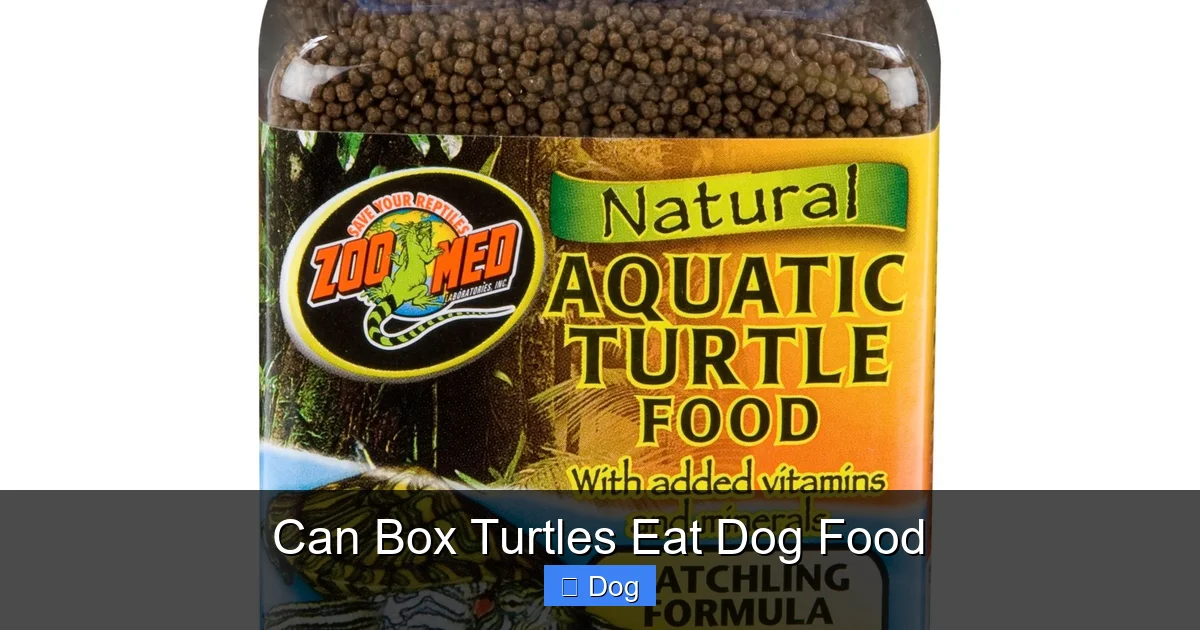
Box turtles should not regularly eat dog food, as it lacks essential nutrients and contains ingredients harmful to their health. While an occasional accidental bite won’t cause immediate harm, relying on dog food can lead to serious deficiencies and long-term health problems.
Key Takeaways
- Dog food is not formulated for turtles: It lacks the proper calcium-to-phosphorus ratio and contains fillers unsuitable for reptile digestion.
- High protein and fat content can be harmful: Box turtles need moderate protein; excess from dog food may cause kidney and liver issues.
- Artificial additives pose health risks: Preservatives, colors, and flavor enhancers in dog food are not safe for turtles.
- Occasional ingestion is not an emergency: If your turtle eats a small amount, monitor for symptoms but don’t panic.
- Stick to species-appropriate diets: Offer leafy greens, insects, fruits, and commercial turtle pellets designed for omnivorous reptiles.
- Hydration and variety are key: Always provide fresh water and rotate food types to ensure balanced nutrition.
- Consult a reptile vet for guidance: If you’re unsure about your turtle’s diet, seek professional advice tailored to your pet.
📑 Table of Contents
- Can Box Turtles Eat Dog Food? The Truth Every Owner Should Know
- Understanding the Box Turtle’s Natural Diet
- The Risks of Feeding Dog Food to Box Turtles
- What to Do If Your Turtle Eats Dog Food
- Safe and Healthy Alternatives to Dog Food
- Creating a Feeding Schedule for Your Box Turtle
- Myths and Misconceptions About Turtle Diets
- Conclusion: Prioritize Your Turtle’s Health
Can Box Turtles Eat Dog Food? The Truth Every Owner Should Know
So, you’ve just spotted your box turtle nibbling on a piece of kibble that fell from your dog’s bowl. Your first thought? “Wait—can box turtles even eat dog food?” It’s a common question among pet owners who share their homes with both dogs and turtles. After all, dog food is convenient, shelf-stable, and packed with protein. But just because it’s safe for your pup doesn’t mean it’s safe for your shelled companion.
Box turtles are fascinating creatures with unique dietary needs. Native to North America, these small, terrestrial reptiles are omnivores, meaning they thrive on a mix of plant and animal matter. In the wild, they munch on insects, worms, berries, mushrooms, and leafy greens. Their digestive systems are finely tuned to process this natural diet—not processed kibble made for canines. While it might seem harmless to offer a bite of dog food now and then, doing so regularly can lead to serious health complications.
In this article, we’ll dive deep into whether box turtles can eat dog food, what the risks are, and how to keep your turtle healthy with the right nutrition. Whether you’re a new turtle owner or a seasoned reptile enthusiast, understanding your pet’s dietary needs is crucial for their long-term well-being.
Understanding the Box Turtle’s Natural Diet

Visual guide about Can Box Turtles Eat Dog Food
Image source: turtlepetguide.com
To answer the question “Can box turtles eat dog food?” we first need to understand what these animals naturally eat. Box turtles are opportunistic feeders, which means they’ll eat a wide variety of foods depending on what’s available in their environment. However, their ideal diet is carefully balanced between animal protein and plant-based nutrients.
What Do Wild Box Turtles Eat?
In their natural habitat, box turtles consume a diverse menu. They hunt for insects like crickets, beetles, and caterpillars, which provide essential protein and fat. They also eat earthworms, slugs, and snails—soft-bodied creatures that are easy to digest. On the plant side, they enjoy dark leafy greens such as dandelion, kale, and collard greens. Fruits like strawberries, blueberries, and apples are occasional treats, while mushrooms and flowers add variety.
This natural diet is rich in fiber, moisture, and essential vitamins—especially vitamin A and calcium. It’s also low in processed ingredients and free from artificial additives. The balance between protein and vegetation supports healthy growth, strong shells, and proper organ function.
The Importance of Calcium and Phosphorus Balance
One of the most critical aspects of a box turtle’s diet is the calcium-to-phosphorus ratio. Ideally, this ratio should be around 2:1 (twice as much calcium as phosphorus). Calcium is vital for shell development, bone strength, and nerve function. Phosphorus, while also important, can interfere with calcium absorption if consumed in excess.
Dog food typically has a phosphorus level that’s too high and a calcium level that’s too low. This imbalance can lead to metabolic bone disease (MBD), a painful condition that causes soft shells, deformities, and mobility issues. Even if your turtle seems fine at first, long-term consumption of dog food can silently damage their skeletal system.
Why Variety Matters
Just like humans, box turtles benefit from dietary variety. Eating the same food every day—whether it’s dog food or even a single type of vegetable—can lead to nutritional gaps. For example, too much spinach can bind calcium due to its oxalate content, while too much fruit can cause digestive upset and obesity.
A well-rounded diet includes:
– 50% plant matter (leafy greens, vegetables, occasional fruits)
– 25% animal protein (insects, worms, cooked lean meats)
– 25% other foods (mushrooms, flowers, commercial turtle pellets)
Rotating these foods ensures your turtle gets a broad spectrum of nutrients and stays interested in eating.
The Risks of Feeding Dog Food to Box Turtles
Now that we know what box turtles should eat, let’s address the elephant in the room: dog food. While it might seem like a quick and easy protein source, dog food is not designed for reptiles. Feeding it to your box turtle—even occasionally—can introduce several health risks.
Imbalanced Nutrient Profile
Dog food is formulated for the digestive systems of mammals, not reptiles. It’s typically high in protein and fat, which might sound good, but box turtles don’t need that much. Adult box turtles, in particular, require moderate protein levels—around 20–30% of their diet. Puppies and growing turtles need a bit more, but even then, dog food often exceeds safe limits.
Excess protein can strain the kidneys and liver, leading to organ damage over time. High-fat content can contribute to obesity, which is a growing problem in captive turtles. Obesity reduces mobility, increases the risk of respiratory infections, and shortens lifespan.
Harmful Additives and Fillers
Most commercial dog foods contain artificial preservatives, colors, and flavor enhancers. Ingredients like BHA, BHT, and ethoxyquin are used to extend shelf life but have been linked to health issues in animals. While dogs may tolerate these additives, turtles are far more sensitive.
Additionally, dog food often includes fillers like corn, wheat, and soy. These ingredients are hard for turtles to digest and provide little nutritional value. They can also cause bloating, gas, and impaction—especially in smaller turtles.
Lack of Essential Vitamins and Minerals
Box turtles need specific vitamins and minerals that dog food doesn’t provide in the right amounts. For example, they require high levels of vitamin D3 to absorb calcium properly. Without adequate D3—often obtained through UVB lighting or natural sunlight—calcium can’t be used effectively, even if it’s present in the diet.
Dog food also lacks sufficient fiber, which is crucial for healthy digestion in turtles. A low-fiber diet can lead to constipation and gut stasis, where food stops moving through the digestive tract.
Risk of Impaction and Digestive Issues
The texture and size of dog kibble can be problematic for turtles. Hard, dry pellets are difficult to chew and swallow, especially for smaller turtles. If ingested, they can expand in the stomach, leading to impaction—a serious condition where the digestive tract becomes blocked.
Symptoms of impaction include loss of appetite, lethargy, and abnormal stool. In severe cases, surgery may be required to remove the blockage. Even if your turtle manages to pass the kibble, the digestive stress can weaken their immune system and make them more susceptible to illness.
What to Do If Your Turtle Eats Dog Food
Accidents happen. Maybe your dog knocked over their bowl, or your turtle wandered into the kitchen during feeding time. If your box turtle has eaten dog food, don’t panic—but do take action.
Assess the Amount Ingested
The first step is to determine how much your turtle consumed. A single piece of kibble is unlikely to cause harm, especially if your turtle is otherwise healthy. However, if they’ve eaten a large portion or multiple pieces, monitor them closely for signs of distress.
Watch for Symptoms
Keep an eye out for the following symptoms over the next 24–48 hours:
– Loss of appetite
– Lethargy or weakness
– Swollen eyes or nasal discharge
– Abnormal stool (diarrhea, constipation, or lack of stool)
– Difficulty moving or walking
If you notice any of these signs, contact a reptile veterinarian immediately. Early intervention can prevent complications.
Encourage Hydration
Dog food is dry and can dehydrate your turtle. Make sure they have access to fresh, clean water at all times. You can also offer hydrating foods like cucumber, zucchini, or watermelon to help replenish fluids.
Return to a Proper Diet
Once your turtle has recovered, return to their regular diet of leafy greens, insects, and turtle-safe pellets. Avoid offering dog food again, even as a “treat.” The risks simply aren’t worth it.
Safe and Healthy Alternatives to Dog Food
Now that we’ve established that dog food isn’t suitable for box turtles, what should you feed them instead? The good news is, there are plenty of safe, nutritious options that mimic their natural diet.
Commercial Turtle Pellets
High-quality turtle pellets are specifically formulated for omnivorous reptiles. Look for brands that list whole ingredients like fish meal, shrimp meal, and plant proteins. Avoid products with artificial colors, excessive fillers, or high-fat content.
Pellets should make up no more than 25% of your turtle’s diet. Use them as a supplement, not a staple.
Live and Frozen Foods
Insects are a favorite among box turtles. Offer live or frozen-thawed options like:
– Crickets
– Mealworms
– Waxworms (in moderation—high in fat)
– Earthworms
– Silkworms
You can purchase these from pet stores or breed them at home. Always gut-load insects (feed them nutritious foods) before offering them to your turtle.
Fresh Vegetables and Fruits
Leafy greens should be the foundation of your turtle’s plant intake. Safe options include:
– Dandelion greens
– Collard greens
– Mustard greens
– Endive
– Escarole
Avoid iceberg lettuce—it’s mostly water and offers little nutrition.
Fruits should be given sparingly, no more than once or twice a week. Good choices include:
– Strawberries
– Blueberries
– Mango
– Papaya
Remove any uneaten food after a few hours to prevent spoilage.
Supplements for Optimal Health
Even with a balanced diet, your turtle may benefit from supplements. A calcium supplement with vitamin D3 can be dusted on food 2–3 times per week. Multivitamins designed for reptiles can be used once a week to fill any nutritional gaps.
Always follow the dosage instructions on the label and consult your vet if you’re unsure.
Creating a Feeding Schedule for Your Box Turtle
Consistency is key when it comes to feeding your box turtle. A regular schedule helps regulate their digestion and ensures they’re getting the nutrients they need.
How Often to Feed
Young box turtles (under 1 year) should be fed daily. Their growing bodies need consistent nutrition. Adult turtles can be fed every other day or 3–4 times per week. Overfeeding can lead to obesity, so it’s better to err on the side of caution.
Portion Sizes
A good rule of thumb is to offer an amount of food roughly the size of your turtle’s head. This ensures they’re getting enough without overeating. Adjust portions based on your turtle’s activity level and growth.
Meal Planning Tips
– Rotate protein sources weekly (e.g., crickets one day, worms the next)
– Mix different greens to provide variety
– Offer fruits only as occasional treats
– Use a shallow dish for food to prevent contamination
– Remove uneaten food after 2–4 hours
Hydration and Environment
Always provide a shallow water dish for drinking and soaking. Turtles absorb water through their skin and cloaca, so regular soaking is essential. Keep the water clean and change it daily.
Ensure your turtle’s habitat has proper UVB lighting and a temperature gradient. These factors directly impact digestion and nutrient absorption.
Myths and Misconceptions About Turtle Diets
There are many misconceptions about what turtles can and cannot eat. Let’s clear up some common myths.
Myth: Turtles Can Eat Anything
While box turtles are adaptable, they’re not garbage disposals. They can’t safely consume processed human foods, dairy, or dog food. Their digestive systems are designed for whole, natural ingredients.
Myth: All Protein Is Good
Not all protein sources are equal. While insects and lean meats are excellent, high-fat or processed proteins (like dog food) can be harmful. Stick to species-appropriate options.
Myth: Turtles Don’t Need Vegetables
Some owners believe turtles only need meat. In reality, plant matter is essential for fiber, vitamins, and hydration. A meat-only diet leads to nutritional imbalances and health problems.
Myth: Supplements Are Unnecessary
Even with a good diet, supplements help prevent deficiencies. Calcium and vitamin D3 are especially important for shell and bone health.
Conclusion: Prioritize Your Turtle’s Health
So, can box turtles eat dog food? The short answer is no—not regularly, and not as a substitute for a proper diet. While a tiny accidental bite won’t spell disaster, dog food lacks the nutrients box turtles need and contains ingredients that can harm them over time.
Your box turtle deserves a diet that supports their unique biology. By offering a balanced mix of leafy greens, insects, fruits, and high-quality turtle pellets, you’ll ensure they live a long, healthy, and active life. Avoid the temptation to use dog food as a quick fix. Instead, invest in foods that are safe, nutritious, and tailored to your pet’s needs.
Remember, a healthy turtle is a happy turtle. With the right care, your shelled friend can thrive for decades. And if you’re ever in doubt about their diet, don’t hesitate to consult a reptile veterinarian. They can provide personalized advice and help you create a feeding plan that works best for your turtle.
Frequently Asked Questions
Can box turtles eat dog food in an emergency?
While it’s not ideal, a small amount of dog food in an emergency won’t immediately harm your turtle. However, it should never become a regular part of their diet due to nutritional imbalances and harmful additives.
What happens if my box turtle eats dog food regularly?
Regular consumption can lead to metabolic bone disease, kidney damage, obesity, and digestive issues due to improper calcium levels, excess protein, and artificial ingredients.
Are there any dog foods safe for turtles?
No dog food is specifically safe for turtles. Even “natural” or “grain-free” formulas are designed for mammals and lack the right nutrient balance for reptiles.
Can I mix dog food with turtle food?
No, mixing dog food with turtle pellets won’t fix the nutritional issues. It’s best to avoid dog food entirely and stick to reptile-specific diets.
How can I tell if my turtle has digestive problems?
Signs include loss of appetite, lethargy, swollen eyes, abnormal stool, or difficulty moving. If you notice these symptoms, consult a reptile vet immediately.
What should I feed my box turtle instead of dog food?
Offer a balanced diet of leafy greens, insects, occasional fruits, and high-quality turtle pellets. Supplement with calcium and vitamin D3 as needed.