
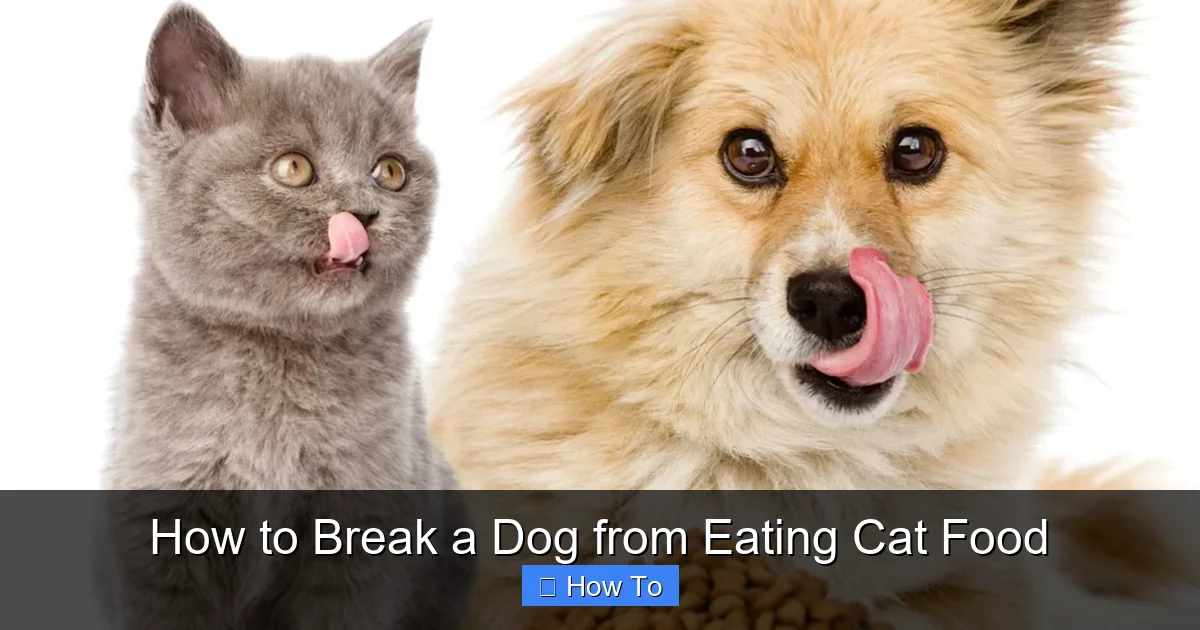
Stop your dog from eating cat food with simple, effective strategies that protect both pets’ health. This guide covers training, feeding routines, and environmental changes to create lasting habits and keep mealtimes peaceful.
Key Takeaways
- Understand why dogs eat cat food: It’s higher in protein and fat, making it tastier to dogs, but not nutritionally balanced for them.
- Separate feeding areas: Feed your cat and dog in different rooms to prevent access and reduce temptation.
- Use positive reinforcement: Reward your dog for ignoring cat food to build good habits over time.
- Choose the right dog food: Offer high-quality, flavorful dog food that satisfies your dog’s cravings naturally.
- Supervise and manage the environment: Keep cat food out of reach using baby gates, elevated feeders, or timed feeders.
- Be consistent and patient: Breaking the habit takes time, so stick to the routine and avoid slipping up.
- Consult your vet if needed: If your dog shows digestive issues or obsession, seek professional advice.
How to Break a Dog from Eating Cat Food
If you’ve ever walked into the kitchen to find your dog happily munching on your cat’s dinner, you’re not alone. Many dog owners face this common but frustrating problem. While it might seem harmless—after all, it’s just food, right?—letting your dog regularly eat cat food can lead to health issues over time. Cat food is formulated for cats, not dogs, and contains higher levels of protein, fat, and certain nutrients that can upset your dog’s digestive system or contribute to obesity.
The good news? You can stop this behavior with the right approach. This guide will walk you through practical, step-by-step strategies to break your dog from eating cat food. Whether your dog sneaks in for a quick bite or has turned it into a daily habit, these tips will help you create a safer, healthier routine for both your pets.
You’ll learn how to manage feeding times, train your dog to resist temptation, and make simple environmental changes that keep cat food out of reach. We’ll also cover what to do if your dog has already eaten cat food and when to call the vet. By the end of this guide, you’ll have a clear plan to protect your dog’s health and keep mealtimes peaceful.
Let’s get started.
Why Do Dogs Eat Cat Food?
Visual guide about How to Break a Dog from Eating Cat Food
Image source: perfectcatfood.com
Before we dive into solutions, it’s important to understand why dogs are so drawn to cat food in the first place. Dogs are naturally curious and opportunistic eaters. If they smell something tasty, they’re likely to investigate—and often, that means sampling whatever’s available.
Cat food has a stronger aroma and richer flavor than most dog food. That’s because it’s packed with animal-based proteins and fats, which cats need in high amounts. Dogs, being omnivores, don’t require the same nutrient profile, but they still find the smell and taste appealing. Think of it like a dog version of junk food—high in fat, salty, and delicious.
Another reason dogs eat cat food is simply because it’s there. If your cat eats freely throughout the day (free-feeding), your dog may see an open buffet. Even if you feed your cat at set times, a dog with access to the food bowl will likely help themselves when no one’s watching.
Lastly, some dogs develop this habit out of boredom or attention-seeking. If eating cat food gets a reaction—whether it’s scolding or laughter—they may repeat the behavior to get a response.
Understanding these motivations helps you address the root cause, not just the symptom. Once you know why your dog is eating cat food, you can take targeted steps to stop it.
Step 1: Separate Feeding Areas
The first and most effective step in breaking your dog from eating cat food is to create separate feeding zones. This means feeding your cat and dog in different rooms or areas of the house where your dog can’t access the cat’s food.
Choose the Right Locations
Pick a quiet, low-traffic spot for your cat to eat—somewhere your dog doesn’t usually go. A spare bedroom, bathroom, or even a corner of the laundry room can work well. The key is consistency. Feed your cat in the same place every day so they feel safe and your dog learns that area is off-limits.
For your dog, feed them in a separate room, ideally one that’s easy to close off with a door or baby gate. This prevents them from wandering over to the cat’s bowl during or after meals.
Use Baby Gates or Pet Barriers
If you can’t close a door, install a baby gate or pet barrier to block your dog’s access. Choose a gate that’s tall enough—most dogs can’t jump over a 30-inch gate. You can also use pressure-mounted gates in doorways or use pet playpens to create a safe zone for your cat.
Some gates come with pet doors, allowing your cat to come and go while keeping your dog out. This is especially helpful if your cat likes to roam freely.
Feed at the Same Time
Try to feed both pets at the same time. This reduces the chance of your dog sneaking over after your cat has finished. While your dog eats in one room, let your cat eat in theirs. Once both are done, clean up any leftover food immediately.
This routine teaches your dog that mealtime is structured and that cat food isn’t available on demand.
Step 2: Elevate the Cat’s Food
If separating rooms isn’t possible, elevating your cat’s food is a smart alternative. Cats are natural climbers and feel comfortable eating from high places, while most dogs can’t reach elevated surfaces.
Use a Cat Feeding Station
Invest in a cat feeding station or platform designed for elevated feeding. These are usually 12 to 18 inches off the ground and have steps or ramps for your cat to climb. Place the station in a corner or against a wall where your dog can’t jump up.
You can also use sturdy furniture like a bookshelf, side table, or cat tree with a feeding ledge. Just make sure it’s stable and won’t tip over when your cat jumps on it.
Try a Wall-Mounted Feeder
For a more permanent solution, consider a wall-mounted cat feeder. These attach to the wall at cat height and keep food completely out of your dog’s reach. They’re especially useful in small spaces or homes with multiple dogs.
Supervise During Meals
Even with elevated feeding, supervise your pets during meals—at least at first. Watch to make sure your dog isn’t trying to jump up or knock the station over. Over time, they’ll learn that the high-up food isn’t accessible.
Step 3: Use Timed or Automatic Feeders
Another effective way to prevent your dog from eating cat food is to use a timed or automatic feeder for your cat. These devices release food at set times, so your cat eats when the portion is dispensed—and your dog doesn’t get a chance to sneak in.
Choose the Right Feeder
Look for a feeder with a timer that matches your cat’s eating schedule. Some models release food multiple times a day, which is great for cats who prefer small, frequent meals. Others have larger compartments for once- or twice-daily feeding.
Make sure the feeder has a secure lid or locking mechanism so your dog can’t pry it open. Some feeders even have microchip or RFID technology that only opens for your cat’s collar tag—keeping your dog completely out.
Set a Consistent Schedule
Program the feeder to release food at the same times every day. This helps regulate your cat’s appetite and reduces the chance of leftover food sitting out. It also teaches your dog that cat food is only available briefly—and only when the machine opens.
Monitor and Adjust
Check the feeder regularly to ensure it’s working properly and that your cat is eating as expected. If your dog still tries to get near the feeder, place it in a corner or behind a barrier to limit access.
Step 4: Train Your Dog to Leave Cat Food Alone
Even with physical barriers, training your dog to ignore cat food is essential for long-term success. Dogs respond well to positive reinforcement, so use rewards to teach them that staying away from the cat’s bowl is the right choice.
Teach the “Leave It” Command
The “leave it” command is one of the most useful tools for stopping unwanted behavior. Start by holding a treat in your closed hand and saying “leave it.” When your dog stops trying to get the treat and looks at you, reward them with a different treat from your other hand.
Practice this daily with low-value treats, then gradually increase the difficulty by placing the treat on the floor or using cat food as the temptation. Always reward your dog for ignoring the food.
Use Positive Reinforcement
Whenever your dog walks past the cat’s food without trying to eat it, praise them and give a treat. This reinforces the idea that good behavior leads to rewards. Be consistent—every time they resist, they should get positive feedback.
Avoid scolding or punishing your dog for trying to eat cat food. This can create fear or anxiety and may make the problem worse. Instead, redirect their attention to a toy or command.
Practice Controlled Exposure
Once your dog knows “leave it,” practice in real-life situations. Feed your cat while your dog is nearby on a leash or in a controlled area. Give the “leave it” command if they approach the bowl. Reward them for staying back.
Over time, your dog will learn that cat food isn’t worth the effort—and that listening to you leads to better rewards.
Step 5: Choose High-Quality Dog Food
Sometimes, dogs eat cat food because they’re not satisfied with their own meals. If your dog’s food is bland, low-quality, or doesn’t meet their nutritional needs, they may seek out tastier options.
Look for Protein-Rich Dog Food
Choose a dog food with high-quality animal protein as the first ingredient—like chicken, beef, or fish. Dogs are naturally drawn to meat, so a protein-rich diet can reduce their interest in cat food.
Avoid foods with fillers like corn, soy, or artificial flavors. These don’t provide much nutritional value and can leave your dog feeling hungry.
Consider Wet or Topper Options
If your dog seems bored with dry kibble, try adding wet food or a food topper. Options like bone broth, freeze-dried meat, or pumpkin puree can make meals more appealing. Just make sure any additions are safe for dogs and don’t contain harmful ingredients like onions or garlic.
Feed Appropriate Portions
Overfeeding can lead to weight gain, but underfeeding can make your dog constantly hungry. Follow the feeding guidelines on the dog food package and adjust based on your dog’s age, size, and activity level. A well-fed dog is less likely to scavenge.
Step 6: Supervise and Manage the Environment
Even with training and feeding changes, supervision is key—especially in the beginning. Keep an eye on your pets during and after meals to ensure your dog isn’t sneaking bites.
Clean Up Immediately
After your cat finishes eating, remove the food bowl and wipe down the area. Lingering food smells can tempt your dog, even if the bowl is empty.
Use Scent Deterrents
Some pet-safe sprays can deter dogs from certain areas. Look for products with natural ingredients like citrus or vinegar, which dogs typically dislike. Spray around the cat’s feeding area to discourage approach.
Provide Mental Stimulation
A bored dog is more likely to seek out trouble—including eating cat food. Keep your dog mentally and physically active with daily walks, puzzle toys, and training sessions. A tired dog is a well-behaved dog.
Troubleshooting Common Problems
Even with the best plan, you might run into challenges. Here’s how to handle common issues:
My Dog Still Gets to the Cat Food
If your dog is persistent, try combining multiple strategies. Use a baby gate, elevate the food, and train with “leave it.” Consistency is key—don’t give up after a few tries.
My Cat Is Stressed by the Changes
Some cats may feel anxious if their feeding routine changes suddenly. Introduce new feeding areas or elevated stations gradually. Let your cat explore the new spot while you’re home, and offer treats to create positive associations.
My Dog Has Eaten Cat Food—What Now?
Occasional ingestion is usually not dangerous, but large amounts can cause digestive upset. Watch for symptoms like vomiting, diarrhea, or lethargy. If your dog shows signs of illness, contact your vet.
My Dog Is Obsessed with Cat Food
If your dog becomes fixated on cat food—constantly sniffing, whining, or trying to get to it—consult your vet. This could be a sign of a nutritional deficiency or behavioral issue that needs professional attention.
When to Call the Vet
While eating a small amount of cat food occasionally isn’t harmful, regular consumption can lead to health problems. Cat food is too high in protein and fat for dogs and may cause:
– Pancreatitis (inflammation of the pancreas)
– Obesity
– Digestive upset (vomiting, diarrhea)
– Nutritional imbalances
If your dog frequently eats cat food or shows signs of illness, schedule a vet visit. Your vet can check for underlying issues and recommend dietary adjustments.
Also, if your dog’s behavior seems compulsive or obsessive, a vet or certified dog trainer can help address the root cause.
Conclusion
Breaking your dog from eating cat food is completely achievable with patience, consistency, and the right strategies. Start by separating feeding areas, elevating your cat’s food, and using timed feeders to limit access. Train your dog with positive reinforcement, choose high-quality dog food, and supervise mealtimes to reinforce good habits.
Remember, every dog is different. What works for one may take longer for another. Stay consistent, celebrate small wins, and don’t get discouraged by setbacks. Over time, your dog will learn that cat food isn’t worth the effort—and that their own meals are just as satisfying.
By following this guide, you’re not only protecting your dog’s health but also creating a more peaceful, respectful household for both pets. With a little effort, you can enjoy mealtimes without the stress of food theft.
Now, go enjoy a well-deserved treat—your dog will thank you.