
Knowing how to calculate cat food calories helps you feed your feline the right amount for optimal health. This guide walks you through reading labels, using formulas, and adjusting portions based on your cat’s needs.
Key Takeaways
- Calorie needs vary by age, weight, and activity level: Kittens, senior cats, and indoor vs. outdoor cats all have different energy requirements.
- Always check the nutrition label: Look for kcal/kg or kcal/can to find calorie content per serving.
- Use the resting energy requirement (RER) formula: RER = 70 × (body weight in kg)^0.75 to estimate daily calorie needs.
- Adjust for life stage and lifestyle: Multiply RER by a factor (e.g., 1.2 for spayed adults, 2.0 for kittens) for accurate feeding.
- Weigh your cat regularly: Monitor weight changes and adjust food intake to prevent obesity or malnutrition.
- Consult your vet for personalized advice: Medical conditions like diabetes or thyroid issues affect calorie needs.
- Track feeding consistently: Use measuring cups or a kitchen scale to avoid overfeeding.
How to Calculate Cat Food Calories: A Complete Guide
Feeding your cat the right amount of food is one of the most important things you can do for their health. Too little, and they may become underweight or nutrient-deficient. Too much, and they could develop obesity, diabetes, or joint problems. But how do you know how much to feed? The answer lies in understanding how to calculate cat food calories.
In this guide, you’ll learn everything you need to know about determining the right calorie intake for your cat. We’ll walk you through reading pet food labels, using simple math formulas, adjusting for your cat’s unique needs, and avoiding common feeding mistakes. Whether you’re feeding dry kibble, wet food, or a mix of both, this step-by-step guide will help you make informed decisions that support your cat’s long-term well-being.
By the end of this article, you’ll be able to confidently calculate how many calories your cat needs each day and adjust their diet accordingly. Let’s get started!
Why Calorie Calculation Matters for Cats
Visual guide about How to Calculate Cat Food Calories
Image source: petshun.com
Cats are obligate carnivores, meaning their bodies are designed to thrive on a diet high in animal protein and fat. Unlike dogs, they can’t efficiently process carbohydrates, and their metabolism is finely tuned to specific nutrient ratios. Because of this, even small imbalances in their diet can lead to health issues over time.
One of the biggest challenges cat owners face is portion control. Many commercial cat foods are calorie-dense, especially dry kibble, which can contain 300–500 calories per cup. If you’re free-feeding or guessing portions, it’s easy to overfeed—even by a small amount. Over time, this can lead to weight gain, which increases the risk of diabetes, arthritis, and heart disease.
On the flip side, underfeeding can cause muscle loss, lethargy, and a weakened immune system. Kittens, pregnant cats, and very active cats need more calories, while senior or sedentary cats need fewer.
That’s why calculating cat food calories isn’t just about numbers—it’s about matching your cat’s energy intake to their lifestyle, age, and health status. When you get it right, your cat will have more energy, a shinier coat, better digestion, and a longer, healthier life.
Step 1: Find the Calorie Content on the Food Label
The first step in calculating cat food calories is knowing how many calories are in the food you’re feeding. This information is usually found on the back or side of the packaging, in the “Guaranteed Analysis” or “Nutritional Information” section.
Look for one of these two measurements:
– kcal/kg (kilocalories per kilogram)
– kcal/can or kcal/cup (kilocalories per can or per cup)
Most pet food labels in the U.S. are required to list calories in kcal/kg, but they may also include per-serving values for convenience. If you only see kcal/kg, you’ll need to do a little math to convert it to a more usable amount (we’ll cover that in Step 3).
Example: Reading a Dry Food Label
Let’s say you’re feeding a popular dry cat food. On the label, you see:
– Crude Protein: 34%
– Crude Fat: 16%
– Crude Fiber: 3%
– Moisture: 10%
– Calorie Content: 3800 kcal/kg
This means there are 3,800 kilocalories in every kilogram of food. But how much is that per cup?
Most dry cat food has a density of about 3,500–4,000 kcal/kg, and one cup typically weighs around 100–120 grams. So, if your food is 3,800 kcal/kg, then:
– 1 kg = 1,000 grams → 3,800 kcal
– 100 grams = 0.1 kg → 380 kcal
So, one cup (100 grams) contains approximately 380 calories.
Example: Reading a Wet Food Label
Now let’s look at a wet food can. The label says:
– Calorie Content: 180 kcal/can
– Net Weight: 5.5 oz (156 grams)
In this case, the calorie count is already given per can, so no conversion is needed. Each can has 180 calories.
Tip: Use a Kitchen Scale for Accuracy
While measuring cups are convenient, they’re not always accurate—especially for dry food, which can settle or vary in density. For the most precise calorie calculation, use a digital kitchen scale to weigh your cat’s food in grams. This ensures you’re feeding the exact amount needed.
Step 2: Determine Your Cat’s Daily Calorie Needs
Now that you know how many calories are in your cat’s food, the next step is figuring out how many calories your cat actually needs each day. This depends on several factors, including weight, age, activity level, and health status.
The most reliable way to estimate daily calorie needs is by using the Resting Energy Requirement (RER) formula. RER is the number of calories a cat needs at rest to maintain basic bodily functions like breathing, circulation, and digestion.
The RER Formula
The standard RER formula is:
RER = 70 × (body weight in kg)^0.75
Let’s break this down:
– 70 is a constant based on metabolic studies.
– Body weight in kg is your cat’s weight converted from pounds (if needed).
– ^0.75 means “to the power of 0.75,” which accounts for metabolic scaling (smaller animals burn more calories per pound than larger ones).
How to Convert Pounds to Kilograms
If your cat weighs in pounds, convert to kilograms first:
Weight in kg = Weight in lbs ÷ 2.2
For example, a 10-pound cat weighs:
10 ÷ 2.2 = 4.55 kg
Calculating RER: Example
Let’s say your cat weighs 10 pounds (4.55 kg). Plug that into the formula:
RER = 70 × (4.55)^0.75
First, calculate 4.55^0.75. Using a calculator:
4.55^0.75 ≈ 2.92
Then:
RER = 70 × 2.92 ≈ 204 calories per day
So, your cat needs about 204 calories per day just to maintain basic functions at rest.
Adjusting RER for Life Stage and Activity
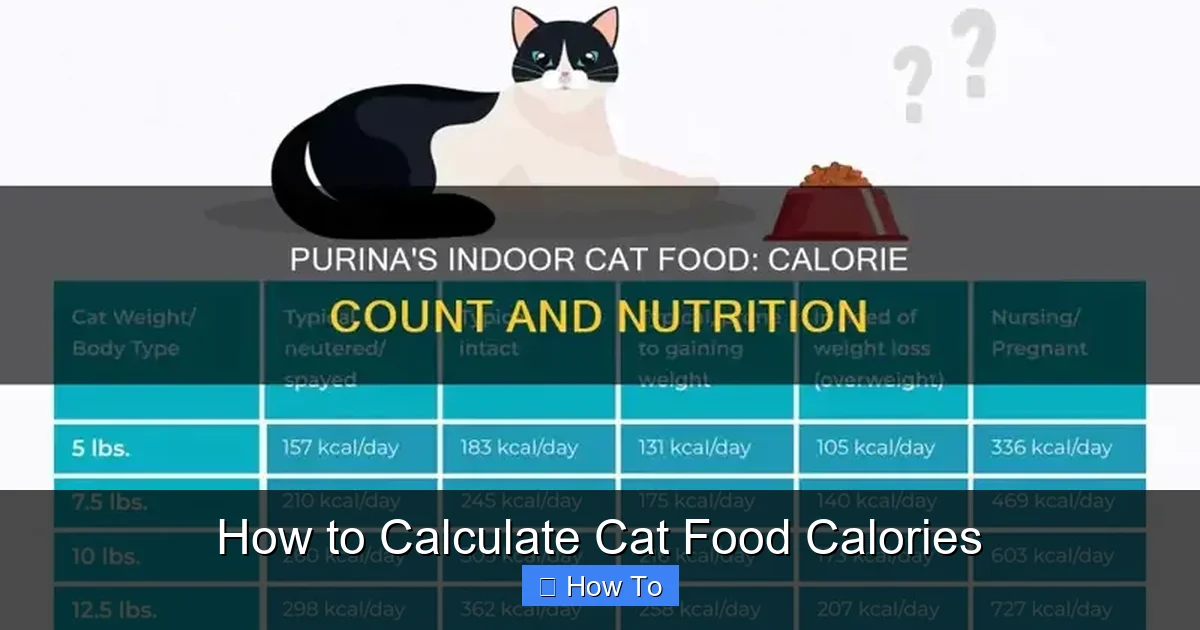
RER is just the baseline. Most cats need more calories than this because they’re not completely at rest all day. To get the Daily Energy Requirement (DER), multiply the RER by a factor based on your cat’s lifestyle:
| Life Stage / Condition | DER Multiplier |
|—————————–|—————-|
| Neutered adult cat | 1.2 |
| Intact adult cat | 1.4 |
| Indoor, sedentary cat | 1.0–1.2 |
| Active or outdoor cat | 1.4–1.6 |
| Kitten (under 1 year) | 2.0–2.5 |
| Pregnant/nursing cat | 2.0–3.0 |
| Senior cat (over 10 years) | 0.8–1.0 |
| Underweight cat (gaining) | 1.2–1.6 |
| Overweight cat (losing) | 0.8–1.0 |
Using our previous example (RER = 204), a neutered indoor cat would need:
204 × 1.2 = 245 calories per day
A kitten of the same weight might need:
204 × 2.2 = 449 calories per day
Tip: Use Online Calculators as a Backup
If math isn’t your strong suit, many veterinary websites offer free calorie calculators. Just input your cat’s weight, age, and activity level, and they’ll estimate daily needs. However, always double-check with your vet, especially for kittens, seniors, or cats with health issues.
Step 3: Match Calories to Food Type and Portion Size
Now that you know how many calories your cat needs, it’s time to figure out how much food to feed. This depends on whether you’re using dry food, wet food, or a combination.
Calculating Portions for Dry Food
Let’s say your cat needs 245 calories per day, and your dry food has 380 kcal per cup.
To find the right portion:
Daily portion (cups) = Daily calorie needs ÷ Calories per cup
245 ÷ 380 ≈ 0.64 cups
So, you should feed about ⅔ cup of dry food per day.
But remember: this is a total daily amount. Most cats do better with two smaller meals instead of one large one. So you might feed ⅓ cup in the morning and ⅓ cup at night.
Calculating Portions for Wet Food
If you’re feeding wet food with 180 kcal per can, and your cat needs 245 calories:
245 ÷ 180 ≈ 1.36 cans
That’s about 1 full can plus a little extra. You could feed one full can (180 kcal) and supplement with a small portion of dry food (about 65 kcal, or ~1/6 cup) to reach the total.
Mixing Wet and Dry Food
Many cat owners use a mix of wet and dry food for variety and hydration. Here’s how to balance the calories:
Suppose you want to feed half wet, half dry.
– Half of 245 = 122.5 kcal from each
For wet food: 122.5 ÷ 180 ≈ 0.68 cans (about ⅔ of a can)
For dry food: 122.5 ÷ 380 ≈ 0.32 cups (about ⅓ cup)
So, feed ⅔ can of wet food and ⅓ cup of dry food daily, split into two meals.
Tip: Adjust Gradually
When changing portions, do it gradually over 5–7 days to avoid digestive upset. Monitor your cat’s weight and energy levels, and adjust as needed.
Step 4: Monitor and Adjust Based on Weight and Health
Calculating cat food calories isn’t a one-time task. Your cat’s needs can change due to age, activity, health, or seasonal factors. That’s why regular monitoring is essential.
Weigh Your Cat Monthly
Use a pet scale or visit your vet for regular weigh-ins. A healthy adult cat should maintain a stable weight. If your cat is gaining or losing weight, adjust their calorie intake.
– Weight gain: Reduce calories by 10–15% and increase playtime.
– Weight loss: Increase calories slightly and check for underlying health issues.
Look for Physical and Behavioral Signs
Besides weight, watch for these signs:
– Healthy cat: Bright eyes, shiny coat, good energy, consistent litter box habits.
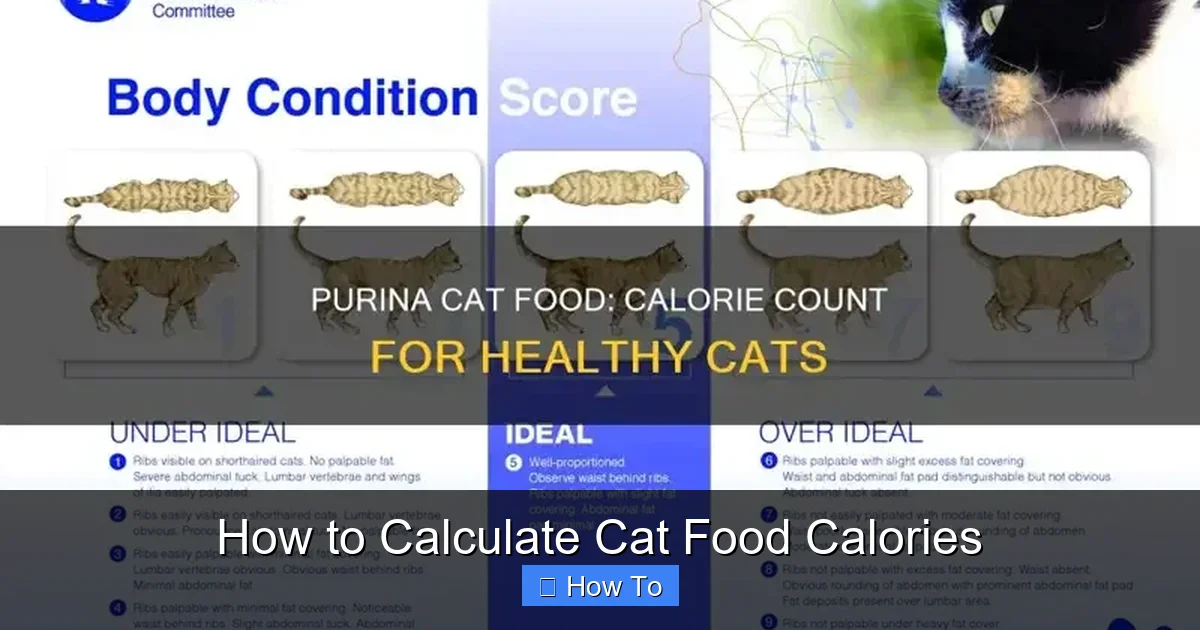
– Overfed cat: Difficulty feeling ribs, lethargy, excessive grooming, or digestive issues.
– Underfed cat: Visible ribs, dull coat, weakness, or increased vocalization for food.
Adjust for Life Changes
Major life events require calorie adjustments:
– Spaying/neutering: Reduces metabolism by 20–30%. Reduce calories shortly after surgery.
– Pregnancy/nursing: Increase calories significantly—up to 3x normal needs.
– Senior years: Metabolism slows. Reduce calories but maintain high protein.
– Illness or recovery: Work with your vet to determine special dietary needs.
Troubleshooting Common Feeding Problems
Even with careful calculation, you might run into issues. Here’s how to handle common problems.
Problem: My Cat Is Still Hungry After Meals
Possible causes:
– You’re underestimating calorie needs (e.g., missed activity level).
– The food is low in protein or high in fillers, so it doesn’t satisfy hunger.
– Your cat has a medical condition like hyperthyroidism.
Solution: Recheck your calculations. Consider switching to a higher-protein, lower-carb food. Consult your vet to rule out health issues.
Problem: My Cat Is Gaining Weight
Possible causes:
– Overfeeding, even by small amounts.
– Lack of exercise.
– Feeding high-calorie treats or human food.
Solution: Measure food precisely. Limit treats to no more than 10% of daily calories. Increase playtime with toys or laser pointers.
Problem: My Cat Won’t Eat the Calculated Amount
Some cats are picky or eat slowly.
Solution: Try warming wet food slightly to enhance smell. Offer smaller, more frequent meals. Avoid leaving food out all day (free-feeding), which can lead to overeating.
Problem: The Food Label Doesn’t List Calories
Some older or imported brands may not include calorie info.
Solution: Contact the manufacturer. Or, use an online pet food database like the USDA FoodData Central or PetFoodDB to estimate calories based on ingredients.
Special Considerations for Kittens, Seniors, and Cats with Health Issues
Not all cats fit the standard calorie model. Here’s how to adjust for special cases.
Kittens
Kittens grow rapidly and need 2–3 times the calories of an adult cat. Feed high-protein, high-fat kitten food and divide into 3–4 small meals per day.
Senior Cats
After age 10, cats often become less active. Reduce calories to prevent weight gain, but don’t cut protein—senior cats need it to maintain muscle mass.
Cats with Medical Conditions
– Diabetes: Requires consistent meal timing and often a high-fiber, low-carb diet.
– Kidney disease: May need reduced phosphorus and protein, but calorie needs stay high to prevent weight loss.
– Hyperthyroidism: Increases metabolism—these cats often need more calories despite weight loss.
Always work with your vet to tailor feeding plans for health conditions.
Conclusion
Learning how to calculate cat food calories empowers you to take control of your cat’s nutrition and overall health. By understanding calorie content on labels, using the RER formula, adjusting for life stage, and monitoring your cat’s response, you can ensure they’re getting the right amount of food—no more, no less.
Remember, every cat is unique. What works for one may not work for another. Stay observant, be flexible, and don’t hesitate to consult your veterinarian for personalized guidance.
With the right knowledge and a little math, you can help your feline friend live a longer, healthier, and happier life—one perfectly portioned meal at a time.