

Understanding how to calculate kcal in cat food helps you make informed feeding decisions and maintain your cat’s ideal weight. This guide breaks down the process simply, using labels, math, and practical tips so you can confidently determine your cat’s daily caloric needs.
Key Takeaways
- Kcal (kilocalories) measure energy in food: Knowing how many kcal your cat consumes daily is essential for proper nutrition and weight management.
- Check the pet food label: Most commercial cat foods list kcal per cup, per can, or per 100 grams—this is your starting point.
- Use the Atwater factors for homemade diets: If you prepare your cat’s meals, calculate kcal using protein, fat, and carbohydrate values (4, 9, and 4 kcal per gram respectively).
- Adjust for your cat’s lifestyle: Active cats need more kcal; sedentary or senior cats need fewer. Always tailor portions to individual needs.
- Monitor weight and body condition: Regular check-ins help you fine-tune kcal intake and prevent obesity or underfeeding.
- Consult your vet for accuracy: Especially for kittens, pregnant cats, or cats with health issues, professional guidance ensures safe calorie calculations.
- Use online calculators as a helper tool: They simplify math but should be cross-checked with label data and vet advice.
How to Calculate Kcal in Cat Food
Feeding your cat the right amount of food is about more than just filling the bowl. It’s about understanding how much energy—measured in kilocalories (kcal)—your cat is actually consuming. Whether you’re using commercial kibble, wet food, or preparing homemade meals, knowing how to calculate kcal in cat food ensures your feline friend stays healthy, active, and at an ideal weight.
In this guide, we’ll walk you through everything you need to know: from reading pet food labels and using simple math to adjusting for your cat’s age, size, and activity level. By the end, you’ll be confident in calculating your cat’s daily caloric needs and making smart feeding choices.
Why Kcal Matter for Cats
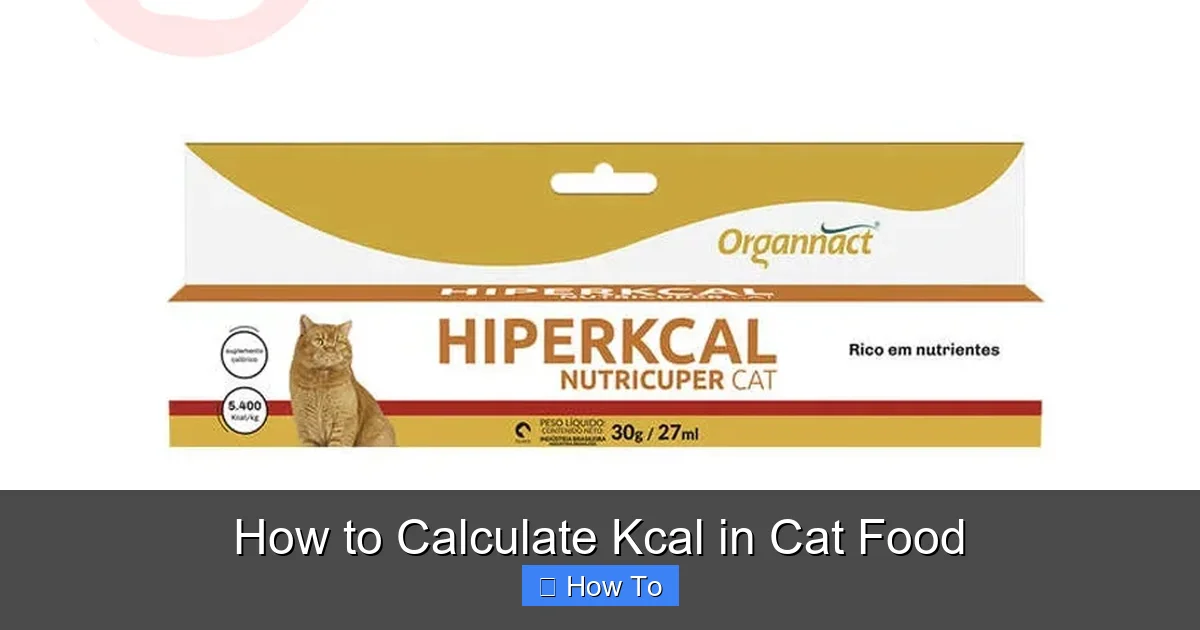
Visual guide about How to Calculate Kcal in Cat Food
Image source: cdn3.ecshop.com.br
Cats are obligate carnivores, meaning their bodies are designed to thrive on a diet rich in animal protein and fat. Unlike humans, they have a limited ability to regulate their metabolism based on food availability, so consistent, appropriate calorie intake is crucial.
Too few kcal can lead to weight loss, muscle wasting, and a weakened immune system. Too many kcal can cause obesity, diabetes, joint problems, and reduced lifespan. That’s why calculating kcal in cat food isn’t just a numbers game—it’s a vital part of responsible pet ownership.
The average adult cat needs between 200 and 300 kcal per day, but this varies widely. A small, indoor, senior cat might only need 150 kcal, while a large, active outdoor cat could require 400 or more. The key is personalization.
Step 1: Understand What Kcal Means
Before diving into calculations, let’s clarify what “kcal” means. In pet nutrition, kcal stands for kilocalorie—the same unit used in human food labels. One kcal equals 1,000 calories (small calories), but in everyday language, we just say “calories.” So when a cat food label says “350 kcal per cup,” it means that one cup of that food provides 350 kilocalories of energy.
This energy comes from three main macronutrients:
– Protein (4 kcal per gram)
– Fat (9 kcal per gram)
– Carbohydrates (4 kcal per gram)
Fiber and moisture don’t contribute significant calories, which is why wet food often has fewer kcal per gram than dry food—even if it looks like more.
Step 2: Read the Pet Food Label
The easiest way to calculate kcal in cat food is to check the label. Most reputable pet food brands provide calorie information in one of these formats:
– kcal per cup
– kcal per can
– kcal per 100 grams
– kcal per kilogram
Look for a section titled “Guaranteed Analysis” or “Nutritional Information.” Some labels also include a “Calorie Content” statement, which is required by the Association of American Feed Control Officials (AAFCO) for complete and balanced diets.
Example: Reading a Kibble Label
Let’s say your cat’s dry food label says:
> “Calorie Content: 380 kcal/cup (as fed)”
This means one standard measuring cup (usually about 8–10 ounces or 225–280 grams) contains 380 kcal. If your cat eats ½ cup per day, they’re consuming 190 kcal.
Example: Reading a Wet Food Label
For wet food, the label might say:
> “Calorie Content: 180 kcal per 5.5 oz can”
So one full can provides 180 kcal. If you feed half a can, that’s 90 kcal.
Tip: Use a Kitchen Scale
Cups can be misleading—especially with kibble, which can vary in density. A more accurate method is to weigh the food. If the label gives kcal per 100 grams, use a digital kitchen scale to measure portions precisely.
For example, if the food has 350 kcal per 100 grams, then 50 grams = 175 kcal.
Step 3: Calculate Kcal for Homemade or Raw Diets
If you prepare your cat’s meals at home, you’ll need to calculate kcal manually using the Atwater system. This method estimates energy based on macronutrient content.
Here’s how it works:
– Multiply grams of protein by 4
– Multiply grams of fat by 9
– Multiply grams of carbohydrates by 4
– Add them together for total kcal
Step-by-Step Example
Let’s say you’re making a batch of chicken-and-liver cat food with the following per serving:
– Protein: 25 grams
– Fat: 10 grams
– Carbohydrates: 2 grams
Calculation:
– Protein: 25 g × 4 = 100 kcal
– Fat: 10 g × 9 = 90 kcal
– Carbs: 2 g × 4 = 8 kcal
– Total = 100 + 90 + 8 = 198 kcal per serving
This serving provides 198 kcal—perfect for a moderately active adult cat.
Tip: Use a Nutrition Database
To find the protein, fat, and carb content of ingredients, use reliable sources like:
– USDA FoodData Central
– Pet nutrition software (e.g., BalanceIT, PetDietDesigner)
– Veterinary nutrition textbooks
Always consult a vet or veterinary nutritionist before switching to a homemade diet, as cats have unique nutritional needs (like taurine, arachidonic acid, and vitamin A).
Step 4: Determine Your Cat’s Daily Caloric Needs
Now that you know how to find kcal in food, the next step is figuring out how much your cat actually needs. This depends on several factors:
1. Weight
A cat’s base caloric need is calculated using Resting Energy Requirement (RER):
> RER (kcal/day) = 70 × (body weight in kg)^0.75
To convert pounds to kilograms: divide by 2.2
Example: A 10-pound cat = 4.5 kg
RER = 70 × (4.5)^0.75 ≈ 70 × 3.2 = 224 kcal/day
2. Life Stage and Activity Level
Multiply RER by a factor based on your cat’s lifestyle:
| Life Stage | Multiplier |
|————|————|
| Neutered adult | × 1.2 |
| Intact adult | × 1.4 |
| Inactive/indoor | × 1.0 |
| Active/outdoor | × 1.6 |
| Kitten (0–4 months) | × 2.5 |
| Kitten (4–12 months) | × 2.0 |
| Senior (11+ years) | × 0.8–1.0 |
| Weight loss | × 0.8 |
| Weight gain | × 1.2–1.4 |
Example: A 10-pound neutered indoor cat
RER = 224 kcal
Daily need = 224 × 1.2 = 269 kcal/day
3. Health Conditions
Cats with hyperthyroidism, diabetes, or kidney disease may have altered metabolic needs. Always work with your vet to adjust kcal intake safely.
Step 5: Match Food to Needs
Once you know your cat’s daily kcal requirement, match it to the food’s calorie density.
Example: Feeding Dry Food
Your cat needs 270 kcal/day. The kibble has 380 kcal per cup.
Calculation:
> 270 ÷ 380 = 0.71 cups per day
Split into two meals: ~0.35 cups per meal.
Example: Feeding Wet Food
Your cat needs 270 kcal/day. Each 5.5 oz can has 180 kcal.
Calculation:
> 270 ÷ 180 = 1.5 cans per day
Feed one full can and half of another, split into two meals.
Tip: Mix Wet and Dry
Many owners combine both. For example:
– Morning: ½ can wet food (90 kcal)
– Evening: ½ cup dry food (190 kcal)
– Total: 280 kcal (close to 270 target)
Adjust slightly to hit your goal.
Step 6: Monitor and Adjust
Calculating kcal is not a one-time task. Cats’ needs change with age, weight, and activity. Regular monitoring ensures you stay on track.
Weigh Your Cat Monthly
Use a pet scale or visit your vet. A healthy adult cat should maintain a stable weight. If your cat gains or loses more than 10% of body weight in a month, adjust kcal intake.
Assess Body Condition
Use the Body Condition Score (BCS) system:
– Ideal: Ribs felt with light fat cover, visible waist, abdominal tuck
– Overweight: Ribs hard to feel, no waist, rounded belly
– Underweight: Ribs, spine, and hips visible, no fat cover
If your cat is overweight, reduce kcal by 10–20%. If underweight, increase slightly and consult your vet.
Track Food Intake
Keep a simple log:
– Date
– Amount fed (cups, cans, grams)
– Treats given (include their kcal!)
– Weight notes
This helps identify patterns and make precise adjustments.
Troubleshooting Common Issues
Problem: Cat is Still Hungry After Meals
Possible causes:
– Underfeeding: Recheck your kcal calculation. Did you use the right multiplier?
– High-fiber food: Fiber adds bulk but not calories. Switch to a higher-fat, lower-fiber formula.
– Medical issue: Hyperthyroidism or diabetes can increase appetite. See your vet.
Problem: Cat is Gaining Weight
Solutions:
– Reduce portion size by 10%
– Switch to a weight-management formula (lower kcal per cup)
– Increase playtime to boost activity
– Limit treats to less than 10% of daily kcal
Problem: Food Label Lacks Kcal Info
Not all brands list calories clearly. If missing:
– Check the manufacturer’s website
– Contact customer service
– Use an online pet food database (e.g., PetFoodDB, DogFoodAdvisor—filter for cats)
– Avoid feeding unverified diets long-term
Problem: Homemade Diet Isn’t Balanced
Even if kcal are correct, homemade meals can lack essential nutrients. Signs include dull coat, lethargy, or digestive issues. Always:
– Use a vet-approved recipe
– Add supplements (e.g., taurine, omega-3s)
– Schedule regular blood work
Using Online Calculators and Apps
Several tools can simplify kcal calculations:
– Pet calorie calculators (e.g., from VCA Hospitals, PetMD)
– Nutrition apps (e.g., Cronometer, BalanceIT)
– Vet clinic feeding guides
These tools ask for weight, age, activity level, and food type, then suggest daily kcal and portion sizes.
Tip: Double-Check Results
Online calculators are helpful but not infallible. Always cross-reference with label data and vet advice. For example, a calculator might suggest 300 kcal for your cat, but if the food is very energy-dense, you could overfeed.
Special Considerations
Kittens
Growing kittens need 2–3 times the kcal of adult cats. Feed high-calorie, nutrient-dense food and divide into 3–4 small meals daily.
Pregnant or Nursing Cats
Energy needs can double during lactation. Feed free-choice high-quality kibble or increase wet food portions. Monitor weight closely.
Senior Cats
Metabolism slows with age. Reduce kcal slightly, but ensure protein remains high to preserve muscle mass. Choose easily digestible foods.
Indoor vs. Outdoor Cats
Indoor cats are less active and prone to weight gain. Use puzzle feeders and measure portions carefully. Outdoor cats may need more food—especially in cold weather.
Final Tips for Success
– Be consistent: Feed at the same times daily.
– Measure accurately: Use scales, not scoops.
– Limit treats: They should be less than 10% of daily kcal.
– Hydrate: Wet food helps with water intake—important for kidney health.
– Stay informed: Recheck labels if the formula changes.
Conclusion
Calculating kcal in cat food doesn’t have to be complicated. By reading labels, using simple math, and understanding your cat’s individual needs, you can ensure they’re getting the right amount of energy every day. Whether you’re feeding kibble, cans, or homemade meals, accurate kcal calculation supports long-term health, vitality, and a happy life for your feline companion.
Remember, every cat is unique. What works for one may not work for another. When in doubt, consult your veterinarian. With the right knowledge and a little attention, you’ll master the art of feeding your cat—one kcal at a time.