

Keeping your cat’s feeding area clean is essential for their health and your home’s hygiene. This guide walks you through easy, step-by-step methods to clean cat food mats—whether they’re silicone, fabric, rubber, or plastic—using household supplies. You’ll also learn how often to clean, prevent stains, and choose the best mat for easy maintenance.
Key Takeaways
- Clean cat food mats daily: Wipe down after each meal to prevent bacteria, odors, and pests.
- Use the right cleaning method for your mat material: Silicone, rubber, fabric, and plastic each require different care.
- Soak stubborn stains weekly: A baking soda and vinegar soak lifts dried food and grease.
- Avoid harsh chemicals: Stick to pet-safe cleaners like mild dish soap or white vinegar.
- Air dry completely: Prevent mold and mildew by letting mats dry fully before reuse.
- Replace worn or damaged mats: Cracks and tears trap bacteria and are hard to clean properly.
- Choose easy-to-clean mats: Opt for non-porous, dishwasher-safe materials for hassle-free maintenance.
How to Clean Cat Food Mats: A Complete Guide
Keeping your cat’s feeding area clean isn’t just about appearances—it’s about health. Food residue, water spills, and saliva can quickly turn your cat’s food mat into a breeding ground for bacteria, mold, and odors. Over time, this can lead to digestive issues, skin irritation, or even attract pests like ants and fruit flies. The good news? Cleaning your cat food mat is simple, fast, and can be done with items you already have at home.
In this guide, you’ll learn how to clean cat food mats of all types—silicone, rubber, fabric, plastic, and more—using safe, effective methods. Whether you’re dealing with a quick daily wipe-down or a deep clean for stubborn stains, we’ve got you covered. You’ll also discover tips for preventing messes, choosing the best mat for easy cleaning, and maintaining a hygienic feeding station your cat will love.
Let’s dive in and make mealtime cleaner, safer, and more enjoyable for both you and your feline friend.
Why Cleaning Cat Food Mats Matters
You might think a little kibble or water on the mat isn’t a big deal—but it is. Cats are naturally clean animals, and they’re sensitive to smells and textures. A dirty food mat can discourage them from eating or drinking, leading to dehydration or weight loss. Worse, bacteria like Salmonella and E. coli can grow on food particles, especially in warm, moist environments.
Beyond health risks, a grimy mat can stain your floors, attract insects, and create unpleasant odors that linger in your home. Regular cleaning not only protects your cat but also keeps your kitchen or feeding area fresh and tidy.
Think of your cat’s food mat like a placemat for a toddler—messy, yes, but needs frequent attention. The more often you clean it, the easier it is to maintain. And with the right techniques, it takes just a few minutes a day.
How Often Should You Clean a Cat Food Mat?
The frequency of cleaning depends on your cat’s eating habits, the type of food they eat, and the material of the mat. But here’s a simple rule: clean it daily.
After every meal, take a quick moment to wipe off any leftover food, water spills, or saliva. This prevents buildup and makes deep cleaning easier. For cats who eat wet food, cleaning after each meal is especially important—wet food spoils quickly and can grow bacteria within hours.
In addition to daily wipe-downs, do a deeper clean once a week. This involves soaking the mat, scrubbing away stains, and disinfecting it thoroughly. If your cat is messy, has long fur that sheds onto the mat, or shares the mat with another pet, you may need to clean it more often—even every other day.
Signs it’s time to clean:
- Visible food crumbs or wet patches
- Sticky or slimy texture
- Unpleasant odor
- Hair or debris stuck in the mat
- Water pooling instead of draining
Don’t wait for these signs—make cleaning part of your routine.
What You’ll Need to Clean a Cat Food Mat
Before you start, gather these supplies. Most are likely already in your kitchen or bathroom:
- Mild dish soap: Gentle on surfaces and safe for pets.
- White vinegar: Natural disinfectant that cuts through grease and odors.
- Baking soda: Great for scrubbing and deodorizing.
- Soft sponge or brush: Avoid abrasive scrubbers that can scratch the mat.
- Microfiber cloth: Perfect for quick wipe-downs.
- Spray bottle: For mixing cleaning solutions.
- Warm water: Helps dissolve food particles and grease.
- Towel or drying rack: For air drying.
- Gloves (optional): Protect your hands, especially if you have sensitive skin.
Avoid bleach, ammonia, or strong chemical cleaners. These can leave toxic residues that harm your cat if ingested. Stick to pet-safe options.
Step-by-Step Guide: How to Clean Different Types of Cat Food Mats
Not all cat food mats are created equal. The material determines how you clean it. Below, we’ll walk you through the best methods for the most common types.
Silicone Cat Food Mats
Silicone mats are popular because they’re flexible, non-slip, and easy to clean. They’re also dishwasher-safe, which makes maintenance a breeze.
Daily Cleaning:
- Rinse the mat under warm water to remove loose food.
- Use a damp microfiber cloth with a drop of dish soap to wipe the surface.
- Rinse again and shake off excess water.
- Let it air dry upside down on a towel or rack.
Weekly Deep Clean:
- Fill a sink or basin with warm water and add 1 tablespoon of dish soap.
- Submerge the mat and let it soak for 10–15 minutes.
- Use a soft sponge to gently scrub any stuck-on food or stains.
- Rinse thoroughly.
- For extra sanitizing, spray with a 50/50 mix of water and white vinegar. Let sit for 5 minutes, then rinse.
- Air dry completely before placing back under the bowls.
Pro Tip: If your silicone mat has a funky smell, sprinkle baking soda on it, spray with water to make a paste, scrub gently, then rinse. Baking soda neutralizes odors naturally.
Rubber Cat Food Mats
Rubber mats are durable and water-resistant, but they can absorb odors over time if not cleaned properly.
Daily Cleaning:
- Wipe with a damp cloth and mild soap after each meal.
- Rinse and pat dry with a towel.
Weekly Deep Clean:
- Soak the mat in a mixture of warm water and 1/4 cup white vinegar for 20 minutes.
- Scrub with a soft brush, focusing on grooves or textured areas where food hides.
- Rinse well.
- Spray with a vinegar-water solution (1:1) to disinfect.
- Air dry completely—rubber can trap moisture, which leads to mold.
Caution: Avoid soaking rubber mats for too long, as prolonged exposure to water can cause them to degrade or warp.
Plastic Cat Food Mats
Plastic mats are affordable and lightweight, but they can scratch easily, creating hiding spots for bacteria.
Daily Cleaning:
- Wipe with a soapy cloth or sponge.
- Rinse and dry with a towel.
Weekly Deep Clean:
- Wash in the dishwasher (top rack) if labeled dishwasher-safe.
- If hand-washing, soak in warm, soapy water for 10 minutes.
- Use a soft brush to clean scratches or textured surfaces.
- Rinse and sanitize with a vinegar spray.
- Air dry upside down.
Note: If your plastic mat is heavily scratched or cloudy, it’s time to replace it. Bacteria can grow in micro-scratches that are hard to clean.
Fabric or Cloth Cat Food Mats
Fabric mats are absorbent and great for catching spills, but they’re harder to clean and can harbor bacteria if not cared for properly.
Daily Cleaning:
- Shake out crumbs over the trash.
- Spot-clean stains with a damp cloth and mild soap.
- Let air dry completely—never put a damp fabric mat back under bowls.
Weekly Deep Clean:
- Check the care label. If machine-washable, wash on a gentle cycle with cold water and mild detergent.
- Add 1/2 cup white vinegar to the rinse cycle to remove odors and soften the fabric.
- Air dry—avoid the dryer, as heat can shrink or damage the material.
- If hand-washing, soak in a basin with warm water, soap, and vinegar for 30 minutes. Scrub gently, rinse, and air dry.
Pro Tip: Use a fabric mat only if it’s labeled as water-resistant or has a waterproof backing. Otherwise, moisture can seep through and damage your floor.
Multi-Material or Hybrid Mats
Some mats combine materials—like a silicone base with a fabric top. Clean each part according to its material.
Example: A mat with a silicone bottom and removable fabric liner.
- Remove the fabric liner and wash separately (machine or hand wash).
- Clean the silicone base as described above.
- Let both parts dry completely before reassembling.
Always check the manufacturer’s instructions for hybrid mats.
DIY Cleaning Solutions for Cat Food Mats
You don’t need fancy cleaners to get great results. These homemade mixes are safe, effective, and eco-friendly.
All-Purpose Cleaner
- 1 cup warm water
- 1 tablespoon mild dish soap
- 1 tablespoon white vinegar
Mix in a spray bottle. Shake well and spray on the mat. Wipe with a sponge, then rinse.
Deodorizing Paste
- 3 parts baking soda
- 1 part water
Stir into a thick paste. Apply to smelly or stained areas, let sit for 10–15 minutes, then scrub and rinse.
Disinfecting Spray
- 1 cup water
- 1 cup white vinegar
- 10 drops of pet-safe essential oil (optional, like lavender or lemon—avoid tea tree oil, which is toxic to cats)
Spray on the mat, let sit for 5 minutes, then wipe or rinse. Vinegar kills bacteria and neutralizes odors.
Tips for Preventing Mess and Stains
Cleaning is easier when you prevent messes in the first place. Try these smart strategies:
- Use elevated bowls: Raised feeders reduce spills and keep food off the mat.
- Choose slow-feeder bowls: These discourage fast eating and reduce splashing.
- Place the mat on a waterproof surface: Protect your floor from water damage.
- Trim your cat’s whiskers (carefully): Long whiskers can cause cats to eat messily. Consult your vet before trimming.
- Use a mat with raised edges: Contains spills and prevents water from pooling.
- Rotate between two mats: While one is drying, use the other. This ensures you always have a clean option.
Troubleshooting Common Cleaning Problems
Even with regular cleaning, you might run into issues. Here’s how to fix them.
Problem: Mat Still Smells After Cleaning
This usually means bacteria or mold is trapped in the material. Try a longer soak in vinegar water (1:1 ratio) for 30–60 minutes. For fabric mats, add baking soda to the wash. If the smell persists, the mat may be too worn and needs replacing.
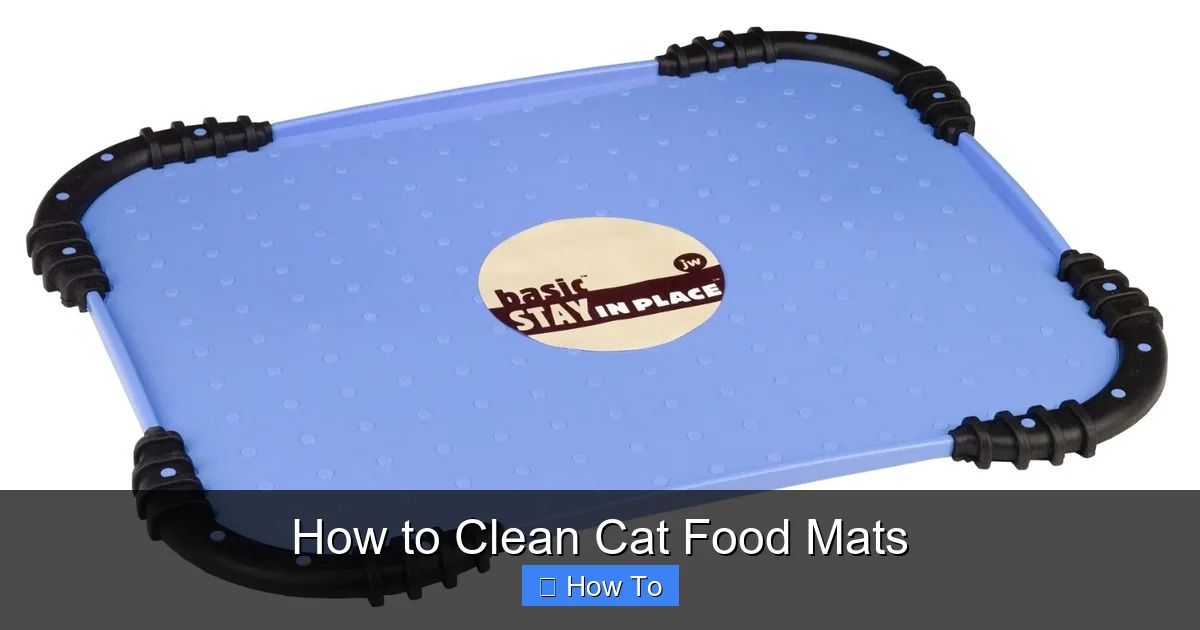
Visual guide about How to Clean Cat Food Mats
Image source: catfooddispensersreviews.com
Problem: Stains Won’t Come Out
For dried food or grease stains, make a paste of baking soda and water. Apply, let sit for 15 minutes, then scrub with a soft brush. Rinse thoroughly. Avoid harsh scrubbing on silicone or plastic to prevent scratches.
Problem: Mat Is Slippery When Wet
This is common with silicone or plastic mats. Place a non-slip rug pad or towel underneath to keep it in place. Or choose a mat with a textured or grippy bottom.
Problem: Water Pools on the Mat
If water doesn’t drain, the mat may be too flat or the surface underneath is uneven. Use a mat with drainage holes or raised edges. Alternatively, tilt the mat slightly after cleaning to let water run off.
Problem: Mat Is Cracking or Peeling
This is a sign of wear and tear. Cracks trap bacteria and are hard to clean. Replace the mat immediately to protect your cat’s health.
When to Replace Your Cat Food Mat
No mat lasts forever. Even with perfect care, materials break down over time. Replace your cat food mat if you notice:
- Cracks, tears, or peeling
- Permanent stains or odors
- Loss of non-slip grip
- Warping or curling edges
- Discoloration that won’t come clean
Most silicone and rubber mats last 1–2 years with regular use. Fabric mats may need replacing every 6–12 months, depending on washing frequency.
Investing in a high-quality mat pays off in the long run. Look for dishwasher-safe, non-porous, and easy-to-clean materials.
Choosing the Best Cat Food Mat for Easy Cleaning
Not all mats are created equal. When shopping, consider these features:
- Material: Silicone and rubber are easiest to clean. Avoid porous materials like untreated fabric.
- Dishwasher-safe: Saves time and ensures thorough cleaning.
- Non-slip base: Keeps the mat in place during meals.
- Raised edges: Contains spills and prevents water from reaching the floor.
- Size: Should be large enough to catch spills but fit comfortably in your space.
- Easy to wipe: Smooth surfaces clean faster than textured ones.
Popular brands like PetFusion, Uxcell, and AmazonBasics offer durable, easy-to-clean options. Read reviews to see how they hold up over time.
Final Thoughts: Make Cleaning a Habit
Cleaning your cat’s food mat doesn’t have to be a chore. With the right tools and routine, it takes just a few minutes a day. By keeping the feeding area clean, you’re not only protecting your cat’s health but also making your home more pleasant.
Remember: clean daily, deep clean weekly, and replace when needed. Use pet-safe cleaners, avoid harsh chemicals, and always let the mat dry completely. Your cat—and your nose—will thank you.
A clean mat means a happy cat, a healthier home, and one less thing to worry about. So grab a sponge, mix up a simple cleaner, and give your cat the clean eating space they deserve.