

Discover practical, bird-friendly strategies to protect your cat’s meals from feathered freeloaders. From smart feeders to habitat tweaks, this guide offers safe, effective solutions that keep birds away without harm—so your kitty eats in peace.
Key Takeaways
- Use enclosed or timed feeders: Automatic feeders with motion sensors or timers prevent birds from accessing food when your cat isn’t eating.
- Feed indoors whenever possible: Keeping meals inside eliminates bird access entirely and reduces outdoor feeding risks.
- Choose elevated or covered feeding stations: Raised platforms or domed feeders make it harder for ground-foraging birds to reach the food.
- Remove nearby perches and water sources: Birds are drawn to food, water, and shelter—eliminating these reduces their interest in your yard.
- Use visual and auditory deterrents wisely: Reflective tape, decoys, or gentle sound devices can discourage birds without harming them.
- Maintain consistent feeding schedules: Feeding at the same time daily helps your cat eat quickly, leaving less time for birds to discover the meal.
- Clean up spills immediately: Leftover kibble or crumbs attract birds—regular cleanup breaks the food trail.
How to Deter Birds from Eating Cat Food
If you’ve ever stepped outside to find a flock of sparrows, pigeons, or even bold crows helping themselves to your cat’s dinner, you’re not alone. In 2026, more pet owners are feeding their cats outdoors—whether on patios, balconies, or in gardens—for convenience, fresh air, or behavioral reasons. But with outdoor feeding comes an unexpected guest list: birds. These clever, opportunistic creatures quickly learn where easy meals are served, and once they do, they’ll return daily.
The good news? You don’t have to choose between your cat’s comfort and a bird-free feeding zone. With a few smart strategies, you can protect your cat’s food from feathered intruders—humanely and effectively. This guide walks you through proven methods to deter birds from eating cat food, from high-tech solutions to simple behavioral changes. Whether you’re dealing with a single curious robin or a full-blown avian buffet, these tips will help you reclaim mealtime for your feline friend.
You’ll learn how to use smart feeders, modify your feeding setup, adjust your environment, and even tweak your routine to keep birds at bay. All methods are safe for birds, cats, and the planet—because in 2026, we know that coexistence means finding balance, not conflict.
Why Birds Are Drawn to Cat Food
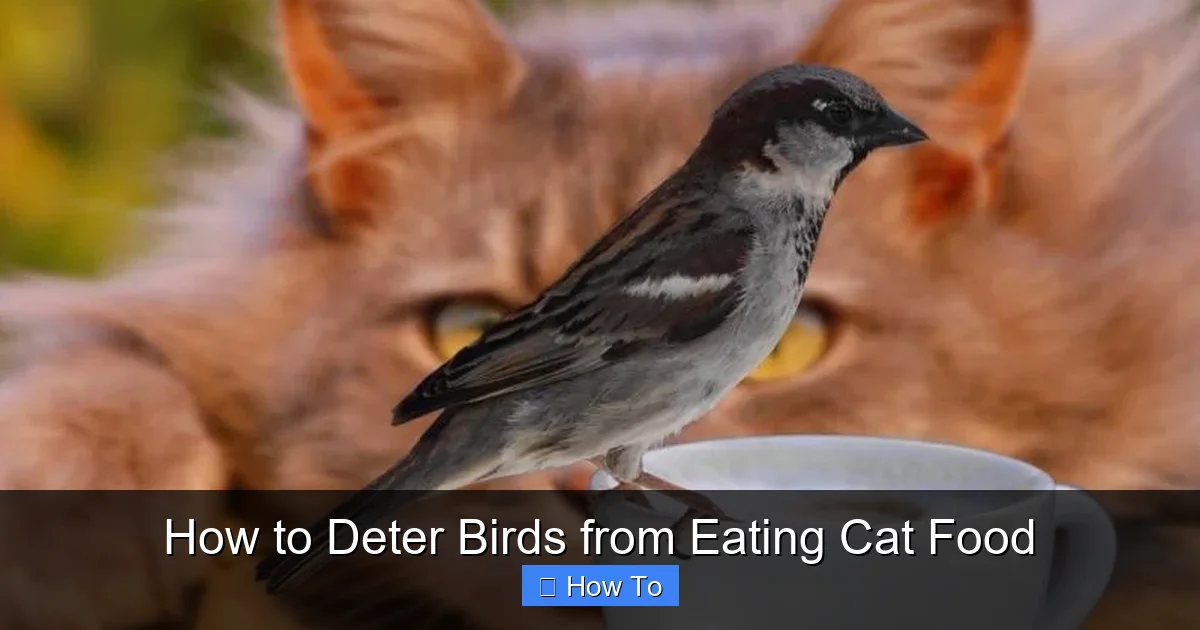
Visual guide about How to Deter Birds from Eating Cat Food
Image source: petcosset.com
Before we dive into solutions, it helps to understand why birds are so interested in cat food in the first place. Cat food—especially dry kibble—is high in protein and fat, making it an attractive energy source for many bird species. Unlike dog food, which is often grain-heavy, cat food is formulated for obligate carnivores, meaning it’s packed with meat-based nutrients that appeal to birds like crows, jays, starlings, and even backyard songbirds.
Birds are also highly intelligent and observant. Once one bird discovers a reliable food source, it will return—and often bring friends. Social species like pigeons and sparrows learn quickly from each other, turning your cat’s feeding spot into a neighborhood hotspot. Add in the fact that many people feed their cats at the same time each day, and you’ve created a predictable buffet that birds can’t resist.
Another factor? Outdoor feeding often happens in open areas with easy access. If your cat eats on a flat plate or bowl on the ground, birds can swoop in without much effort. And if there’s spilled food or crumbs left behind, it only reinforces the idea that this is a great place to eat.
Understanding these behaviors is the first step to solving the problem. Birds aren’t being malicious—they’re just following their instincts. The key is to make your cat’s food less accessible, less visible, and less appealing—without disrupting your cat’s routine or harming the birds.
Step 1: Feed Indoors Whenever Possible
The most effective way to prevent birds from eating cat food is simple: don’t leave it outside. Feeding your cat indoors eliminates the problem at its source. If birds can’t reach the food, they can’t eat it.
Why indoor feeding works: Indoor feeding removes the food from the birds’ environment entirely. There’s no scent trail, no visual cue, and no opportunity for discovery. Even the smartest birds can’t find food that isn’t there.
Tips for successful indoor feeding:
- Choose a quiet, low-traffic area: Cats prefer to eat in calm spaces. A corner of the kitchen or a dedicated feeding nook works well.
- Use a non-slip mat: This keeps bowls stable and reduces spills, which can attract insects or other pests.
- Stick to a routine: Feed at the same times each day so your cat knows when to expect food.
- Monitor your cat’s behavior: Some cats enjoy outdoor time and may resist indoor feeding. Gradually transition by starting with one meal inside and increasing over time.
If your cat is used to eating outside, don’t panic. Many cats adapt quickly to indoor feeding, especially if it’s paired with positive reinforcement like treats or playtime. And if your cat spends time outdoors, consider feeding them right before they go out—so they’re less likely to be hungry and tempted by bird leftovers.
Step 2: Use a Smart or Timed Feeder
If indoor feeding isn’t an option, a smart feeder is your next best bet. These devices are designed to dispense food at specific times or under certain conditions, reducing the window of opportunity for birds.
How smart feeders help: Most smart feeders open only when your cat approaches or at preset times. This means food isn’t left out all day, giving birds less time to discover and raid it.
Types of smart feeders to consider:
- RFID or collar-activated feeders: These open only when your cat wears a special collar tag. Birds can’t trigger them, so food stays secure.
- Timed feeders: Program these to release food at specific times, like early morning or evening when birds are less active.
- Motion-sensor feeders: Some models detect your cat’s presence and open briefly, then close automatically.
Top picks for 2026: Brands like PetSafe, SureFeed, and Cat Mate offer reliable smart feeders with app connectivity, portion control, and battery backups. Look for models with weather-resistant designs if using outdoors.
Pro tip: Place the feeder in a sheltered spot, like under a porch or awning, to protect it from rain and wind. This also makes it less visible to birds scanning from above.
Step 3: Choose the Right Feeding Station
If you must feed outdoors, the design of your feeding station can make a big difference. Birds prefer easy access, so making it harder for them to reach the food is key.
Elevated feeders: Raise the food off the ground using a platform, stool, or wall-mounted shelf. Most birds that raid cat food are ground foragers, so a raised station puts the food out of their comfort zone.
Covered or domed feeders: These have a roof or dome that shields the food from above. Some models even have side panels or mesh that allow cats in but block birds. Look for feeders with a wide base for stability and a low entrance for your cat.
Enclosed feeding tents: These are small, tent-like structures with openings just big enough for your cat. They create a private dining space and block birds from entering. Some even have weighted bottoms to prevent tipping.
DIY option: You can make a simple covered feeder using a plastic storage bin with a cutout entrance. Place the cat food bowl inside and weigh down the lid with rocks or sand.
Placement matters: Position the feeder away from trees, fences, or structures birds can use as perches. Aim for an open area with good visibility so your cat feels safe—and birds feel exposed.
Step 4: Modify the Environment
Birds don’t just come for the food—they stay for the habitat. By making your yard less bird-friendly, you reduce the chances of them sticking around.
Remove nearby perches: Trim tree branches, remove garden stakes, or take down unused clotheslines near the feeding area. Birds use these as lookout points before swooping in.
Eliminate water sources: Birdbaths, puddles, or leaky hoses attract birds. If you have a birdbath, consider moving it to a different part of the yard—far from the feeding zone.
Reduce shelter options: Dense shrubs, tall grass, or stacked firewood provide hiding spots. Keep the area around the feeder clear and well-maintained.
Use visual deterrents: Birds are wary of movement and reflections. Hang reflective tape, old CDs, or wind spinners near the feeding area. These create flashes of light that startle birds without harming them.
Try decoys: Place a plastic owl, hawk, or snake near the feeder. Move it every few days so birds don’t get used to it. For best results, choose decoys with realistic eyes and textures.
Sound deterrents: Ultrasonic devices or gentle wind chimes can discourage birds. Avoid loud noises, which may stress your cat or neighbors. In 2026, many eco-friendly sound devices use natural frequencies that birds find unsettling but humans can’t hear.
Step 5: Adjust Your Feeding Routine
Timing and consistency play a big role in bird behavior. Birds learn patterns quickly, so changing your routine can break the cycle.
Feed during low-bird activity: Early morning or late evening are often quieter times. Many birds are less active at dawn and dusk, giving your cat a chance to eat in peace.
Shorten feeding windows: Instead of leaving food out all day, feed your cat and remove the bowl after 15–20 minutes. This reduces the time birds have to discover it.
Use portion control: Overfeeding leads to leftovers, which attract birds. Measure your cat’s meals and avoid free-feeding outdoors.
Clean up immediately: Sweep up any spilled kibble or crumbs right after your cat eats. A clean area sends the message that there’s no food to be found.
Rotate feeding spots: If you always feed in the same place, birds will learn the location. Try moving the feeder every few days to confuse them.
Step 6: Use Natural Deterrents
If you prefer chemical-free solutions, natural deterrents can be surprisingly effective.
Spice it up (safely): Some pet owners sprinkle a tiny amount of cayenne pepper or chili powder around the feeding area. Birds hate the smell and taste, but it won’t harm them—or your cat, as long as it’s not on the food itself. Reapply after rain.
Plant bird-repellent herbs: Grow mint, lavender, or marigolds near the feeding zone. These plants have strong scents that birds tend to avoid.
Use citrus peels: Place orange or lemon peels around the feeder. The scent is unpleasant to many birds but safe for cats.
Water spray bottles: Keep a spray bottle handy. If you see birds approaching, a quick mist can scare them off without harm. Just don’t aim at the birds—spray near them to create a deterrent effect.
Step 7: Monitor and Adapt
No solution works perfectly forever. Birds are adaptable, so you may need to tweak your approach over time.
Observe bird behavior: Note which species are visiting and when. This helps you choose the right deterrents—some birds respond better to visual cues, others to sound.
Rotate deterrents: If birds get used to a decoy or sound, switch it up. Use reflective tape one week, a decoy the next, then a sound device.
Involve your community: If neighbors are also feeding pets outdoors, talk to them. A coordinated effort—like feeding at different times or using enclosed feeders—can reduce overall bird traffic.
Be patient: It may take a few weeks for birds to lose interest. Consistency is key.
Troubleshooting Common Issues
Even with the best plans, challenges can arise. Here’s how to handle them:
Problem: Birds keep returning despite deterrents.
Solution: Combine multiple methods. Use a covered feeder with reflective tape and a timed schedule. Birds are less likely to persist if the food is hard to access and unpredictable.
Problem: Your cat refuses to eat from a new feeder.
Solution: Introduce the new feeder gradually. Start by placing it next to the old one, then slowly move the food into the new dish. Offer treats nearby to create positive associations.
Problem: Deterrents scare your cat.
Solution: Choose low-impact options like covered feeders or elevated platforms. Avoid loud noises or sudden movements near your cat’s eating area.
Problem: Other wildlife is attracted.
Solution: Raccoons, squirrels, and stray cats may also be drawn to outdoor food. Use secure, animal-proof feeders and feed only during daylight hours.
Conclusion
Keeping birds away from your cat’s food doesn’t have to be a battle. With a mix of smart tools, environmental tweaks, and consistent habits, you can protect your cat’s meals while respecting the wildlife around you. In 2026, we have more options than ever—from app-controlled feeders to eco-friendly deterrents—that make coexistence possible.
Start with the simplest solution: feeding indoors. If that’s not feasible, invest in a smart or covered feeder, adjust your routine, and make your yard less inviting to birds. Remember, the goal isn’t to harm birds but to manage access. With patience and persistence, you’ll find a system that works for both your cat and your conscience.
Your cat deserves to eat in peace—and so do the birds. By taking thoughtful, humane steps, you can enjoy a peaceful outdoor space where everyone knows their place.