
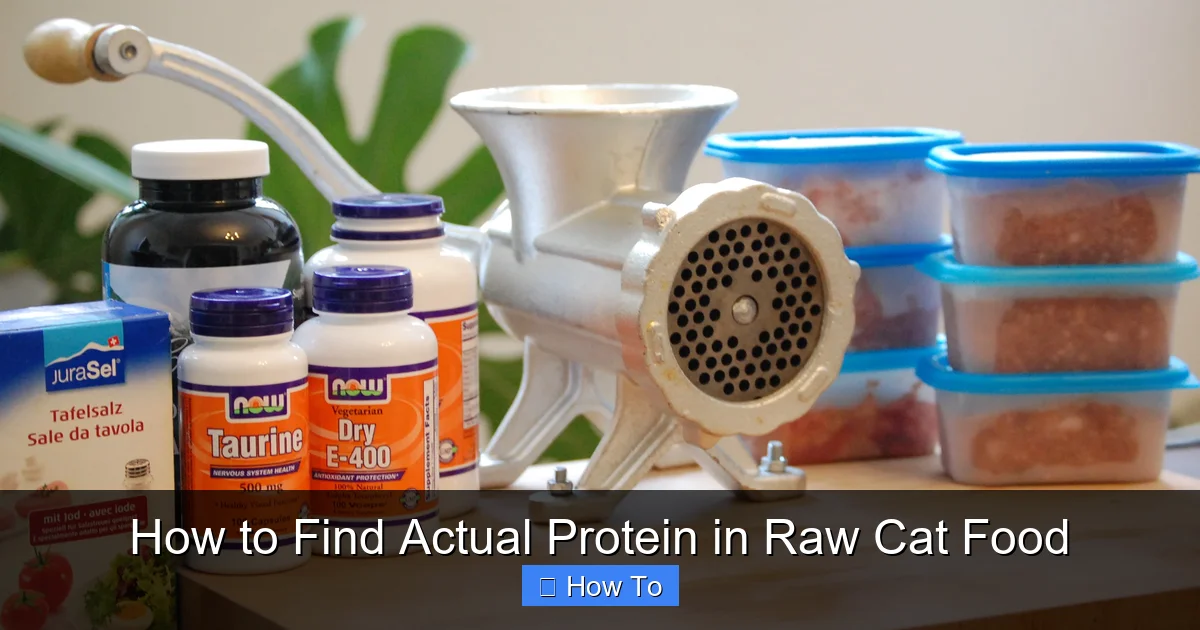
Finding real protein in raw cat food isn’t as simple as reading the front label. This guide teaches you how to decode ingredient lists, understand guaranteed analysis, and spot hidden fillers so you can confidently choose nutrient-rich, species-appropriate meals for your feline in 2026.
Key Takeaways
- Look beyond the front label: Marketing claims like “high protein” can be misleading—always check the ingredient list and guaranteed analysis.
- Prioritize named animal proteins first: Ingredients like “chicken thigh,” “salmon fillet,” or “turkey liver” indicate real, identifiable meat sources.
- Avoid vague terms like “meat meal” or “animal by-products”: These often include low-quality or unspecified parts that dilute protein quality.
- Understand dry matter basis (DMB): Comparing protein on an as-fed basis is inaccurate—convert to DMB for a true comparison between brands.
- Check for moisture content: Raw foods are typically 60–75% water, which affects how you interpret protein percentages.
- Use third-party testing and certifications: Look for AAFCO statements, FDA compliance, and brands that publish lab results for transparency.
- Consult your vet before switching: Especially if your cat has kidney issues or other health conditions that require tailored nutrition.
How to Find Actual Protein in Raw Cat Food: A 2026 Guide for Savvy Cat Parents
If you’re feeding your cat raw food in 2026, you’re already ahead of the curve. Raw diets are gaining popularity for their potential benefits—better digestion, shinier coats, healthier teeth, and more energy. But here’s the catch: not all raw cat food is created equal. With so many brands flooding the market, it’s easy to fall for flashy packaging and buzzwords like “premium,” “natural,” or “high-protein”—without knowing if your cat is actually getting the nutrition they need.
The truth? Finding actual protein in raw cat food requires more than just glancing at the front of the bag or tub. You need to become a label detective, understand how moisture skews numbers, and know which ingredients truly deliver bioavailable amino acids your carnivorous kitty thrives on.
This step-by-step guide will walk you through everything you need to know in 2026 to confidently evaluate raw cat food and ensure your feline is getting real, high-quality protein—not fillers, by-products, or marketing fluff.
Step 1: Understand Why Protein Matters for Cats
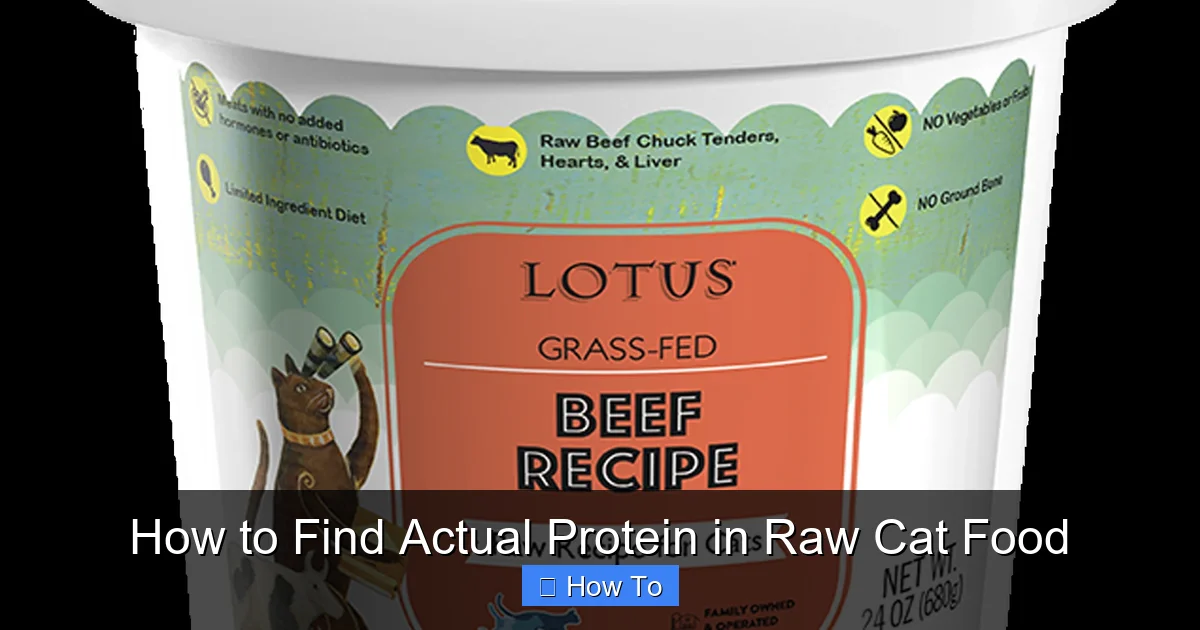
Visual guide about How to Find Actual Protein in Raw Cat Food
Image source: cdn.shoplightspeed.com
Before diving into labels, it’s important to know why protein is so critical for cats. Unlike dogs or humans, cats are obligate carnivores. That means their bodies are built to run on animal-based protein and fat. They can’t efficiently convert plant-based nutrients into what they need to survive.
Protein provides essential amino acids like taurine, arginine, and methionine—vital for heart function, vision, immune health, and muscle maintenance. Without enough high-quality protein, cats can develop serious health issues, including heart disease, blindness, and muscle wasting.
In 2026, veterinary nutritionists recommend that adult cats consume a diet with at least 30–40% protein on a dry matter basis, with kittens and pregnant/nursing cats needing even more. Raw diets often exceed this, which is one reason they’re so appealing—but only if the protein is real and digestible.
Step 2: Read the Ingredient List Like a Pro
The ingredient list is your first clue to finding actual protein. Ingredients are listed by weight, so the first few items make up the bulk of the food. Here’s how to decode them.
Look for Named Animal Proteins First
The best raw cat foods list a specific, named animal protein as the first ingredient. Examples include:
– Chicken thigh
– Turkey breast
– Beef heart
– Salmon fillet
– Duck liver
These are whole, identifiable cuts of meat—not vague terms. “Chicken” is better than “poultry,” and “salmon” is better than “fish.” The more specific, the better.
Avoid Vague or Low-Quality Terms
Watch out for red-flag phrases like:
– “Meat meal”
– “Animal by-products”
– “Poultry by-product meal”
– “Meat and bone meal”
These can include parts like beaks, feet, feathers, or low-grade slaughterhouse waste. While some by-products (like liver or heart) are nutritious, they should be clearly named. If it just says “by-products,” you don’t know what you’re getting.
In 2026, the FDA still allows these terms, but reputable brands are moving toward full transparency. If a brand uses vague language, it’s a sign they may be cutting corners.
Check for Multiple Protein Sources
Many high-quality raw foods include 2–3 named animal proteins. For example:
– Chicken thigh, chicken liver, chicken heart
– Beef, beef kidney, beef spleen
This variety ensures a broader amino acid profile and mimics what cats would eat in the wild. Just make sure plant-based ingredients (like peas or carrots) don’t outnumber the meat.
Beware of “Protein Stacking” with Plant Fillers
Some brands sneak in plant proteins like pea protein, lentil flour, or potato protein to boost the protein percentage on the label. While these add numerical protein, they’re not biologically appropriate for cats. Cats lack the enzymes to efficiently digest plant matter, and these fillers can cause digestive upset or nutrient imbalances.
A good rule of thumb: if you see more than one plant-based ingredient in the top five, the protein may be inflated with non-meat sources.
Step 3: Decode the Guaranteed Analysis
The guaranteed analysis is the small box on the back or side of the package that lists minimum protein, maximum fat, and maximum moisture. It looks something like this:
– Crude Protein (min): 12%
– Crude Fat (min): 8%
– Moisture (max): 78%
– Crude Fiber (max): 1%
At first glance, 12% protein seems low—but remember, this is on an as-fed basis, meaning it includes water. Raw food is mostly water, so these numbers are misleading if you don’t adjust for moisture.
Why Moisture Matters
Raw cat food typically contains 60–75% moisture. That means only 25–40% of the food is dry matter—the part that contains nutrients like protein and fat. If you’re comparing a raw food (78% moisture) to a dry kibble (10% moisture), the numbers aren’t apples-to-apples.
For example:
– Raw food: 12% protein, 78% moisture
– Dry food: 32% protein, 10% moisture
Which has more actual protein? You can’t tell without converting to dry matter basis (DMB).
How to Calculate Dry Matter Basis (DMB)
Dry matter basis removes water so you can compare foods fairly. Here’s the formula:
DMB Protein % = (As-Fed Protein %) ÷ (100% – Moisture %)
Let’s use the raw food example:
– As-fed protein: 12%
– Moisture: 78%
– Dry matter = 100% – 78% = 22%
– DMB Protein = 12 ÷ 22 = 0.545 → 54.5% protein on dry matter basis
That’s excellent! Now compare it to the dry food:
– As-fed protein: 32%
– Moisture: 10%
– Dry matter = 90%
– DMB Protein = 32 ÷ 90 = 0.355 → 35.5% protein on dry matter basis
Even though the dry food says 32% protein, the raw food actually has more when adjusted for moisture.
Practical Tip: Use a DMB Calculator
In 2026, several pet nutrition websites and apps offer free dry matter calculators. Just plug in the protein and moisture percentages, and it does the math for you. Some popular tools include:
– Pet Nutrition Alliance DMB Calculator
– Feline Nutrition Foundation’s Comparison Tool
– Raw Feeding Calculator (mobile app)
This takes the guesswork out and helps you compare brands side by side.
Step 4: Look for Third-Party Testing and Transparency
In an ideal world, every brand would test their food and publish the results. In 2026, more companies are doing just that—but not all. Here’s what to look for.
AAFCO Statement
Check for an AAFCO (Association of American Feed Control Officials) statement on the label. It should say something like:
> “This product is formulated to meet the nutritional levels established by the AAFCO Cat Food Nutrient Profiles for [life stage].”
This means the food has been tested or formulated to meet minimum standards. However, AAFCO doesn’t test for protein quality—only quantity. So it’s a good start, but not the whole story.
FDA Compliance and Facility Info
Reputable brands will list their manufacturing facility and confirm FDA compliance. In 2026, the FDA continues to monitor pet food for pathogens like Salmonella and Listeria, especially in raw products. Look for brands that use high-pressure processing (HPP) or flash-freezing to reduce risk without cooking the food.
Published Lab Results
The gold standard? Brands that publish third-party lab results for each batch. These reports show actual nutrient levels, not just guaranteed minimums. Companies like Primal, Stella & Chewy’s, and Smallbatch have started offering batch-specific reports online.
If a brand doesn’t share lab data, ask why. Transparency builds trust.
Certifications to Watch For
Look for certifications like:
– USDA Organic (for meat sourcing)
– Animal Welfare Approved
– Non-GMO Project Verified
– Sustainably Sourced Seafood (MSC certified)
These don’t guarantee high protein, but they indicate a commitment to quality and ethics.
Step 5: Evaluate Protein Quality, Not Just Quantity
Not all protein is created equal. A food might have 50% protein on DMB, but if it’s from low-quality sources or hard-to-digest ingredients, your cat won’t benefit.
Bioavailability Matters
Bioavailability refers to how well your cat can digest and use the protein. Animal-based proteins (like muscle meat, organs, and bone) are highly bioavailable. Plant proteins and rendered meals are less so.
For example:
– Chicken breast: ~90% digestibility
– Pea protein: ~60% digestibility
– Meat meal (unspecified): ~70–80%, but variable
Choose foods where the protein comes from whole, fresh, or frozen animal parts—not processed meals or plant fillers.
Balance of Muscle Meat, Organs, and Bone
A complete raw diet should include:
– 80–85% muscle meat (thigh, breast, heart)
– 10% organs (half of which should be liver)
– 5–10% edible bone
This balance provides taurine (from heart), vitamin A (from liver), and calcium (from bone)—all essential for feline health. If a food lists only muscle meat and no organs or bone, it’s incomplete, no matter how high the protein.
Watch for Excessive Organ Content
While organs are nutritious, too much liver can lead to vitamin A toxicity. Stick to brands that follow the 10% organ rule (5% liver, 5% other secreting organs like kidney or spleen).
Step 6: Compare Brands Using Real Data
Now that you know how to read labels, let’s compare two popular raw brands available in 2026.
Brand A: PurePaws Chicken Recipe
– Ingredients: Chicken thigh, chicken liver, chicken heart, chicken bone, salmon oil, vitamin E
– Guaranteed Analysis:
– Protein (min): 11%
– Fat (min): 9%
– Moisture (max): 76%
– DMB Protein: 11 ÷ (100 – 76) = 11 ÷ 24 = 45.8%
– AAFCO: Yes
– Lab Reports: Available online
– Price: $3.50 per 8 oz tub
Brand B: Nature’s Blend Raw Mix
– Ingredients: Chicken meal, pea protein, chicken fat, dried egg product, flaxseed, natural flavor
– Guaranteed Analysis:
– Protein (min): 14%
– Fat (min): 10%
– Moisture (max): 70%
– DMB Protein: 14 ÷ (100 – 70) = 14 ÷ 30 = 46.7%
– AAFCO: Yes
– Lab Reports: Not published
– Price: $2.80 per 8 oz tub
At first glance, Brand B has slightly higher DMB protein. But look closer: the first ingredient is “chicken meal” (processed, not fresh), and it includes pea protein—a plant filler. Brand A uses whole chicken parts and no fillers. Despite a slightly lower DMB, Brand A offers higher-quality, more bioavailable protein.
Step 7: Troubleshooting Common Issues
Even with the best intentions, you might run into problems. Here’s how to handle them.
My Cat Won’t Eat the New Food
Some cats are picky. Try mixing the new raw food with their old food, gradually increasing the ratio over 7–10 days. Warming it slightly (to room temperature) can enhance smell and appeal.
The Food Smells Strong
Raw food naturally has a stronger odor than kibble. This is normal. Store it in airtight containers in the freezer, and thaw only what you need. Avoid leaving it out for more than 1–2 hours to prevent bacterial growth.
I’m Worried About Bacteria
In 2026, HPP (high-pressure processing) is widely used to kill pathogens without cooking. Choose brands that use HPP or flash-freezing. Always wash bowls, utensils, and hands after handling raw food.
My Cat Has Kidney Disease
High-protein diets are often misunderstood. While excess protein can be hard on failing kidneys, cats with early-stage kidney disease still need quality protein to maintain muscle mass. Consult your vet or a veterinary nutritionist to tailor the diet.
The Price Is Too High
Raw food can be expensive. To save money:
– Buy in bulk (many brands offer discounts)
– Rotate between 2–3 affordable, high-quality brands
– Consider making your own (with guidance from a vet nutritionist)
Step 8: Make the Switch Safely
Transitioning to raw should be gradual. Sudden changes can upset your cat’s stomach.
7-Day Transition Plan
- Days 1–2: 25% raw, 75% current food
- Days 3–4: 50% raw, 50% current food
- Days 5–6: 75% raw, 25% current food
- Day 7: 100% raw
Monitor your cat’s stool, energy, and appetite. If they show signs of digestive upset (vomiting, diarrhea), slow down the transition.
Conclusion: You’re Now a Raw Food Expert
Finding actual protein in raw cat food in 2026 isn’t about trusting marketing—it’s about knowing how to read between the lines. By focusing on named animal proteins, calculating dry matter basis, avoiding fillers, and choosing transparent brands, you can ensure your cat gets the high-quality, species-appropriate nutrition they deserve.
Remember: real protein comes from real meat—not meals, not plants, not vague by-products. Your cat’s health, energy, and longevity depend on it. With the tools in this guide, you’re equipped to make informed choices and give your feline the best possible diet in the modern era of pet nutrition.