
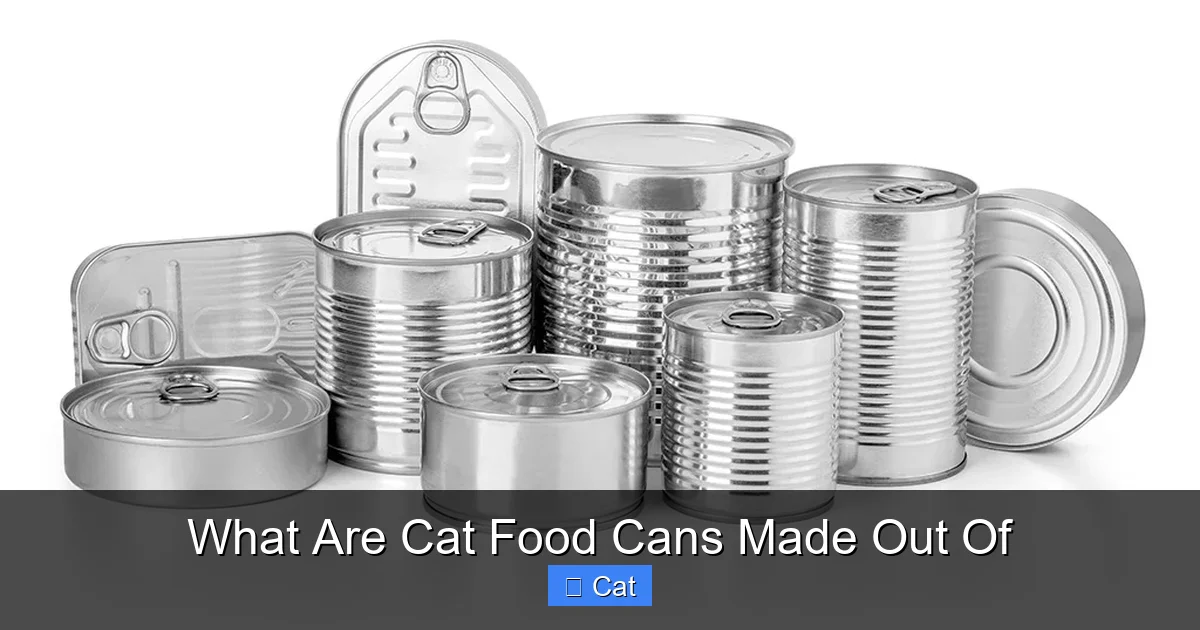
Cat food cans are primarily made from aluminum or steel, often lined with food-safe coatings to protect both the food and the metal. In 2026, manufacturers are prioritizing recyclability, safety, and sustainability, with innovations in BPA-free linings and eco-friendly production methods shaping the future of pet food packaging.
If you’re a cat parent, you’ve probably opened dozens—maybe hundreds—of cat food cans. But have you ever stopped to wonder what those little silver or gray cans are actually made of? It’s not just about what’s inside the can (though your kitty definitely cares about that!). The packaging itself plays a crucial role in keeping your cat’s food safe, fresh, and nutritious. In 2026, the materials used in cat food cans have evolved significantly, driven by advances in food safety, environmental awareness, and consumer demand for transparency.
Understanding what cat food cans are made out of isn’t just a matter of curiosity—it’s about making informed choices for your pet’s health and the planet. From the type of metal used to the invisible lining inside, every component serves a purpose. And with growing concerns about toxins, sustainability, and waste, knowing the details can help you choose better products and dispose of them responsibly. Whether you’re feeding your cat premium pâté or budget-friendly shreds, the can it comes in matters more than you might think.
So, let’s dive into the world of cat food can construction. We’ll explore the materials, the science behind them, how they’ve changed over time, and what the future holds. By the end, you’ll be able to look at that can of tuna-flavored delight and know exactly what it’s made of—and why that matters.
Key Takeaways
- Most cat food cans are made from aluminum or steel: These metals are durable, lightweight, and excellent at preserving freshness and flavor.
- Food-safe linings prevent metal leaching: Interior coatings, often epoxy-based or BPA-free alternatives, protect the food from reacting with the metal.
- Aluminum is highly recyclable: Over 75% of all aluminum ever produced is still in use today, making it a top choice for sustainable packaging.
- Steel cans offer superior strength: Ideal for wet food storage, steel resists denting and maintains integrity during transport and storage.
- BPA-free linings are now standard: Due to health concerns, most brands in 2026 use safer epoxy resins or plant-based coatings.
- Eco-conscious brands are innovating: Some companies now use recycled metals and biodegradable liners to reduce environmental impact.
- Proper recycling matters: Rinsing cans before recycling helps improve processing efficiency and reduces contamination.
📑 Table of Contents
- What Materials Are Used in Cat Food Cans?
- The Role of Metal: Aluminum vs. Steel in Cat Food Packaging
- The Hidden Layer: Understanding Can Linings and Coatings
- Sustainability and Environmental Impact of Cat Food Cans
- How to Safely Recycle and Dispose of Cat Food Cans
- The Future of Cat Food Can Materials
What Materials Are Used in Cat Food Cans?
At first glance, cat food cans might all look the same—shiny, metallic, and ready to pop open with a can opener. But beneath that uniform appearance lies a carefully engineered combination of materials designed to protect, preserve, and deliver your cat’s meal safely. The two primary materials used in cat food cans in 2026 are aluminum and steel, each with its own strengths and applications.
Aluminum is the most common material for single-serve and smaller cat food cans. It’s lightweight, which makes it cheaper to ship and easier for pet owners to handle. Aluminum also has excellent barrier properties—it blocks out light, oxygen, and moisture, all of which can degrade food quality over time. This means your cat’s food stays fresher longer, even after the can is opened and stored in the fridge.
Steel, on the other hand, is typically used for larger cans or multi-serve containers. It’s stronger and more rigid than aluminum, making it ideal for industrial packaging and long-term storage. Steel cans are less likely to dent or puncture during shipping, which is especially important for wet cat food that needs to stay sealed until mealtime. While steel is heavier, it’s also highly durable and can withstand the rigors of global supply chains.
Both aluminum and steel are chosen not just for their physical properties, but for their ability to be recycled repeatedly without losing quality. In fact, aluminum can be recycled indefinitely—making it one of the most sustainable packaging materials available. Steel is also highly recyclable, with over 80% of steel packaging being recovered and reused globally.
But the metal isn’t the only thing that matters. Inside every cat food can, there’s a thin but critical layer—a lining—that separates the food from the metal. This lining prevents chemical reactions that could alter the taste, smell, or safety of the food. Without it, acidic ingredients like fish or tomato-based sauces could react with the metal, leading to off-flavors or even contamination.
In the past, many of these linings were made with bisphenol A (BPA), a chemical compound used in epoxy resins. However, due to growing health concerns—especially its potential endocrine-disrupting effects—most pet food manufacturers have shifted to BPA-free alternatives. Today’s linings are often made from safer epoxy resins, acrylics, or even plant-based polymers.
So, when you’re holding a cat food can, you’re holding a multi-layered system: a strong outer shell of aluminum or steel, a protective inner lining, and a vacuum-sealed environment that keeps the food fresh. It’s a small package with a big job—and in 2026, that job is being done with greater safety and sustainability than ever before.
The Role of Metal: Aluminum vs. Steel in Cat Food Packaging
Visual guide about What Are Cat Food Cans Made Out Of
Image source: c8.alamy.com
When it comes to choosing between aluminum and steel for cat food cans, manufacturers weigh several factors: cost, weight, durability, recyclability, and performance. Each metal has its place in the pet food industry, and understanding the differences can help you make smarter choices as a consumer.
Aluminum is the go-to material for most single-serve and small-portion cat food cans. One of its biggest advantages is weight. Aluminum is about one-third the weight of steel, which reduces shipping costs and carbon emissions during transportation. For pet owners, lighter cans are easier to open, store, and dispose of—especially important for seniors or those with limited mobility.
Another benefit of aluminum is its resistance to corrosion. Unlike steel, aluminum naturally forms a protective oxide layer when exposed to air, which prevents rust and extends the shelf life of the can. This is particularly important for wet cat food, which often contains moisture-rich ingredients that could otherwise promote rust in unprotected metals.
Aluminum also excels in thermal conductivity. This means it heats and cools quickly, which is useful during the canning process. Food is sterilized at high temperatures to eliminate bacteria, and aluminum’s ability to distribute heat evenly ensures that the food is safely preserved without overcooking.
However, aluminum isn’t perfect. It’s softer than steel, so it’s more prone to denting and puncturing. This is why you’ll rarely see large, family-sized cat food cans made entirely of aluminum. The structural integrity just isn’t there for bulk packaging.
That’s where steel comes in. Steel cans are the backbone of larger cat food containers, especially those designed for multi-cat households or commercial use. Steel is incredibly strong and rigid, making it ideal for stacking, shipping, and long-term storage. It can withstand the pressure of industrial canning processes and resist damage during handling.
Steel is also highly magnetic, which makes it easy to separate from other materials during recycling. In fact, steel is the most recycled material in the world, with a global recycling rate of over 85%. This makes steel cans a favorite among eco-conscious brands and consumers.
But steel has its downsides. It’s heavier than aluminum, which increases transportation costs and carbon footprint. It’s also more susceptible to rust if the protective lining is compromised. That’s why steel cans almost always include a robust interior coating to prevent contact between the food and the metal.
In 2026, many manufacturers are using a hybrid approach—combining the best of both worlds. For example, some brands use steel for the can body but aluminum for the lid, balancing strength with ease of opening. Others are experimenting with thinner-gauge steel to reduce weight without sacrificing durability.
Ultimately, the choice between aluminum and steel depends on the product, the brand, and the intended use. For everyday wet food, aluminum is often the preferred choice due to its lightweight and corrosion resistance. For bulk or long-term storage, steel remains the gold standard. And as sustainability becomes a bigger priority, both materials are being sourced more responsibly—with increasing use of recycled content.
The Hidden Layer: Understanding Can Linings and Coatings
While the outer metal of a cat food can is easy to see, the most important part might be the one you never notice—the interior lining. This thin, often invisible layer is what stands between your cat’s food and the metal container, preventing chemical reactions, preserving flavor, and ensuring safety.
In the past, most can linings were made from epoxy resins containing bisphenol A (BPA). BPA was valued for its ability to create a strong, durable barrier that resisted corrosion and maintained food quality. However, over time, studies linked BPA to potential health risks, including hormonal imbalances and developmental issues in animals and humans. While the FDA maintains that low levels of BPA exposure are safe, public concern led to a major shift in the pet food industry.
By 2026, the vast majority of cat food cans are labeled “BPA-free.” But what does that really mean? It doesn’t necessarily mean the can is completely free of epoxy resins—just that BPA is not intentionally added. Instead, manufacturers use alternative compounds such as bisphenol S (BPS) or bisphenol F (BPF), which are chemically similar but considered safer. However, some research suggests these substitutes may also have endocrine-disrupting properties, so the search for truly safe alternatives continues.
One promising development is the rise of non-epoxy linings. Some companies are now using acrylic-based coatings, which are free of bisphenols and provide excellent barrier protection. Others are turning to plant-derived polymers, such as those made from corn or sugarcane, which are biodegradable and non-toxic. These bio-based linings are still relatively new and more expensive, but they represent a major step forward in sustainable packaging.
The lining also plays a critical role in preserving the sensory qualities of cat food. Cats have a highly developed sense of smell, and even minor changes in odor or taste can make them reject their meal. The coating prevents the metal from interacting with acidic or sulfur-rich ingredients—like fish or liver—which could otherwise produce off-flavors or metallic tastes.
Additionally, the lining helps maintain the can’s structural integrity. During the canning process, food is heated to high temperatures to kill bacteria. Without a protective layer, the heat and moisture could weaken the metal or cause it to react with the food. The lining acts as a buffer, ensuring the can remains intact and the food stays safe.
It’s also worth noting that not all linings are created equal. Some are applied in multiple layers for extra protection, while others are designed to be easily removable during recycling. In 2026, several brands are experimenting with water-based coatings that reduce volatile organic compound (VOC) emissions during manufacturing—another win for environmental health.
So, the next time you open a can of cat food, remember: that smooth, white or gray interior isn’t just for show. It’s a carefully engineered barrier that protects your cat’s meal from contamination, preserves freshness, and reflects the latest advances in food safety. And as technology improves, we can expect even safer, greener linings to become the norm.
Sustainability and Environmental Impact of Cat Food Cans
As pet ownership continues to rise globally, so does the demand for cat food—and with it, the environmental footprint of packaging. In 2026, sustainability is no longer a niche concern; it’s a core consideration for both manufacturers and consumers. The materials used in cat food cans play a significant role in this equation, and the industry is making notable strides toward greener practices.
Aluminum and steel are both highly recyclable, which is a major advantage over plastic or composite packaging. According to the Aluminum Association, over 75% of all aluminum ever produced is still in use today, thanks to recycling. Steel is similarly efficient, with a global recycling rate exceeding 85%. This means that when you recycle a cat food can, it has a very good chance of being turned into a new product—whether that’s another can, a car part, or even a bicycle frame.
But recycling only works if consumers participate. One of the biggest challenges in 2026 is contamination. Food residue left inside cans can interfere with the recycling process, reducing the quality of the recycled material. That’s why it’s important to rinse out cat food cans before placing them in the recycling bin. A quick rinse removes leftover food and makes the can much more valuable to recyclers.
Some forward-thinking brands are going beyond recyclability and focusing on circularity. This means designing packaging that can be reused, remanufactured, or returned to the manufacturer for reprocessing. For example, a few premium pet food companies now offer take-back programs, where customers can return empty cans to be cleaned, refilled, and redistributed. While still rare, these programs represent a promising shift toward zero-waste pet care.
Another trend is the use of recycled content. Many cat food cans now contain a significant percentage of post-consumer recycled aluminum or steel. This reduces the need for virgin materials, lowers energy consumption, and cuts greenhouse gas emissions. Some brands proudly display the recycled content percentage on their labels, helping eco-conscious consumers make informed choices.
Manufacturing processes are also becoming cleaner. In 2026, several pet food companies have adopted renewable energy sources—such as solar or wind—to power their canning facilities. Water usage is being minimized, and waste is being diverted from landfills through composting and reuse programs.
However, challenges remain. The production of aluminum, even recycled, is energy-intensive. Mining bauxite (the raw material for aluminum) can cause deforestation and habitat destruction. Similarly, steel production emits significant amounts of carbon dioxide. While recycling helps, it doesn’t eliminate the environmental cost entirely.
That’s why some innovators are exploring alternative materials. Bioplastics, mushroom-based packaging, and even edible coatings are being tested as potential replacements for metal cans. While none have yet replaced traditional cans at scale, they offer a glimpse into a future where pet food packaging is not only safe and functional but also fully biodegradable.
Ultimately, the most sustainable cat food can is one that’s made responsibly, used efficiently, and recycled properly. As a pet owner, you can support this cycle by choosing brands that prioritize sustainability, rinsing your cans, and recycling them correctly. Every small action adds up—and in 2026, that’s more important than ever.
How to Safely Recycle and Dispose of Cat Food Cans
Recycling cat food cans is one of the simplest yet most impactful things you can do for the environment. But it’s not as straightforward as tossing the can into the blue bin. To ensure your cans are actually recycled—and not rejected at the facility—follow these best practices.
First, always rinse the can. Leftover food residue can attract pests, create odors, and contaminate other recyclables. A quick rinse with water is usually enough. You don’t need to scrub it spotless—just remove the bulk of the food. Some people even use the leftover broth to water plants (if it’s not too salty), giving the food a second life.
Next, remove the label if possible. While most labels are made of paper or plastic that can be separated during recycling, removing them reduces the risk of contamination. If the label is glued on, you can often peel it off or soak the can in warm water to loosen the adhesive.
Check your local recycling guidelines. Not all municipalities accept the same materials. Most accept aluminum and steel cans, but some have specific rules about size, shape, or preparation. For example, some centers require cans to be crushed, while others prefer them intact. A quick search online or a call to your local waste management office can clarify the rules.
Avoid putting cans in plastic bags. Recycling facilities use automated sorting systems that can’t process bagged materials. Instead, place cans loosely in your recycling bin or a dedicated container.
If your area doesn’t offer curbside recycling, look for drop-off centers or retail take-back programs. Many grocery stores and pet supply chains have collection bins for metal cans. Some even offer small incentives, like discounts on future purchases.
For those with home composting systems, note that metal cans cannot be composted. However, the food scraps inside can be—just transfer them to your compost bin before recycling the can.
Finally, consider reusing cans creatively. Cleaned cat food cans make excellent storage containers for small items like screws, buttons, or craft supplies. They can also be used as planters for herbs or succulents (just drill drainage holes). With a little paint or decoration, they can even become charming DIY projects.
By recycling and reusing cat food cans responsibly, you’re not just reducing waste—you’re supporting a circular economy where materials are kept in use for as long as possible. And that’s good for your cat, your community, and the planet.
The Future of Cat Food Can Materials
As we look ahead, the future of cat food cans is poised for innovation. With growing pressure to reduce waste, improve safety, and lower carbon emissions, manufacturers are investing in next-generation materials and technologies.
One area of focus is smart packaging. Imagine a can that changes color when the food inside is spoiled, or one that tracks how long it’s been opened. While still in development, such features could revolutionize pet food safety and reduce waste.
Another trend is the integration of digital labels. QR codes on cans could link to information about sourcing, recycling instructions, or even your cat’s feeding history. This level of transparency builds trust and empowers consumers.
On the materials front, researchers are exploring nanotechnology to create ultra-thin, high-performance linings that use fewer chemicals. Others are developing self-healing coatings that can repair small scratches or punctures, extending the can’s lifespan.
Ultimately, the goal is to create packaging that’s not only safe and functional but also regenerative—giving back to the environment rather than taking from it. In 2026 and beyond, the humble cat food can is becoming a symbol of progress, proving that even the smallest details can make a big difference.
Frequently Asked Questions
Are cat food cans safe for my cat?
Yes, cat food cans are designed to be safe. The metal is coated with food-grade linings that prevent contamination, and the canning process ensures the food is sterile and preserved. Always check for dents or rust before use.
Can I recycle cat food cans?
Absolutely. Both aluminum and steel cat food cans are widely recyclable. Just rinse them out to remove food residue and check your local recycling guidelines for proper disposal.
Are BPA-free cans really safer?
BPA-free cans use alternative coatings that are considered safer, though research is ongoing. Most major brands in 2026 use BPA-free linings to meet consumer demand for healthier packaging.
Why are some cans made of steel and others aluminum?
Aluminum is lighter and better for small portions, while steel is stronger and ideal for larger cans. The choice depends on the product size, shipping needs, and brand preferences.
Can I reuse cat food cans at home?
Yes! Cleaned cans can be used for storage, DIY projects, or even as planters. Just make sure they’re thoroughly washed and free of sharp edges.
What’s the most eco-friendly cat food packaging?
Metal cans are among the most sustainable options due to high recyclability. Look for brands that use recycled content and offer take-back programs for even greener choices.