
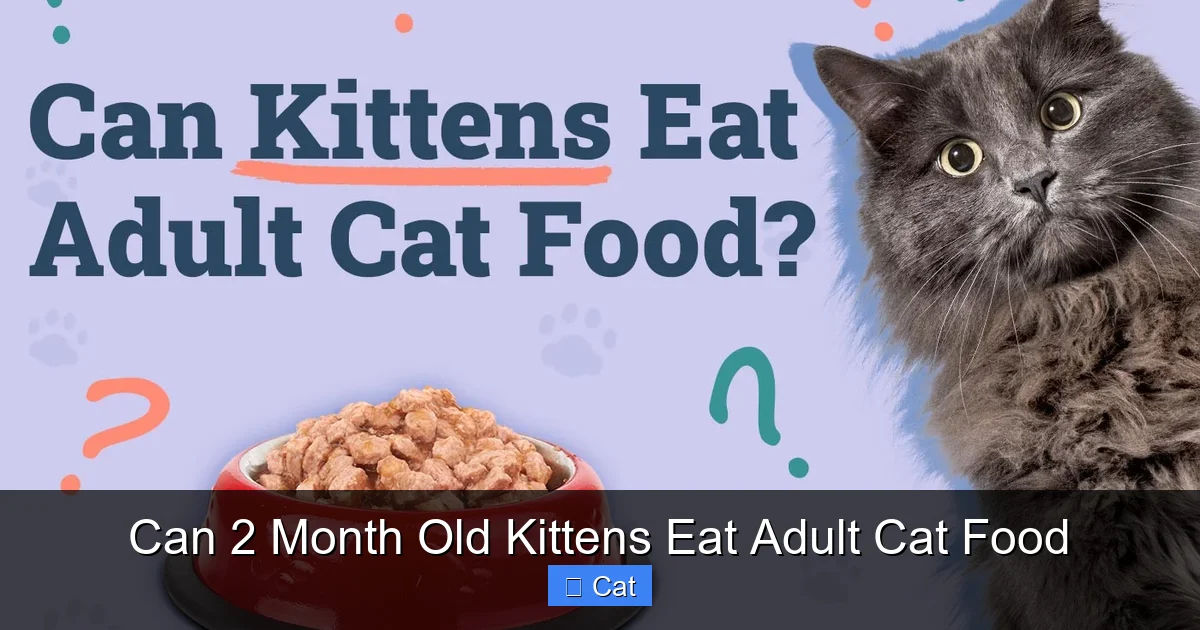
Two-month-old kittens should not eat adult cat food regularly. Their growing bodies need higher levels of protein, fat, calories, and key nutrients like DHA and taurine—nutrients often missing or too low in adult formulas. Feeding adult food can lead to malnutrition, stunted growth, and long-term health issues.
Key Takeaways
- Kittens need more calories and nutrients: At 2 months old, kittens require up to 3 times more energy per pound than adult cats due to rapid growth and development.
- Adult cat food lacks essential kitten nutrients: Most adult formulas don’t meet the high protein, fat, and DHA needs critical for brain, vision, and muscle development.
- Short-term adult food is okay in emergencies: If you’re out of kitten food, a small amount of wet or dry adult food for a day or two won’t harm, but it’s not a long-term solution.
- Choose high-quality kitten-specific food: Look for AAFCO-approved labels stating “for growth” or “kitten” to ensure balanced nutrition.
- Feed frequent, small meals: Kittens have tiny stomachs and high metabolism—feed 4–6 small meals daily until 6 months old.
- Watch for digestive upset: Sudden diet changes, including switching to adult food, can cause diarrhea or vomiting.
- Consult your vet for personalized advice: Every kitten is different—your veterinarian can recommend the best diet based on breed, size, and health.
📑 Table of Contents
- Can 2 Month Old Kittens Eat Adult Cat Food? The Truth Every New Cat Parent Needs to Know
- Why 2-Month-Old Kittens Have Unique Nutritional Needs
- The Risks of Feeding Adult Cat Food to Kittens
- When Is It Okay to Feed Adult Food to a Kitten?
- How to Choose the Best Food for Your 2-Month-Old Kitten
- Common Mistakes to Avoid When Feeding Kittens
- When to Consult Your Veterinarian
- Final Thoughts: Prioritize Your Kitten’s Health from Day One
Can 2 Month Old Kittens Eat Adult Cat Food? The Truth Every New Cat Parent Needs to Know
Bringing home a 2-month-old kitten is one of the most joyful experiences a pet lover can have. Those tiny paws, wide curious eyes, and playful antics make your heart melt. But with that joy comes responsibility—especially when it comes to feeding. One of the most common questions new kitten owners ask is: Can 2 month old kittens eat adult cat food?
The short answer? Not regularly. While it might seem convenient to feed your kitten the same food as your adult cat, doing so can actually put their health at risk. At just 8 weeks old, kittens are in a critical stage of development. Their bodies are growing at an astonishing rate, and their nutritional needs are far more demanding than those of adult cats. Adult cat food simply isn’t designed to meet these intense requirements.
Think of it like feeding a toddler a meal made for a full-grown adult. The portions might be too big, the ingredients might not be right, and the nutritional balance could be off. The same logic applies to kittens. Even if the adult food looks similar and smells appealing, it likely lacks the specific nutrients your kitten needs to thrive.
In this guide, we’ll dive deep into why kitten-specific nutrition matters, what happens when kittens eat adult food, and how to make the best feeding choices for your tiny furball. Whether you’re a first-time kitten parent or just looking to brush up on your knowledge, this article will give you everything you need to keep your little one healthy, happy, and growing strong.
Why 2-Month-Old Kittens Have Unique Nutritional Needs
Visual guide about Can 2 Month Old Kittens Eat Adult Cat Food
Image source: welovecatsandkittens.com
At two months old, kittens are still very much in their infancy. They’ve just been weaned from their mother’s milk (usually between 6 to 8 weeks), and now they’re transitioning to solid food. This is a pivotal moment in their lives—one that sets the foundation for their long-term health.
Rapid Growth and Development
Kittens grow faster in their first year than almost any other mammal. In just 12 months, a tiny 1-pound kitten can become a 10-pound adult cat. This explosive growth requires a lot of energy and building materials. Their bones, muscles, organs, and immune systems are all developing at lightning speed. To support this, they need a diet that’s rich in calories, high-quality protein, healthy fats, and essential vitamins and minerals.
For example, a 2-month-old kitten may need up to 250–300 calories per day, depending on size and activity level. That’s nearly double what an adult cat of the same weight would need. Adult cat food typically contains fewer calories and less fat, which can leave kittens undernourished and sluggish.
High Protein and Fat Requirements
Protein is the cornerstone of a kitten’s diet. It provides the amino acids needed to build muscle, repair tissues, and support immune function. Kittens need about 30–40% protein in their diet—significantly more than adult cats, who only need around 26–30%. Adult cat food often falls short in this department, especially if it’s a lower-quality brand.
Fat is equally important. It’s a concentrated source of energy and helps absorb fat-soluble vitamins like A, D, E, and K. Kittens need about 20–30% fat in their diet, compared to 9–20% for adults. Fats also provide essential fatty acids like DHA (docosahexaenoic acid), which is crucial for brain and eye development. Many adult cat foods don’t include enough DHA, which can impact a kitten’s cognitive and visual development.
Critical Nutrients Only Found in Kitten Food
Beyond protein and fat, kittens need specific nutrients that are often missing or insufficient in adult cat food. One of the most important is taurine—an amino acid that supports heart health, vision, and reproductive function. A deficiency in taurine can lead to serious conditions like dilated cardiomyopathy (a heart disease) or blindness.
Kitten food is specially formulated to include higher levels of taurine, calcium, phosphorus, and other minerals that support bone growth and development. Adult food may not provide enough of these, especially if the kitten is eating a lot of it to meet calorie needs.
The Risks of Feeding Adult Cat Food to Kittens
Now that we understand why kittens have such high nutritional demands, let’s talk about what happens when those needs aren’t met. Feeding adult cat food to a 2-month-old kitten—even occasionally—can lead to a range of health problems.
Malnutrition and Stunted Growth
The most immediate risk is malnutrition. Because adult food is lower in calories, protein, and fat, kittens may not get enough energy to grow properly. Over time, this can result in stunted growth, weak bones, and underdeveloped muscles. A kitten that doesn’t reach its full size potential may also have a weaker immune system, making it more susceptible to infections and illnesses.
Imagine trying to build a house with half the bricks and no cement. That’s what happens when a kitten’s body tries to grow without the right nutrients. The foundation is weak, and the structure is unstable.
Digestive Upset and Poor Appetite
Kittens have sensitive digestive systems. Sudden changes in diet—like switching from kitten food to adult food—can cause diarrhea, vomiting, or constipation. Adult food is often harder to digest because it may contain more fiber or different protein sources. This can lead to discomfort, dehydration, and a loss of appetite.
If your kitten starts refusing food or showing signs of digestive distress, it’s important to go back to a kitten-specific diet and consult your vet. Prolonged digestive issues can lead to nutrient deficiencies and further health complications.
Long-Term Health Consequences
The effects of poor nutrition in kittens don’t always show up right away. Some problems, like weakened bones or poor vision, may not become apparent until the cat is older. For example, a kitten that doesn’t get enough DHA may develop learning difficulties or vision problems later in life.
Additionally, early malnutrition can increase the risk of chronic conditions such as obesity, diabetes, and kidney disease. Kittens that don’t get enough protein or proper nutrients during their growth phase may have a harder time maintaining a healthy weight and metabolism as adults.
When Is It Okay to Feed Adult Food to a Kitten?
We’ve established that adult cat food isn’t ideal for kittens—but does that mean it’s never okay? Not exactly. There are rare situations where a small amount of adult food might be acceptable, but only under specific circumstances.
Emergency Situations Only
If you’ve run out of kitten food and can’t get to the store right away, feeding your kitten a small amount of wet or dry adult food for a day or two is unlikely to cause serious harm. The key here is “small amount” and “short term.” This is not a solution—it’s a temporary fix.
In this case, choose a high-quality adult food that’s high in protein and low in fillers. Wet food is often easier for kittens to digest than dry kibble, so it may be a better option in a pinch. Just make sure to return to kitten food as soon as possible.
Mixing with Kitten Food (Transitioning)
Another scenario where adult food might be used is during a gradual transition from kitten to adult food. This usually happens around 10–12 months of age, when the kitten is nearing full size. At that point, you can slowly mix adult food with kitten food over 7–10 days to help your cat adjust.
But at 2 months old? No. Your kitten is still in the heart of its growth phase and needs every nutrient it can get. Don’t rush the process.
What About “All Life Stages” Food?
Some cat foods are labeled as “for all life stages,” which means they meet the nutritional requirements for kittens, adults, and even pregnant or nursing cats. These can be a safe option for kittens, as they’re formulated to support growth.
However, not all “all life stages” foods are created equal. Always check the label to ensure it’s AAFCO-approved for growth or kitten development. If it only says “for maintenance,” it’s not suitable for kittens.
How to Choose the Best Food for Your 2-Month-Old Kitten
Now that you know why adult food isn’t the right choice, let’s talk about what is the right choice. Picking the best food for your kitten doesn’t have to be overwhelming. With a few simple guidelines, you can make a confident decision.
Look for AAFCO Approval
The Association of American Feed Control Officials (AAFCO) sets standards for pet food nutrition. When shopping for kitten food, look for a label that says the food meets AAFCO nutrient profiles for “growth” or “kitten.” This ensures the food has been tested and proven to support healthy development.
Avoid foods that only say “for maintenance” or “adult.” These are not designed for growing kittens.
Prioritize High-Quality Protein
The first ingredient on the label should be a named animal protein, such as “chicken,” “turkey,” or “salmon.” Avoid foods that list “meat by-products,” “meat meal,” or “animal digest” as the primary ingredient—these are lower-quality protein sources.
Kittens need real meat to build strong muscles and support their metabolism. The more whole, recognizable ingredients, the better.
Choose Wet or Dry—or Both
Both wet and dry kitten food have their benefits. Wet food is higher in moisture, which helps keep kittens hydrated and supports kidney health. It’s also often more palatable, which can encourage picky eaters to eat.
Dry food is convenient, can be left out for free-feeding (if your kitten doesn’t overeat), and helps reduce plaque buildup. Many owners choose to feed a combination of both—wet food for meals and dry food for snacking.
Just make sure whichever you choose is specifically formulated for kittens.
Feed Frequent, Small Meals
Kittens have tiny stomachs and high energy needs. They can’t eat large meals like adult cats. Instead, they should be fed 4–6 small meals throughout the day until they’re about 6 months old.
For example, you might feed your kitten at 7 a.m., 10 a.m., 1 p.m., 4 p.m., 7 p.m., and 10 p.m. This keeps their energy levels stable and supports steady growth.
As they get older, you can gradually reduce the number of meals. By 6–12 months, most kittens can transition to 2–3 meals per day.
Monitor Your Kitten’s Growth and Health
Once you’ve started feeding your kitten the right food, keep an eye on their weight, energy levels, and coat condition. A healthy kitten should gain weight steadily, have bright eyes, a shiny coat, and be playful and curious.
If you notice any signs of lethargy, weight loss, diarrhea, or vomiting, it could be a sign of dietary issues or illness. Don’t hesitate to contact your veterinarian.
Common Mistakes to Avoid When Feeding Kittens
Even with the best intentions, new kitten owners can make feeding mistakes. Here are a few common pitfalls to watch out for.
Feeding Cow’s Milk
Many people think kittens love milk—and they do! But cow’s milk is not safe for kittens. Most kittens are lactose intolerant, meaning they can’t digest the lactose in milk. This can lead to severe diarrhea, dehydration, and even death in extreme cases.
If you want to give your kitten a milk-like treat, use a specially formulated kitten milk replacer (KMR), available at pet stores. Never use regular cow’s milk.
Overfeeding or Free-Feeding Dry Food
While it’s tempting to leave a bowl of dry food out all day, this can lead to overeating and obesity. Kittens are naturally curious and may eat out of boredom rather than hunger.
Instead, measure out the recommended daily amount and divide it into several small meals. This helps regulate their intake and prevents weight gain.
Switching Foods Too Quickly
If you need to change your kitten’s food—whether due to availability, allergies, or preference—do it gradually. Sudden changes can upset their stomach.
Mix the new food with the old, starting with 25% new and 75% old, and gradually increase the ratio over 7–10 days. This gives their digestive system time to adjust.
Ignoring Water Intake
Kittens need access to fresh, clean water at all times—even if they’re eating wet food. Dehydration can happen quickly, especially in hot weather or if they’re sick.
Change the water daily and wash the bowl regularly to prevent bacteria buildup.
When to Consult Your Veterinarian
While most kittens thrive on a high-quality kitten diet, some may have special needs. If your kitten has a medical condition, food allergy, or digestive issue, your vet can recommend a prescription or specialized diet.
Regular check-ups are also important. Your vet can monitor your kitten’s growth, check for parasites, and ensure they’re developing properly. They can also help you create a feeding schedule and recommend the best food for your kitten’s breed and size.
Don’t wait for a problem to arise—preventive care is key to a long, healthy life.
Final Thoughts: Prioritize Your Kitten’s Health from Day One
So, can 2 month old kittens eat adult cat food? The answer is clear: not as a regular diet. While a small amount in an emergency won’t cause lasting harm, adult food simply doesn’t provide the nutrition your growing kitten needs.
From higher protein and fat to essential vitamins and minerals, kitten-specific food is designed to support every stage of development. Feeding your kitten the right diet now sets the stage for a lifetime of health, energy, and happiness.
Remember, your kitten is counting on you to make the best choices. By choosing high-quality kitten food, feeding frequent meals, and staying in touch with your vet, you’re giving them the strongest possible start in life.
So go ahead—spoil your kitten with the best. They deserve it.
Frequently Asked Questions
Can I feed my 2-month-old kitten dry adult cat food in a pinch?
Yes, but only for a day or two in an emergency. Adult dry food is lower in calories and key nutrients, so it’s not suitable for long-term feeding. Return to kitten food as soon as possible.
Is wet adult cat food safer for kittens than dry?
Wet adult food is easier to digest and more hydrating, so it’s a slightly better option in a pinch. However, it still lacks the high protein and fat levels kittens need for growth.
How often should I feed my 2-month-old kitten?
Feed your kitten 4–6 small meals per day. Their tiny stomachs can’t handle large portions, and their high metabolism requires frequent fuel.
What should I look for on a kitten food label?
Look for AAFCO approval for “growth” or “kitten,” a named animal protein as the first ingredient, and no fillers like corn or soy. Avoid foods labeled only for “maintenance.”
Can kittens drink cow’s milk?
No. Most kittens are lactose intolerant, and cow’s milk can cause severe diarrhea. Use a kitten milk replacer instead.
When can my kitten start eating adult cat food?
Most kittens can transition to adult food around 10–12 months of age, when they’ve reached most of their adult size. Always consult your vet before making the switch.