
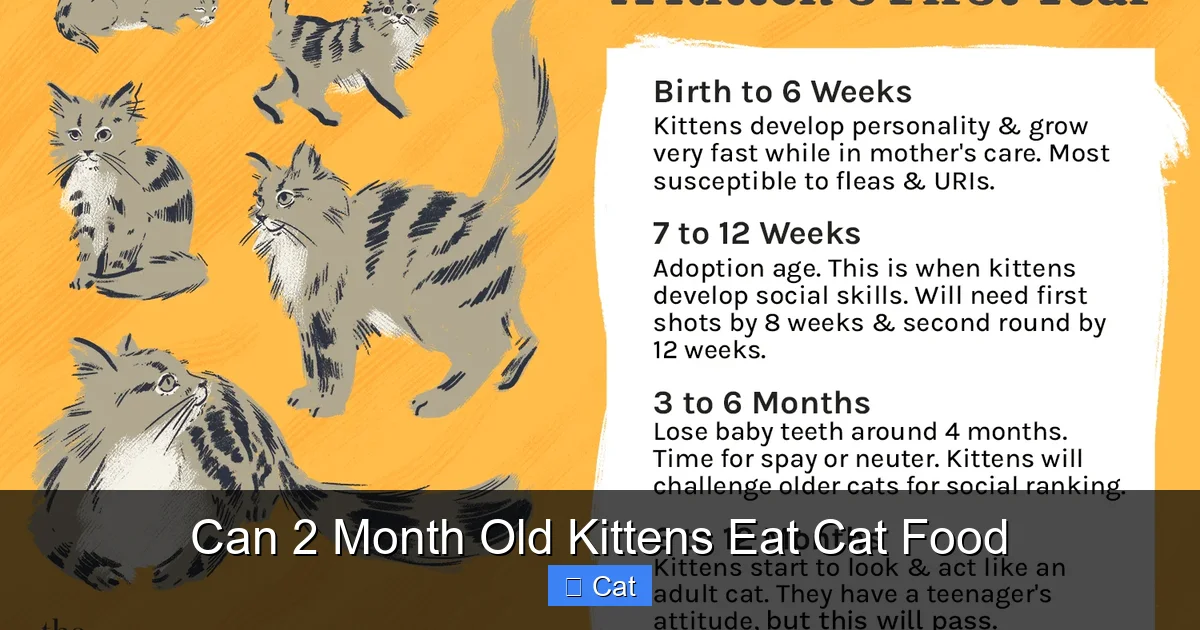
Two-month-old kittens can safely eat cat food, but only high-quality kitten-specific formulas that are soft, nutrient-dense, and easy to digest. At this age, they’re weaning off mother’s milk and need frequent, small meals to support rapid growth and development.
Key Takeaways
- Kittens can eat cat food at 2 months, but only kitten-formulated food: Adult cat food lacks the essential nutrients like taurine, DHA, and protein that growing kittens need.
- Food must be softened for easy eating: Dry kibble should be soaked in warm water or kitten formula to make it soft and digestible.
- Feed 4–6 small meals per day: Young kittens have tiny stomachs and high energy needs, so frequent feeding is crucial.
- Choose high-protein, high-fat kitten food: Look for brands with real meat as the first ingredient and at least 30% protein and 20% fat.
- Always provide fresh water: Even if they’re drinking formula, kittens should have access to clean water at all times.
- Monitor for digestive issues: Diarrhea, vomiting, or refusal to eat could signal food intolerance or illness—consult a vet if symptoms persist.
- Transition gradually to solid food: Mix formula with food at first, then slowly increase the food-to-formula ratio over 1–2 weeks.
📑 Table of Contents
- Can 2 Month Old Kittens Eat Cat Food? A Complete Guide for New Cat Parents
- Understanding the Nutritional Needs of 2-Month-Old Kittens
- Types of Cat Food Suitable for 2-Month-Old Kittens
- How to Safely Transition Kittens to Solid Food
- Feeding Schedule and Portion Sizes for 2-Month-Old Kittens
- Common Mistakes to Avoid When Feeding 2-Month-Old Kittens
- When to Consult a Veterinarian
- Conclusion: Giving Your Kitten the Best Start
Can 2 Month Old Kittens Eat Cat Food? A Complete Guide for New Cat Parents
Bringing home a tiny, wide-eyed 2-month-old kitten is one of the most joyful experiences a pet lover can have. Their playful pounces, curious meows, and sleepy cuddles melt hearts in an instant. But with that joy comes responsibility—especially when it comes to feeding. One of the most common questions new kitten parents ask is: Can 2 month old kittens eat cat food?
The short answer is yes—but with important caveats. At 8 weeks old, kittens are in a critical stage of development. They’re typically weaning off their mother’s milk and beginning to explore solid food. However, not all cat food is created equal, and what’s safe for an adult cat might not be suitable for a growing kitten. Feeding the wrong type of food—or feeding it incorrectly—can lead to digestive upset, malnutrition, or even long-term health issues.
In this guide, we’ll walk you through everything you need to know about feeding 2-month-old kittens. From understanding their nutritional needs to choosing the right food and transitioning them safely, we’ll cover it all. Whether you’re a first-time kitten owner or adding a new furry friend to your multi-pet household, this information will help you give your kitten the best possible start in life.
Understanding the Nutritional Needs of 2-Month-Old Kittens

Visual guide about Can 2 Month Old Kittens Eat Cat Food
Image source: b4111172.smushcdn.com
At 2 months old, kittens are growing at an astonishing rate. In fact, they can double their birth weight in just the first week of life and continue to grow rapidly throughout their first year. This explosive growth demands a diet rich in specific nutrients that support brain development, muscle growth, immune function, and overall health.
Unlike adult cats, kittens require significantly more protein, fat, calories, and certain vitamins and minerals per pound of body weight. For example, kittens need about twice as much protein as adult cats—around 30–40% of their diet should come from high-quality animal protein. They also need higher levels of fat (around 20–30%) to fuel their active lifestyles and support brain development.
One of the most critical nutrients for kittens is taurine, an amino acid found only in animal-based proteins. Taurine is essential for healthy vision, heart function, and immune response. A deficiency can lead to blindness, heart disease, and developmental delays. Kittens also need docosahexaenoic acid (DHA), an omega-3 fatty acid that supports brain and eye development. This is why many high-quality kitten foods include DHA from sources like fish oil or algae.
Another key consideration is calcium and phosphorus balance. Kittens need these minerals for strong bones and teeth, but too much or too little can cause skeletal problems. The ideal calcium-to-phosphorus ratio in kitten food is around 1.2:1. Adult cat food often has lower levels of these nutrients and may not provide the right balance for growing kittens.
Finally, kittens have small stomachs but high energy needs. This means they can’t eat large meals, so they require frequent, nutrient-dense feedings throughout the day. Skipping meals or feeding low-calorie food can lead to low blood sugar (hypoglycemia), which is especially dangerous in young kittens.
Why Kitten Food Is Different from Adult Cat Food
You might wonder why you can’t just feed your 2-month-old kitten the same food you give your adult cat. After all, it’s all “cat food,” right? Not exactly. While adult cat food meets the nutritional needs of a fully grown feline, it falls short in several key areas for kittens.
First, adult cat food typically contains lower levels of protein and fat. While adult cats need around 26–30% protein, kittens require 30–40%. Similarly, adult food often has less fat, which means fewer calories—something kittens desperately need for growth and play.
Second, adult cat food may lack sufficient taurine, DHA, and other growth-supporting nutrients. These are often added in higher concentrations in kitten-specific formulas. Feeding adult food to a kitten long-term can result in stunted growth, weakened immunity, and developmental issues.
Third, the kibble size and texture in adult food may be too large or hard for a 2-month-old kitten to chew and digest. Kittens at this age are still developing their teeth and jaw strength, so they need softer, smaller pieces that are easy to eat.
In short, while adult cat food is perfectly fine for adult cats, it’s not designed for the unique needs of growing kittens. Always choose food labeled specifically for “kittens” or “growth” to ensure your little one gets the nutrition they need.
Types of Cat Food Suitable for 2-Month-Old Kittens
When it comes to feeding 2-month-old kittens, you have several options: wet food, dry food, and a combination of both. Each has its pros and cons, and the best choice often depends on your kitten’s preferences, your lifestyle, and your veterinarian’s recommendations.
Wet Kitten Food: The Gold Standard for Young Kittens
Wet food is often the top choice for 2-month-old kittens. It’s soft, easy to eat, and has a high moisture content—around 70–80%—which helps keep kittens hydrated. This is especially important since young kittens may not drink enough water on their own.
Wet kitten food also tends to be more palatable, which encourages picky eaters to eat. It’s typically made with real meat, poultry, or fish as the first ingredient and is free from artificial fillers like corn, wheat, and soy. Many brands offer pâté-style textures that are perfect for tiny mouths.
One practical tip: warm the wet food slightly before serving. Gently warming it to room temperature or slightly above (never hot) enhances the aroma, making it more appealing to your kitten. You can do this by placing the opened can or pouch in a bowl of warm water for a few minutes.
Dry Kitten Food: When and How to Introduce It
Dry kitten food can be introduced at 2 months, but it should be softened with warm water or kitten formula to make it easier to chew and digest. At this age, kittens may struggle with hard kibble, and forcing them to eat it can lead to frustration or choking.
To soften dry food, mix 1 part kibble with 2–3 parts warm water or formula. Let it sit for 5–10 minutes until it becomes mushy. You can also use a fork to break it down further. As your kitten grows and becomes more comfortable eating, you can gradually reduce the amount of liquid until they’re eating dry kibble on its own.
Choose a high-quality dry kitten food with at least 30% protein and 20% fat. Look for brands that list a named meat (like “chicken” or “salmon”) as the first ingredient and avoid those with excessive fillers or artificial additives.
Combination Feeding: The Best of Both Worlds
Many kitten owners find success with a combination of wet and dry food. For example, you might offer wet food in the morning and evening for hydration and palatability, and leave out a small bowl of softened dry food during the day for grazing.
This approach provides flexibility and ensures your kitten gets the benefits of both food types. It also helps kittens get used to different textures, which can make future transitions (like switching to adult food) smoother.
How to Safely Transition Kittens to Solid Food
If your kitten was recently separated from their mother, they may still be nursing or drinking kitten formula. Transitioning to solid food should be done gradually to avoid digestive upset and ensure they accept the new diet.
Step-by-Step Weaning Process
The weaning process typically begins around 3–4 weeks of age and continues through 6–8 weeks. By 2 months, most kittens are ready to eat solid food, but they may still need some formula to supplement their diet.
Here’s how to transition your kitten safely:
1. Start with a gruel: Mix high-quality wet kitten food with kitten formula or warm water to create a thin, soupy mixture. The consistency should be similar to applesauce.
2. Offer small amounts frequently: Place a tiny bit of gruel on your finger or a shallow dish and let your kitten lick it. Most kittens will be curious and start eating within a few days.
3. Gradually thicken the mixture: Over 7–10 days, slowly reduce the amount of liquid and increase the food-to-liquid ratio. Eventually, you’ll be feeding pure wet food.
4. Introduce softened dry food: Once your kitten is eating wet food well, you can start adding softened dry kibble to the mix.
5. Monitor intake and behavior: Watch for signs of hunger, fullness, and digestive health. Adjust portion sizes and feeding frequency as needed.
Tips for Encouraging Eating
Some kittens are hesitant to try new foods. If your kitten isn’t interested, try these tips:
– Warm the food slightly to enhance the smell.
– Offer food on your finger or a spoon to mimic nursing.
– Feed in a quiet, stress-free environment.
– Try different flavors (chicken, turkey, salmon) to find one they like.
– Avoid forcing food—this can create negative associations.
Remember, every kitten is different. Some take to solid food immediately, while others need more time. Be patient and consistent, and consult your vet if your kitten refuses to eat for more than 24 hours.
Feeding Schedule and Portion Sizes for 2-Month-Old Kittens
At 2 months old, kittens have tiny stomachs but big appetites. They need to eat frequently to maintain their energy levels and support growth. Skipping meals can lead to hypoglycemia, which can be life-threatening in young kittens.
Recommended Feeding Frequency
Most veterinarians recommend feeding 2-month-old kittens 4 to 6 small meals per day. This might sound like a lot, but each meal is only about 1–2 tablespoons of food, depending on the kitten’s size and appetite.
Here’s a sample feeding schedule:
– 7:00 AM: Wet food or gruel
– 10:00 AM: Softened dry food or small portion of wet food
– 1:00 PM: Wet food
– 4:00 PM: Softened dry food
– 7:00 PM: Wet food
– 10:00 PM: Optional small snack (especially if your kitten wakes up hungry)
As your kitten grows, you can gradually reduce the number of meals. By 4–6 months, most kittens can eat 3 meals per day, and by 6–12 months, they can transition to 2 meals.
How Much Should You Feed?
Portion sizes vary by brand and kitten size, so always check the feeding guidelines on the food packaging. However, as a general rule:
– Wet food: 1/4 to 1/2 can (3 oz) per meal
– Dry food: 1–2 tablespoons per meal (when softened)
Weigh your kitten weekly to ensure they’re gaining weight steadily. A healthy 2-month-old kitten should weigh between 1.5 to 2.5 pounds, depending on breed. If your kitten isn’t gaining weight or seems lethargic, consult your vet.
Free Feeding vs. Scheduled Meals
Some owners choose to “free feed” by leaving dry food out all day. While this works for some kittens, it’s not ideal for 2-month-olds. Young kittens may overeat or eat too quickly, leading to digestive issues. Scheduled meals also help you monitor how much your kitten is eating, which is important for detecting health problems early.
Common Mistakes to Avoid When Feeding 2-Month-Old Kittens
Even with the best intentions, new kitten owners can make feeding mistakes that affect their pet’s health. Here are some common pitfalls to avoid:
Feeding Adult Cat Food
As mentioned earlier, adult cat food doesn’t meet the nutritional needs of growing kittens. It’s lower in protein, fat, and essential nutrients like taurine and DHA. Feeding adult food long-term can stunt growth and cause health problems.
Overfeeding or Underfeeding
It’s easy to overestimate or underestimate how much a kitten should eat. Overfeeding can lead to obesity and digestive upset, while underfeeding can cause malnutrition and low energy. Always follow feeding guidelines and adjust based on your kitten’s growth and behavior.
Using Cow’s Milk
Many people think kittens love milk—and they do—but cow’s milk is not safe for them. It’s high in lactose, which most kittens can’t digest properly, leading to diarrhea and dehydration. Stick to kitten formula or water.
Ignoring Hydration
Even if your kitten is eating wet food, they still need access to fresh water. Dehydration can occur quickly in young kittens, especially if they’re active or in a warm environment. Change the water daily and consider using a pet water fountain to encourage drinking.
Sudden Diet Changes
Switching food brands or types too quickly can upset your kitten’s stomach. Always transition gradually over 7–10 days by mixing the old and new food.
When to Consult a Veterinarian
While most 2-month-old kittens adapt well to solid food, some may have trouble. Watch for these signs that it’s time to call the vet:
– Refusal to eat for more than 24 hours
– Persistent vomiting or diarrhea
– Lethargy or weakness
– No weight gain or weight loss
– Signs of dehydration (sunken eyes, dry gums, lethargy)
Your vet can check for underlying health issues like parasites, infections, or congenital conditions that might affect eating. They can also recommend a specific diet or feeding plan tailored to your kitten’s needs.
Conclusion: Giving Your Kitten the Best Start
So, can 2-month-old kittens eat cat food? Absolutely—but only the right kind, served the right way. Kitten-specific food, whether wet, dry, or a combination, provides the high protein, healthy fats, and essential nutrients needed for healthy growth. Softening dry food, feeding frequent small meals, and ensuring access to water are all key to a successful transition.
Remember, every kitten is unique. Some will eagerly dive into their food bowl, while others need a little encouragement. Be patient, observant, and responsive to your kitten’s needs. With proper nutrition and care, your tiny furball will grow into a healthy, happy adult cat.
If you’re ever unsure about what or how to feed your kitten, don’t hesitate to reach out to your veterinarian. They’re your best resource for personalized advice and support. After all, a well-fed kitten is a thriving kitten—and that’s what every pet parent wants.
Frequently Asked Questions
Can I feed my 2-month-old kitten adult cat food in a pinch?
It’s not recommended. Adult cat food lacks the higher protein, fat, and essential nutrients that kittens need for growth. Feeding it occasionally for a day or two is unlikely to cause harm, but it shouldn’t become a regular practice.
How often should I feed my 2-month-old kitten?
Kittens this age should be fed 4 to 6 small meals per day. Their tiny stomachs can’t hold large amounts, but their high metabolism demands frequent fuel.
Should I soak dry kitten food for a 2-month-old?
Yes, always soften dry kibble with warm water or kitten formula. This makes it easier to chew and digest, reducing the risk of choking or stomach upset.
Can 2-month-old kittens drink water?
Yes, even though they may still be drinking formula, kittens should have access to fresh water at all times. Proper hydration supports digestion and overall health.
What if my kitten won’t eat solid food?
Try warming the food, offering it on your finger, or mixing it with formula. If your kitten refuses to eat for more than 24 hours, contact your vet to rule out illness.
Is it okay to mix wet and dry food for kittens?
Absolutely. Many owners use a combination to provide variety, hydration, and texture. Just make sure both foods are formulated for kittens.