
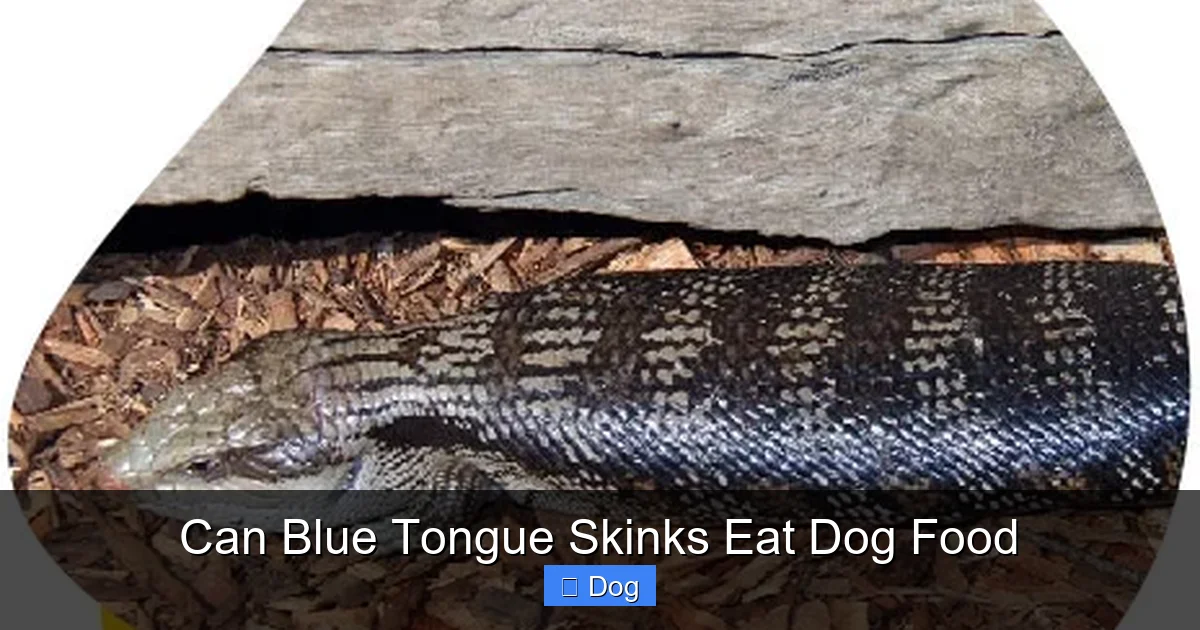
Blue tongue skinks can eat dog food in small amounts as an occasional protein source, but it should never replace a balanced diet. While some high-quality dog foods may offer temporary nutritional value, they lack essential nutrients and contain ingredients that can harm your skink over time. A proper diet includes insects, vegetables, fruits, and specially formulated reptile foods.
Key Takeaways
- Dog food is not ideal for blue tongue skinks: It lacks the proper calcium-to-phosphorus ratio and contains fillers and preservatives that can be harmful in the long term.
- Occasional use may be acceptable: In emergencies or as a rare supplement, small amounts of high-quality, grain-free dog food can be offered, but only under supervision.
- Protein balance is crucial: Blue tongue skinks need a mix of animal and plant-based proteins; dog food alone cannot meet their dietary needs.
- Look for specific ingredients: If using dog food, choose formulas with real meat as the first ingredient and avoid those with artificial additives, corn, or soy.
- Hydration matters: Dry dog food can dehydrate your skink, so always provide fresh water and consider soaking kibble before feeding.
- Better alternatives exist: Commercial reptile diets, cooked lean meats, and gut-loaded insects are safer and more nutritious options.
- Consult a reptile vet: Always discuss dietary changes with a veterinarian experienced in exotic pets to ensure your skink stays healthy.
📑 Table of Contents
- Can Blue Tongue Skinks Eat Dog Food? A Complete Guide
- Understanding the Blue Tongue Skink’s Natural Diet
- Can Blue Tongue Skinks Eat Dog Food? The Risks and Realities
- What to Look for in Dog Food (If You Must Use It)
- Healthier Alternatives to Dog Food
- Creating a Balanced Diet Plan for Your Blue Tongue Skink
- When to Consult a Veterinarian
- Conclusion: Dog Food Is a Last Resort, Not a Staple
Can Blue Tongue Skinks Eat Dog Food? A Complete Guide
So, you’ve got a blue tongue skink—adorable, curious, and full of personality. You love your scaly friend and want to make sure they’re eating right. But life gets busy, and sometimes you wonder: “Can I just give them a bit of dog food?” After all, it’s protein-rich, convenient, and your dog seems to love it. It’s a fair question, and one that many reptile owners ask.
The short answer? Yes, blue tongue skinks *can* eat dog food—but with major caveats. While it’s not toxic in small amounts, dog food is not designed for reptiles. Their digestive systems, nutritional needs, and metabolic rates are vastly different from dogs. Feeding dog food regularly or as a staple can lead to serious health problems, including metabolic bone disease, obesity, and organ stress.
In this guide, we’ll dive deep into whether dog food is safe for blue tongue skinks, what to look for if you choose to use it, and what healthier alternatives are available. We’ll also cover how to balance your skink’s diet for optimal health, because when it comes to these unique lizards, nutrition is everything.
Understanding the Blue Tongue Skink’s Natural Diet

Visual guide about Can Blue Tongue Skinks Eat Dog Food
Image source: unusualpetvets.com.au
To answer whether dog food is appropriate, we first need to understand what blue tongue skinks eat in the wild. Native to Australia, New Guinea, and parts of Indonesia, blue tongue skinks are omnivores with a highly varied diet. In their natural habitat, they forage for a mix of plant matter and animal protein.
What Do Wild Blue Tongue Skinks Eat?
In the wild, blue tongue skinks consume a wide range of foods. Their diet includes:
– Insects such as crickets, beetles, and grasshoppers
– Small vertebrates like baby mice or lizards
– Fruits like berries and figs
– Vegetables and leafy greens such as dandelion, clover, and plantains
– Flowers and soft plant shoots
This diverse menu provides them with a balanced intake of protein, fiber, vitamins, and minerals. Importantly, their diet is naturally high in moisture, which supports hydration and kidney function.
The Importance of Nutritional Balance
One of the most critical aspects of a blue tongue skink’s diet is the calcium-to-phosphorus ratio. Ideally, this ratio should be around 2:1 (twice as much calcium as phosphorus). This balance is essential for bone development, muscle function, and preventing metabolic bone disease—a common and serious condition in captive reptiles.
Most dog foods, however, have a phosphorus level that’s too high and calcium that’s too low. Over time, this imbalance can weaken bones, cause deformities, and even lead to paralysis. Additionally, dog food often contains fillers like corn, wheat, and soy, which offer little nutritional value to reptiles and can cause digestive issues.
Protein Needs: Quality Over Quantity
Blue tongue skinks need protein, but not in the same way dogs do. While dogs thrive on high-protein diets, skinks require moderate amounts of high-quality, easily digestible protein. Too much animal protein can strain their kidneys and lead to gout—a painful buildup of uric acid crystals.
In the wild, skinks get protein from insects and occasional small prey. These sources are rich in essential amino acids and are naturally balanced with other nutrients. Dog food, even high-end varieties, is formulated for canine metabolism and may contain excessive fat and protein levels that aren’t suitable for reptiles.
Can Blue Tongue Skinks Eat Dog Food? The Risks and Realities
Now, let’s get to the heart of the question: can blue tongue skinks eat dog food? The answer isn’t a simple yes or no—it depends on the type, frequency, and context.
Short-Term Use: When Dog Food Might Be Acceptable
In rare cases, such as during travel, illness, or when preferred foods are unavailable, a small amount of high-quality dog food might be used as a temporary protein source. For example, if your skink refuses insects or reptile pellets for a day or two, offering a teaspoon of soaked, grain-free dog food could help maintain protein intake.
However, this should never become a habit. Think of it like giving your human child a fast-food meal—it’s okay once in a blue moon, but not as a regular dinner plan.
Why Regular Feeding Is Dangerous
Feeding dog food regularly poses several risks:
– **Nutritional Imbalance:** As mentioned, the calcium-phosphorus ratio is off, which can lead to bone disorders.
– **High Fat Content:** Many dog foods are high in fat, which can cause obesity and liver problems in skinks.
– **Artificial Additives:** Preservatives like BHA, BHT, and ethoxyquin are common in dog food and may be harmful to reptiles over time.
– **Low Moisture:** Dry kibble doesn’t provide the hydration skinks need. Unlike dogs, skinks don’t drink large amounts of water regularly and rely on moist foods for hydration.
Signs Your Skink Isn’t Thriving on Dog Food
If your skink is eating dog food regularly, watch for these warning signs:
– Lethargy or lack of appetite
– Swollen joints or difficulty moving (signs of gout)
– Soft or deformed bones (metabolic bone disease)
– Poor shedding or skin issues
– Weight gain or loss
If you notice any of these symptoms, stop feeding dog food immediately and consult a reptile veterinarian.
What to Look for in Dog Food (If You Must Use It)
If you find yourself in a situation where dog food is the only option, not all brands are created equal. Here’s how to choose the safest possible option.
Choose High-Quality, Grain-Free Formulas
Look for dog food with real meat (like chicken, turkey, or beef) as the first ingredient. Avoid products that list “meat by-products,” “corn,” “wheat,” or “soy” near the top of the ingredient list. These fillers are hard for skinks to digest and offer little nutritional benefit.
Grain-free options are generally better, as they reduce the risk of digestive upset. However, even grain-free dog food isn’t ideal—it’s still made for dogs, not reptiles.
Avoid Artificial Preservatives and Colors
Check the label for artificial additives. Ingredients like BHA, BHT, propylene glycol, and food dyes (e.g., Red 40, Yellow 5) should be avoided. These chemicals can accumulate in your skink’s system and cause long-term health issues.
Natural preservatives like mixed tocopherols (vitamin E) are safer, but again, the best option is to avoid dog food altogether when possible.
Soak the Kibble Before Feeding
Dry dog food can be hard for skinks to chew and digest. To make it easier, soak the kibble in warm water for 10–15 minutes until it softens. This also helps with hydration, which is crucial for reptiles.
Offer only a small amount—no more than a teaspoon per feeding—and remove any uneaten food after a few hours to prevent spoilage and bacterial growth.
Healthier Alternatives to Dog Food
Instead of relying on dog food, consider these safer, more nutritious options that better meet your skink’s dietary needs.
Commercial Reptile Diets
There are high-quality commercial diets specifically formulated for blue tongue skinks. Brands like Rep-Cal, Zoo Med, and Pangea offer pelleted foods that are balanced in protein, calcium, and vitamins. These can be used as a base diet, supplemented with fresh foods.
Look for formulas that include insect meal, vegetables, and added calcium. Avoid products with excessive fillers or artificial ingredients.
Cooked Lean Meats
Cooked, unseasoned chicken, turkey, or lean beef can be offered occasionally. Make sure the meat is plain—no salt, garlic, onion, or spices. Cut it into small, bite-sized pieces and serve at room temperature.
Avoid fatty cuts like pork or lamb, as they can be too rich for skinks. Also, never feed raw meat due to the risk of bacterial contamination.
Gut-Loaded Insects
Insects like crickets, dubia roaches, and mealworms should be a staple in your skink’s diet. But don’t just feed them plain insects—“gut-load” them first. This means feeding the insects nutritious foods (like carrots, leafy greens, and commercial gut-load formulas) 24–48 hours before offering them to your skink.
Gut-loaded insects provide better nutrition and help ensure your skink gets a wide range of vitamins and minerals.
Fresh Fruits and Vegetables
Blue tongue skinks love fruits and veggies! Offer a variety of options, including:
– Leafy greens: kale, collard greens, mustard greens
– Vegetables: squash, zucchini, bell peppers, green beans
– Fruits: berries, melon, mango, papaya (in moderation due to sugar content)
Wash all produce thoroughly and chop it into small pieces. Rotate different foods to keep meals interesting and nutritionally diverse.
Calcium and Vitamin Supplements
Even with a balanced diet, supplementation is often necessary. Dust insects and fresh foods with a calcium supplement (without vitamin D3) at most feedings. Use a multivitamin supplement once or twice a week to ensure your skink gets all essential nutrients.
Always follow the dosage instructions on the supplement packaging, and consult your vet if you’re unsure.
Creating a Balanced Diet Plan for Your Blue Tongue Skink
Now that you know what to feed—and what to avoid—let’s put it all together into a practical feeding plan.
Sample Weekly Diet Schedule
Here’s a balanced weekly meal plan for an adult blue tongue skink:
– **Monday:** Gut-loaded crickets + chopped kale and squash
– **Tuesday:** Cooked chicken + blueberries and zucchini
– **Wednesday:** Dubia roaches + collard greens and bell pepper
– **Thursday:** Reptile pellet + mango and green beans
– **Friday:** Mealworms + mustard greens and carrots
– **Saturday:** Scrambled egg (plain) + melon and squash
– **Sunday:** Variety mix—insects, veggies, and a small piece of fruit
Adjust portion sizes based on your skink’s age, size, and activity level. Juveniles may need more protein, while adults benefit from more plant matter.
Feeding Tips for Success
– Feed adults 3–4 times per week; juveniles daily or every other day.
– Offer food in the morning or early afternoon when skinks are most active.
– Remove uneaten food after 4–6 hours to maintain cleanliness.
– Provide a shallow water dish for drinking and soaking.
– Monitor your skink’s weight and behavior to ensure they’re thriving.
Hydration Is Key
Even if you’re not feeding dog food, hydration is essential. Blue tongue skinks absorb water through their skin and from their food. Misting their enclosure daily and providing a large, shallow water dish encourages drinking and helps prevent dehydration.
Avoid using distilled or softened water, as it lacks essential minerals. Use filtered or bottled water if your tap water is high in chlorine or fluoride.
When to Consult a Veterinarian
Dietary issues can quickly become health problems in reptiles. If you’re unsure about your skink’s nutrition, or if they show signs of illness, don’t wait—see a vet.
Finding a Reptile-Savvy Vet
Not all veterinarians are experienced with exotic pets. Look for a vet who specializes in reptiles or has a strong background in herpetology. You can search through organizations like the Association of Reptilian and Amphibian Veterinarians (ARAV) for qualified professionals.
Common Nutritional Issues to Watch For
– **Metabolic Bone Disease (MBD):** Caused by calcium deficiency or improper UVB lighting. Symptoms include soft jaws, swollen limbs, and tremors.
– **Gout:** Results from too much protein or dehydration. Look for swollen joints and lethargy.
– **Obesity:** Overfeeding or high-fat diets can lead to weight gain and liver disease.
– **Impaction:** Caused by ingesting substrate or eating foods that are too dry or large.
Regular check-ups, even when your skink seems healthy, can catch problems early and keep them thriving for years.
Conclusion: Dog Food Is a Last Resort, Not a Staple
So, can blue tongue skinks eat dog food? Technically, yes—but it’s far from ideal. While a small amount of high-quality, grain-free dog food might be safe in emergencies, it should never become a regular part of your skink’s diet. The nutritional imbalances, high fat content, and lack of moisture make it a poor choice for long-term health.
Instead, focus on providing a varied, balanced diet rich in insects, vegetables, fruits, and reptile-specific foods. Supplement with calcium and vitamins, keep your skink hydrated, and consult a reptile vet for personalized advice.
Your blue tongue skink depends on you for everything—food, warmth, and care. By making informed dietary choices, you’re giving them the best chance at a long, healthy, and happy life. And trust us, they’ll thank you with curious head tilts, gentle nudges, and maybe even a little blue tongue flick.
Frequently Asked Questions
Can blue tongue skinks eat dry dog food?
Blue tongue skinks can eat dry dog food in very small amounts and only as a temporary solution. However, it should be soaked in water first to prevent dehydration and aid digestion. Dry kibble alone is not recommended due to low moisture and poor nutritional balance.
Is wet dog food better for blue tongue skinks?
Wet dog food is slightly better than dry because it contains more moisture, but it still lacks the proper calcium-to-phosphorus ratio and may contain harmful additives. It’s still not ideal and should only be used sparingly in emergencies.
What kind of dog food is safest for blue tongue skinks?
If you must use dog food, choose a high-quality, grain-free formula with real meat as the first ingredient and no artificial preservatives. Avoid foods with corn, soy, or by-products. Always soak it before feeding.
How often can I feed my skink dog food?
Dog food should never be fed regularly. Limit it to once every few weeks at most, and only in small amounts. A balanced diet of insects, vegetables, and reptile pellets is far superior.
Can baby blue tongue skinks eat dog food?
No, baby skinks should not eat dog food. They have higher protein and calcium needs for growth, and dog food cannot meet these requirements. Stick to gut-loaded insects, soft vegetables, and calcium-supplemented foods.
What should I do if my skink ate dog food by accident?
If your skink accidentally ate a small amount of dog food, don’t panic. Monitor them for any signs of digestive upset, such as lethargy or lack of appetite. Ensure they have fresh water and return to their normal diet immediately.